
Livraison le jour même ou le lendemain

Qualité garantie

Débloquez vos offres de bienvenue: Livraison GRATUITE | Jusqu'à -80 % | 30 jours d'essai gratuits à JoyPlus
Téléchargez l'application
Blonde, bleached, highlighted or grey hair can quickly develop unwanted yellow or orange tones. A purple shampoo for blonde hair helps maintain a cooler tone between salon visits, provided you choose a formula suited to your hair type and washing routine.
The choice, however, goes far beyond the colour of the bottle. Behind the marketing promises lie some significant differences in pigments, cleansing agents, format and recommended leave-in time.
Purple pigments are generally used to visually counteract yellow tones. They do not lighten the hair and will not turn a brunette base into light blonde. If your hair leans more towards orange, a blue or blue-violet formula may sometimes be a better match for the tone you are after.
An anti-yellow shampoo therefore maintains an existing colour, but it cannot replace a professional colour treatment, toner or bleach.
A sulphate-free purple shampoo can be suitable for sensitised hair or for those who prefer a gentler wash. However, this label alone is not enough to judge the overall formula. You should also examine the cleansing agents, fragrance, conditioning agents and any potential allergens listed in the INCI ingredients list.
Conversely, the presence of sulphates does not automatically make a shampoo unsuitable. Such a formula may cleanse more effectively, but could be less comfortable on dry hair or a sensitive scalp.
The leave-in time directly affects the intensity of the result. Leaving it on for too long can create a greyish or violet tint, especially on very porous highlights. Start with a short time, then adjust based on how your hair reacts.
For light blonde, balayage or grey hair, look for a formula containing violet pigment, often listed in the INCI as CI 60730, also known as Acid Violet 43. As the concentration is not always stated, the product’s colour and the usage instructions can provide useful clues.
On highlighted blonde hair, distribute the product evenly to avoid differences in tone between porous areas and natural hair.
Bleached hair often needs a colour-protecting shampoo, paired with a conditioner or mask. Check for cleansing agents such as sodium laureth sulphate or sodium lauryl sulphate. Conversely, some formulas rely on gentler bases like sodium cocoamphoacetate or decyl glucoside.
The term ‘colour-treated hair’ primarily concerns preserving shine, whereas a purple shampoo targets tone maintenance. Your routine may therefore require two different products rather than using a purple shampoo every wash.
Formats of 250 to 300 ml are practical for testing a formula or for occasional use. Bottles of 500 ml or 1,000 ml can offer better value for regular use, but only if the product truly meets your needs.
A purple shampoo is not necessarily intended for every wash. Follow the manufacturer’s recommendations and alternate, if needed, with a gentle shampoo for coloured hair.
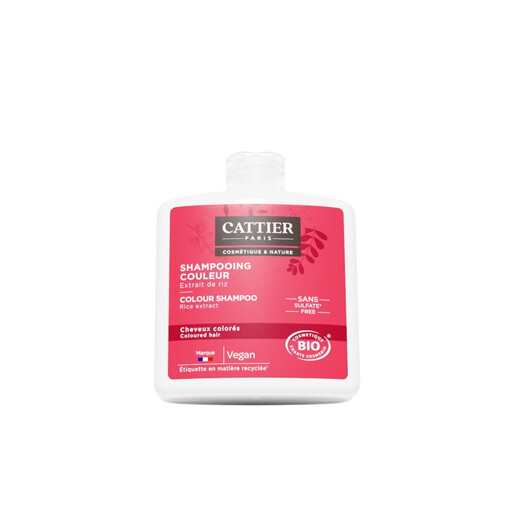
Why this choice suits this profile: This sulphate-free, silicone-free cleansing base is ideal for those wanting to start a colour-treated hair routine without investing in a large format. It does not contain violet pigment: use it instead as an alternative to a toning treatment.
Its product page details the ingredients, the 250 ml format and usage precautions, without presenting it as a lightening product.
Sulphate-free and silicone-free formula; made in France; contains glycerin, jojoba oil and aloe vera powder.
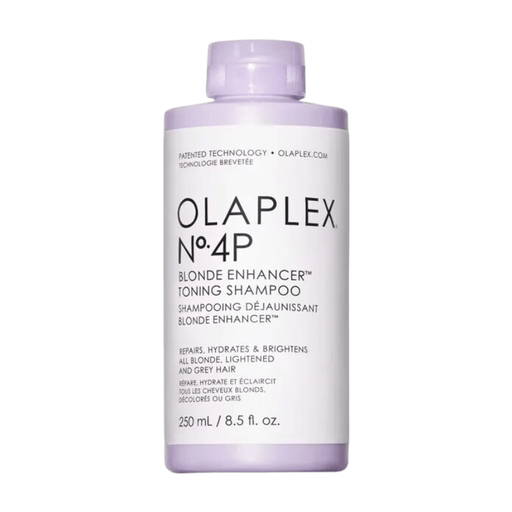
Why this choice suits this profile: Its concentrated violet pigment formula is designed for those who want to control the leave-in time to maintain cool blonde or grey hair.
The instructions recommend a leave-in time of 1 to 3 minutes, which can be extended to 5 minutes for a more pronounced result. This is a useful guide to avoid leaving the product on too long the first time.
250 ml format; sulphate-free formula; OLAPLEX Bond Building technology highlighted by the brand; suitable for natural or coloured hair.
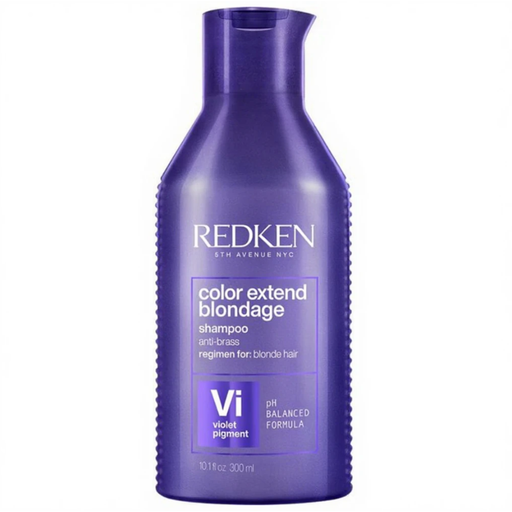
Why this choice suits this profile: This purple shampoo is suitable for natural, coloured, highlighted or balayage blonde hair, with a recommended leave-in time of 3 to 5 minutes.
The instructions recommend wearing gloves and specify the leave-in time. These guidelines help limit direct contact with the pigments.
300 ml format; Acid Violet 43 violet pigments listed in the INCI; contains amino acids and hydrolysed wheat proteins.
We have selected a comprehensive, real-time updated list of products that meet these demanding criteria and European safety standards.
For regular washes, a non-pigmented shampoo for coloured hair can complete your routine. Formulas such as L’Oréal Professionnel Vitamino Color in 300 ml or 1,500 ml, and Phyto Paris Couleur in 500 ml, are designed to maintain colour but do not necessarily replace a purple shampoo.
It depends on your hair colour, porosity and the intensity of warm tones. Occasional use may be enough between treatments. Always check the product instructions and alternate with a gentle shampoo if the lengths start to dry out.
Yes, some formulas are specifically marketed as suitable for both grey and blonde hair. However, the result depends on your starting base and hair porosity. Leaving it on for too long can accentuate violet or grey tones.
Follow the best-before date or the period after opening indicated on the packaging. Keep the bottle closed, in a dry place away from heat and direct light. Also check the batch number and ingredients list before use.