
Livraison le jour même ou le lendemain

Qualité garantie

Débloquez vos offres de bienvenue: Livraison GRATUITE | Jusqu'à -80 % | 30 jours d'essai gratuits à JoyPlus
Téléchargez l'application
Van life road trips, remote worksites, or simply as a precaution against power outages: the challenge is always the same. How do you transform a battery's 12V DC into reliable 220V AC for your devices? The answer lies in one device: the 12V to 220V pure sine wave inverter. This is what will allow you to safely power all your equipment, from a simple charger to the most delicate laptop.
But when faced with a jungle of models and spec sheets, it's hard to know where to start. This guide is here to break down the criteria that truly matter and present our 2026 selection, without the marketing fluff.
Before diving into our selection, a few technical concepts are essential to avoid making the wrong choice.
This is the most critical factor. Expressed in watts (W), power is defined by two crucial values:
A practical example: For an 800?W appliance that requires a 1600?W peak to start, a 1000?W inverter (nominal power) capable of reaching 2000?W peak power would be a perfect match.
Inverters are divided into two main families based on the quality of the current they produce: modified sine wave and pure sine wave.
A good 12V to 220V inverter is packed with protective features. These are essential for your safety and the longevity of your setup. Make sure the model you choose includes protection against:
These safeguards are all the more crucial for heavy-duty use, typically in an RV or on a professional worksite.
We have selected three models that stand out for their technical specifications and their suitability for specific use cases.
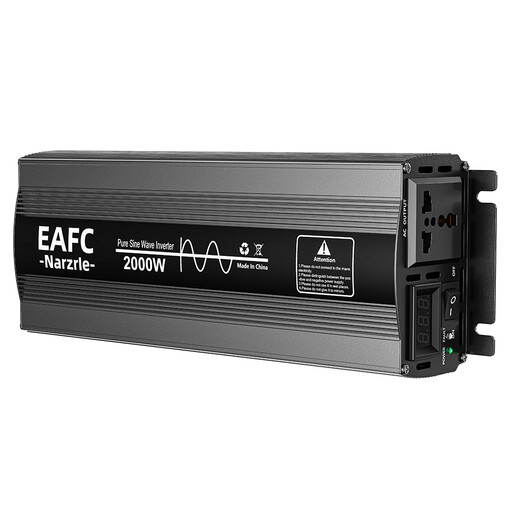
Why it stands out This is the ultimate Swiss Army knife. It offers an ideal balance between ample power and a compact design. Its 1000?W of continuous power is enough for most needs on the go, and the 2000?W peak allows it to easily start a small home appliance or power tool. The small LCD screen, which lets you keep an eye on the voltage, is a real day-to-day bonus.
Advantages
Who is it for? The ideal travel companion for owners of vans, converted campers, and demanding campers. It will power a laptop, a small compressor fridge, lights, and all the family's chargers without breaking a sweat.
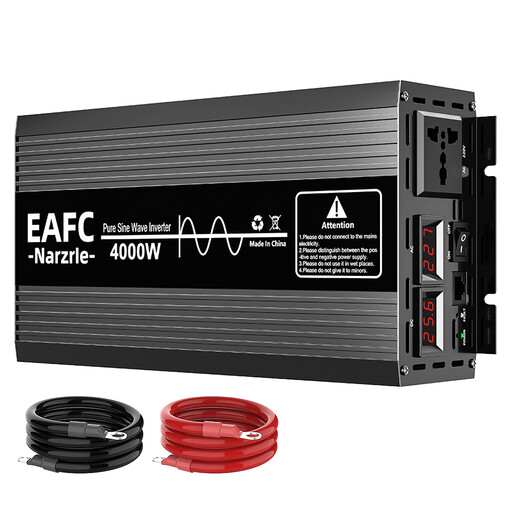
Why it stands out Here we step into the big leagues. With 2000?W of continuous power and a 4000?W peak, this model is built for intensive use and high-consumption devices. Its dual fans ensure optimal cooling even at full load, while the dual display allows for precise monitoring of the battery and the 220V output.
Advantages
Who is it for? Essential for large RVs, mobile tradespeople, or as a reliable home backup system. Its power allows for the simultaneous use of several energy-hungry appliances with peace of mind.
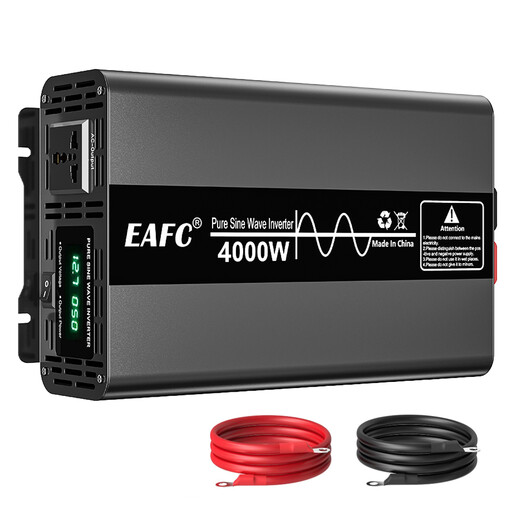
Why it stands out Based on the same power rating as the previous model (2000?W / 4000?W), this version stands out with its amorphous silicon core transformer. According to the manufacturer, this technology optimises conversion efficiency (over 95%), resulting in less wasted energy and therefore better battery life. Its universal socket and resistance to extreme temperatures (-30°C to 60°C) make it a true workhorse.
Advantages
Who is it for? For pro users looking to maximise every watt. Think food trucks, off-grid solar installations, boats, or any critical application where efficiency and reliability are non-negotiable.
If our selection doesn't perfectly match your needs in terms of power or budget, feel free to explore other options.
Discover our full range of DC adapters
It all depends on your equipment! The golden rule: list the devices you might use simultaneously, add up their wattage, and then add a 20% safety margin. For typical use (laptop, TV, small fridge, lights), a 1000?W nominal (2000?W peak) model is a good starting point. If you want the convenience of a microwave or a coffee machine, you'll need to upgrade to at least a 2000?W nominal (4000?W peak) model.
Absolutely. That's the whole point of pure sine wave. The generated current is so clean that it's compatible with 100% of 220V devices, with no exceptions. Computers, hi-fi equipment, medical devices, tool battery chargers... everything is supported, completely safely.
This is a crucial step that allows no shortcuts. Safety first! Here are the golden rules: