
Livraison le jour même ou le lendemain

Qualité garantie

Débloquez vos offres de bienvenue: Livraison GRATUITE | Jusqu'à -80 % | 30 jours d'essai gratuits à JoyPlus
Téléchargez l'application
Bringing a puppy home is a magical experience, but it quickly raises a crucial question: what's the best way to feed them? Faced with overwhelming store shelves, finding the right puppy food can feel like a real puzzle. Our mission is to give you clear, practical guidance for choosing a diet that supports their growth and well-being—cutting through the marketing jargon.
Your puppy's health starts with what's in their bowl. A high-quality puppy food is the cornerstone of their future health. There are three key things to check before you head to the checkout.
The ingredients list is your most valuable tool. A quality natural puppy food is first and foremost identified by its protein sources.
The choice between dry and wet food depends as much on your puppy's needs as it does on your daily routine.
The solution? Sometimes, it's mixed feeding. Combining kibble and wet food adds variety while offering the benefits of both formats.
A puppy's stomach is sensitive, so any diet change must be done gradually. Introduce the new food over 7 to 10 days, progressively increasing its proportion in the bowl until it completely replaces the old food.
We've selected products that tick all the boxes: quality ingredients, formulas adapted for growth, and positive customer feedback.
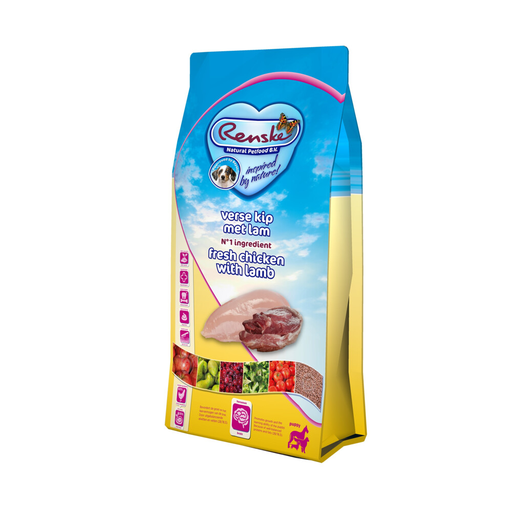
What sets it apart: This formula stands out with fresh chicken (26%) as its number one ingredient, a sign of high-quality protein and optimal digestibility. Its gluten-free recipe is perfect for sensitive stomachs, while the addition of krill and flaxseed provides a high omega-3 content to support brain development.
Pros:
Who is it for? For owners of puppies of all breeds (from 3 weeks old) looking for a natural, gluten-free puppy kibble that's perfect for starting a mixed-feeding diet.
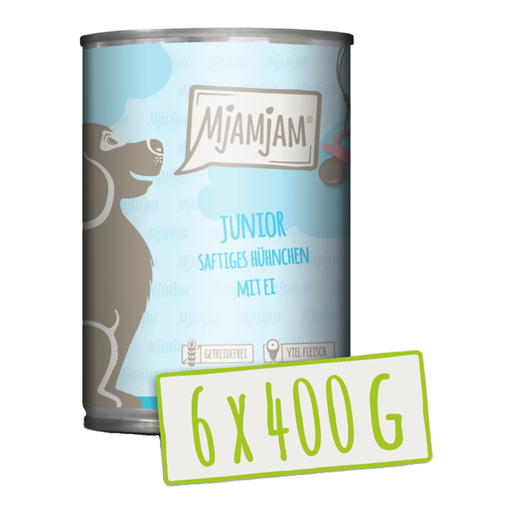
What sets it apart: MjAMjAM's philosophy is simple: maximum meat content to get as close as possible to a carnivore's natural diet. With 66% chicken meat (heart, liver, gizzard), this puppy wet food is a flavour and nutrient powerhouse. The recipe is guaranteed to be free from grains, added sugar, and any artificial additives.
Pros:
Who is it for? Ideal for puppies who are fussy about their kibble, those who need a hydration boost, or for owners who swear by a 100% natural, grain-free puppy food.
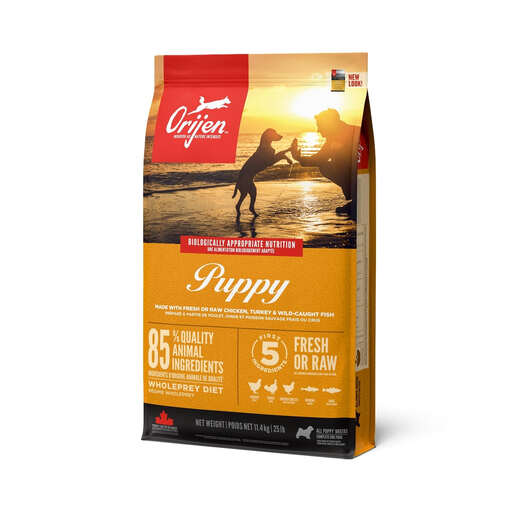
What sets it apart: Orijen is built on its flagship "Biologically Appropriate" concept: 85% premium animal ingredients, including free-run chicken and turkey, cage-free eggs, and wild-caught fish. The WholePrey principle (meat, organs, cartilage) mimics the ancestral diet of canids, providing complete and natural nutrition.
Pros:
Who is it for? This protein-rich puppy kibble is for discerning owners who make no compromises on quality and are looking for a nutrient-dense food, perfect for active or large-breed puppies.
The perfect food for your puppy depends on their breed, energy level, and any potential sensitivities. If our selection doesn't perfectly match your needs, don't worry. The market is full of other excellent options to discover.
To explore a wider range, take a look at our complete selection of puppy food.
The daily portion depends on their age, current weight, estimated adult weight, and activity level. The easiest way is to follow the recommendations on the packaging of your chosen puppy food. These are just guidelines; feel free to adjust them to ensure your puppy maintains a healthy weight without becoming overweight. If in doubt, your vet's advice is essential.
The transition to adult food should happen when your puppy reaches about 90% of their adult size. This key milestone varies by breed:
A grain-free puppy food is an excellent solution for pets with a known sensitivity or allergy. However, it's not a requirement for all puppies. Quality whole grains (rice, oats, etc.) can be a perfectly healthy source of fibre and energy. The most important factor remains the quality of the protein and the overall balance of the recipe.