After a workout
You want a snack with a clearly stated amount of protein per bar, without mistaking it for a meal. The products featured by Decathlon France and EAFIT are examples of sports nutrition bars.


If your main priority is comparing the protein content of a post-workout snack, look at sports nutrition bars. If you’d rather have a small snack to enjoy in front of the telly, a protein cereal bar may be a better fit. Either way, compare the serving size, nutritional values and ingredients of the specific product: the word “protein” doesn’t make a bar a complete dinner.
You want a snack with a clearly stated amount of protein per bar, without mistaking it for a meal. The products featured by Decathlon France and EAFIT are examples of sports nutrition bars.
You’re mainly looking for a cereal, nut or chocolate-style snack, but you also want to know how much protein the bar actually provides. Kellogg's France’s Special K products show why it’s important to check the nutritional value of each recipe.
You compare sugars, energy, ingredients and allergens before choosing a bar, especially if you have a dietary restriction.
First decide whether you want a snack for its convenient format or one whose protein content you can check precisely. The three types below don’t quite meet the same needs.
Consider this: if the amount of protein per serving is your top priority after training. The chocolate bar featured by Decathlon France contains 30 g of protein per 60 g bar.
Keep in mind: Decathlon France describes this product as a snack, not a meal replacement.
Consider this: if you want the format of a cereal bar with a clearly stated protein content. Kellogg's France lists 5.9 g of protein for its 28 g Special K Protein coconut and cashew bar.
Keep in mind: this figure applies to one specific recipe; it doesn’t represent all cereal bars or make the bar a complete dinner.
Consider this: if you’re mainly after a tasty snack rather than a bar chosen for its protein content.
Keep in mind: Kellogg's France lists 1.5 g of protein per 21.5 g Special K dark chocolate bar. The term “cereal bar” alone doesn’t tell you how much protein it contains.
| What to consider | What to check | Who is it for? |
|---|---|---|
| Protein per serving | Compare the protein per bar, then per 100 g; check the weight of each serving. | After a workout, I want to know how much protein is in the snack I’m about to eat. Around 42% of consumers would put this first. |
| Snack format | Check the bar’s weight, energy per serving and ingredients. | When I’m watching a series, I prefer a cereal-bar-style snack and a recipe that appeals to me. This would be the main priority for around 33% of consumers. |
| Ingredients and allergens | Check the sugars and energy per 100 g and per serving, along with the ingredients list and any highlighted allergens. | If I need to avoid an ingredient or keep an eye on what’s in my snacks, the label matters more than the taste or protein content. Around 25% of consumers would prioritise checking this. |
A protein claim describes one aspect of the bar, not the role it plays in your whole meal. Decathlon France states that its High Protein chocolate bar is not a meal replacement.
Decide whether you’re looking for a snack or something to include in your dinner, then consider the meal as a whole.
A small cereal bar and a larger sports nutrition bar aren’t the same serving size. So the figure per bar isn’t enough to compare their recipes.
Check the nutritional values per 100 g, then look at the values for the serving you plan to eat.
Cereal, chocolate and nut-based recipes may contain different ingredients depending on the product. In France, the DGCCRF reminds consumers that allergens must be highlighted in the ingredients list.
If you have an allergy or intolerance, check the ingredients for the exact flavour and pack before buying.
The protein content shown on the pack doesn’t, on its own, prove that a particular bar will have a specific effect after a workout.
Choose based on the serving size and ingredients, rather than treating a claim on the pack as a personal recommendation.
These examples illustrate different types of bars and specific recipes; they don’t represent every product from each brand.
The Special K range includes classic cereal bars and Protein products. Compare them recipe by recipe.
Its High Protein chocolate bar is a sports nutrition product rather than a small cereal bar.
Its sports nutrition bars are another option to consider when protein per serving is your main priority.
These products are options to consider if you’re looking for a protein bar as a snack around a workout. To decide whether this format works for your dinner in front of the telly, compare the serving size and label with what you plan to eat.
 Image unavailable
A pack to consider if you’re planning several post-workout snacks. The title states 10 bars with a total weight of 650 g. Check the nutritional values and allergens for this recipe before choosing your serving.
 Image unavailable
A single 55 g bar to consider as a snack around your workout. Compare its values per 100 g with other recipes, and check the ingredients for this flavour if you need to avoid certain allergens.
 Image unavailable
This single 55 g bar could be included in your comparison of post-workout snacks. Check the serving size, sugars, polyols and ingredients before choosing it.
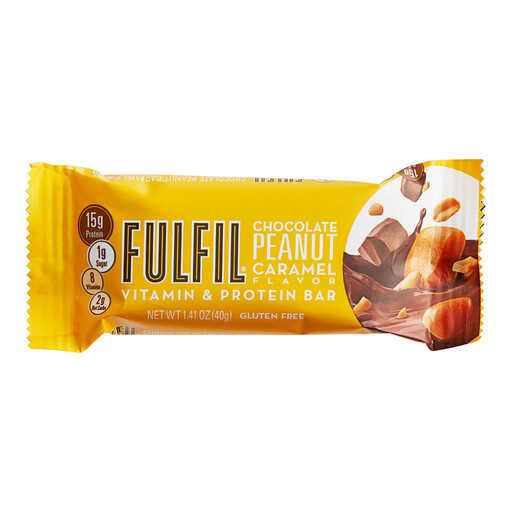 Image unavailable
Worth considering if you’re looking for 40 g bars for a snack. The title states 3 × 40 g, while the description mentions a box of 12 bars. Confirm the pack contents before buying and check the recipe label.
Start with their nutritional values per 100 g, then check the values for the serving you’ll eat. The DGCCRF explains that nutritional information per 100 g makes it easier to compare products; the values per bar then help you work out how much you’ll consume.
Don’t assume that a bar is a complete dinner just because it’s called a “protein” bar. Decathlon France states that its High Protein chocolate bar is a snack, not a meal replacement. Consider the bar as part of everything you plan to eat.
Read the ingredients list for the exact flavour and check which allergens are highlighted, as the DGCCRF advises for the labelling of relevant food products. Don’t assume that two bars in the same range have identical ingredients.
No. Compare the grams of protein and the weight of each serving. Kellogg's France lists 5.9 g of protein for its 28 g Special K Protein coconut and cashew bar, while Decathlon France lists 30 g for its 60 g High Protein chocolate bar. These are two specific products in two specific formats, not a rule that applies to all bars.
Follow the storage instructions and check the date shown on the packaging of the product you buy. For the Kellogg's recipes featured by Kellogg's France and Auchan France, the information consulted recommends storing them in a dry place. Always check the instructions on your product.