To fuel a marathon, choose your race food and drinks based on their carbohydrate content, rather than choosing a bar for its protein content alone. A protein bar is better suited to a post-workout snack or something to eat on the go. If you’re planning to eat one during your run, check the serving size and try it on a long run first.
Who is this guide for?
Runners planning their race-day fuelling
If you’re thinking of having a bar during a marathon or long run, its category alone won’t tell you what it’s best for. Compare the carbohydrates per serving with those in your other food and drinks, then try the format in training.
Anyone looking for a post-workout snack
A protein bar in a handy, portable portion can make a convenient snack after a session or while travelling. Check the nutritional information per bar, and don’t confuse it with the fuel you’ve planned for your race.
Anyone mindful of ingredients and tolerance
If allergens, polyols or how well you tolerate solid food during exercise affect your choice, check the ingredients and any may-contain warnings for the exact flavour. Try any new product before race day.
What should you prioritise when packing your bag?
Keep bars intended for fuelling during exercise separate from those you’ll have as a post-workout or on-the-go snack. Individually wrapped bars are easy to organise in your bag, but the packaging doesn’t tell you how much each bar provides.
Energy bar for running
Worth considering: if you’re looking for a portion with a carbohydrate content that fits your fuelling plan, and you’ve already tried eating this type of solid food on a run.
Bear in mind: depending on what you can tolerate, a solid bar may be less convenient to eat during exercise than other forms of fuel.
Protein bar for snacking
Worth considering: as a snack to take with you after a workout or while travelling.
Bear in mind: its protein content doesn’t mean it will provide enough carbohydrates for race-day fuelling.
| Priority |
What to check |
Who it’s for |
| Carbohydrates during exercise |
The carbohydrates per bar and how it fits with your other planned sources of fuel during the race. |
If I’m planning to eat a bar on a long run, I want to know how much it will actually contribute to my fuelling. Around 36% of shoppers put carbohydrate content first. |
| Post-workout snack |
The protein per serving, along with the bar’s other nutritional information. |
After a workout, I’m mainly looking for an easy-to-carry protein snack, not fuel for my next run. This is the priority for around 29% of shoppers. |
| Portable portions |
The number and weight of the bars, and whether they’re individually wrapped if you need to divide them between several bags. |
When packing my gym bag and snacks for a journey, I want to be able to count and carry the portions without repacking them. Around 21% of shoppers prioritise this format. |
| Ingredients and tolerance |
Allergens and may-contain warnings for the exact flavour; whether it contains polyols, and how much fibre and fat it provides. |
If a recipe doesn’t suit my dietary requirements or upsets my stomach on long runs, convenient packaging won’t solve the problem. Ingredients are the first consideration for around 14% of shoppers. |
What should you look out for?
-
Assuming “protein” means it’s suitable for fuelling a run
A bar’s name doesn’t tell you how many carbohydrates it provides during a race. For example, Auchan France’s product listing for a 45 g HiPRO caramel bar states that each bar contains 14.4 g of carbohydrates and 15 g of protein.
Plan your fuelling around the carbohydrates in each portion, then decide whether and when a protein bar fits in.
-
Choosing based only on the sugar content
Sugar content doesn’t tell you the total amount of carbohydrates or everything else in the bar. The recipe may also contain fibre, fat or polyols, all of which can affect your choice.
Compare the nutritional information for the portion you’ll eat, and read the ingredients list.
-
Relying on the brand instead of checking the exact flavour
Ingredients and may-contain warnings vary between products. The product listings checked mention milk, soya, peanuts, tree nuts and other allergens, depending on the bar.
Check the packaging of your chosen product every time you buy it, especially if you need to avoid an ingredient.
-
Trying a new bar on marathon day
A bar that’s easy to slip into your bag isn’t necessarily easy to eat during a long run. Texture, timing and how well you tolerate it all matter too.
Try the bar, the planned portion and the drink you’ll have with it during similar training sessions before adding it to your race-day fuelling plan.
Which brands should you compare?
Nature Valley
Carrefour France lists an assortment of four 40 g protein bars in individual wrappers.
- The individual wrappers make it easy to split the portions between bags.
- Check the carbohydrate content and allergens for your chosen flavour before deciding whether to include it in your fuelling plan.
HiPRO
Auchan France lists products including a 45 g caramel-flavoured protein bar.
- For this product, the listing states that each bar contains 15 g of protein and 14.4 g of carbohydrates.
- Check the ingredients and storage instructions to make sure the bar suits how you plan to use and carry it.
Eafit
E.Leclerc lists products including a 46 g Eafit chocolate protein bar.
- The single-bar format makes it easy to compare the weight of a snack with that of a multipack.
- Check the nutritional information and ingredients for the exact product before deciding when to eat it.
Carrefour Sensation
Carrefour France lists chocolate protein bars in packs of four 32 g bars.
- The number and weight of the bars help you plan the portions you’ll take with you.
- Check the nutritional information per bar and how each one is packaged for your intended use.
Bars to consider on Joybuy
These products cover two different uses: an energy bar to consider for fuelling during exercise, and protein bars to have as a post-workout or on-the-go snack. First decide when you’ll eat the bar, then compare the portions and ingredients.
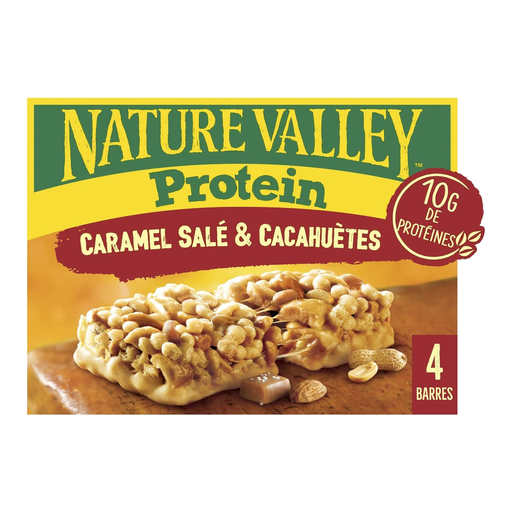 Image unavailable
Nature Valley Protein Bar salted caramel and peanuts, 4 × 40 g
Worth considering for snacks to take with you: this product comes as four 40 g bars in individual wrappers. If you’d like to eat one on a long run, check the carbohydrates per bar and try it in training first.
View on Joybuy
 Image unavailable
CLIF BAR Blueberry Energy Bar, 12 × 68 g
This energy bar is worth considering if you’re looking for a solid snack for long runs; the box contains twelve 68 g bars. Check the carbohydrates per bar, the packaging of each bar and how well you tolerate it before adding it to your fuelling plan.
View on Joybuy
 Image unavailable
Optimum Nutrition Marshmallow Crunch Protein Bar, 10 bars, 650 g
This box of ten protein bars could make a handy snack after a workout or while travelling. Before packing them in your bag, check the packaging of each bar. For running, check the carbohydrates per portion and the ingredients separately.
View on Joybuy
 Image unavailable
Andros Sport High-Protein Bar chocolate and peanut, 55 g
This 55 g bar is worth considering as a snack to take with you, rather than as your only source of carbohydrates during a marathon. Check the ingredients list, especially if peanuts are a consideration for you, and check the packaging before putting it in your bag.
View on Joybuy
 Image unavailable
nu3 Fit Protein Bar salted caramel, 55 g
This 55 g protein bar could be one to pack as a snack for a journey after a workout. To decide whether it’s also suitable to eat around a run, check the carbohydrates per portion, the ingredients and the packaging, then see how well you tolerate it.
View on Joybuy
Frequently asked questions
Is a protein bar enough to fuel you during a marathon?
Don’t assume it is: during prolonged exercise, the carbohydrates in the bar need to be considered alongside those in your other food and drinks. Check the amount per portion before adding it to your fuelling plan.
When is it better to take a protein bar?
A protein bar can be a handy snack after a workout or while travelling. To compare different products, check the nutritional information per bar, the ingredients and the format you’ll actually be carrying.
Which allergens should you check before packing a bar?
Read the ingredients list and any may-contain warnings for the exact flavour, rather than relying on the brand alone. Depending on the product, listings from Auchan France and Carrefour France mention milk, soya, peanuts or tree nuts, among other allergens.
How should you store bars for a journey?
Follow the instructions on each wrapper, as these can vary by recipe. Also check the date shown on the product and the conditions in which your bag will be stored.


