People comparing what they get after exercise
If you have a snack after a workout, the protein per bar tells you more than the name of the range. Check the sugars and allergens too, and don’t take a recovery claim as a guarantee of results.


If you need lunch on the go, a protein bar can complement your meal, but its convenient format doesn’t make it a complete lunch on its own. If your priority is comparing what you get after exercise, check the protein per bar rather than relying on the word ‘protein’ alone, then look at the sugars, portion size and allergens. Manger Bouger highlights the importance of variety at lunchtime.
If you have a snack after a workout, the protein per bar tells you more than the name of the range. Check the sugars and allergens too, and don’t take a recovery claim as a guarantee of results.
An individually wrapped bar is easy to carry. Even so, choose one based on its place in your lunch: as a snack, as part of a meal or as the only option available at the time.
Peanuts, tree nuts, milk, soya and cereals containing gluten vary between recipes. Check the ingredients and ‘may contain’ information for the specific product you plan to buy.
When choosing a bar for lunch or after a workout, start with what matters most to you, then compare the information per portion.
| Criteria | What to check | Who is it for? |
|---|---|---|
| Protein per bar | The grams of protein and sugars in the portion you’ll eat, as well as its weight. | After exercise, I want to know what my snack provides without relying on the product name alone; around 40% of consumers put protein per bar first when choosing. |
| Its place in your lunch | What the bar will go with and what other foods are available to make up your meal. | When my break is short, I’m looking for something easy to carry without automatically making a bar my entire lunch. This is the priority for around 40% of consumers. |
| Ingredients and allergens | The ingredient list for the exact recipe and any ‘may contain’ information. | If certain ingredients matter to me, the ingredients take priority over the format or protein content: around 20% of consumers make this compatibility their main criterion. |
Portion sizes vary. According to Auchan product information, the Isostar vanilla-cranberry bar contains 18 g of protein per 55 g, compared with 10.2 g per 40 g for Nature Valley Protein Peanuts & Chocolate and 9.1 g per 35 g for Kellogg’s High Protein Salted Caramel, calculated from the figures per 100 g.
Compare protein, sugars and weight for the same unit of consumption: one bar.
Being easy to carry doesn’t tell you whether a meal is varied. Manger Bouger recommends putting together a lunch with a variety of foods.
If you take a bar for lunch, think about what else you could have with it.
According to its Auchan product information, the Nature Valley Protein Peanuts & Chocolate bar, which is presented as gluten-free, contains peanuts, soya and milk, among other ingredients.
Check the ingredients and ‘may contain’ information for every recipe, even within a range you know well.
ANSES warns against the idea that everyday diets are always inadequate for achieving sporting goals. A bar’s name doesn’t tell you what effect it will have for any particular person.
Assess it as a food by comparing its ingredients and portion size, rather than treating it as a promise of results.
The 55 g vanilla-cranberry protein bar stands out here for the amount of protein listed for this particular product, but it isn’t a cereal bar that can be swapped like-for-like with other recipes.
The Protein Peanuts & Chocolate cereal bar comes in a single 40 g portion, for a snack or as part of lunch.
The High Protein Salted Caramel cereal bar comes in 35 g portions and is best considered as a snack rather than a complete lunch.
The chocolate recipe includes sunflower seeds, pumpkin seeds and almonds, among other ingredients. This is the kind of composition to check if these ingredients influence your choice.
This selection includes protein bars and an energy bar in handy formats. Whether you’re looking for lunch on the go or a snack after exercise, choose according to the product’s actual category, portion size and label information.
 Image unavailable
This pack is a convenient option if you’re looking for a snack to take with you after a workout. Compare the nutritional information per bar and check the allergens in this recipe. If you have one at lunchtime, plan to have other foods with it.
 Image unavailable
This individually wrapped bar can make a handy snack between meals or after training. If you’re comparing several bars, check the protein, sugars and other nutritional information for the 55 g portion, as well as the allergens.
 Image unavailable
This multipack of energy bars could be a handy snack to take with you when you’re being active. Each bar weighs 68 g. To compare it with a protein bar, check the nutritional values per portion rather than relying on the product category name.
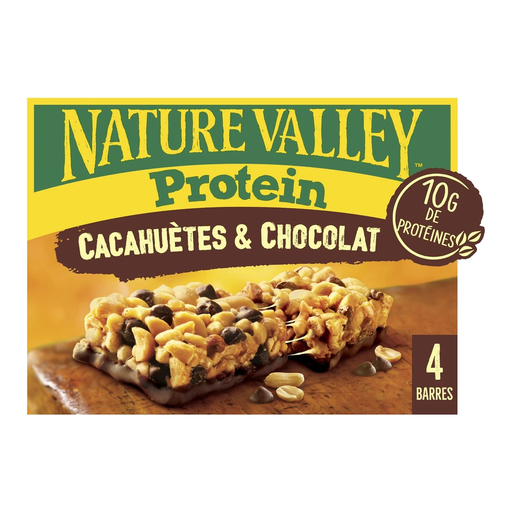 Image unavailable
The pack of four portions could suit a short break or complement your lunch. If protein is a priority, check how much there is in a 40 g bar and check the allergens in this product.
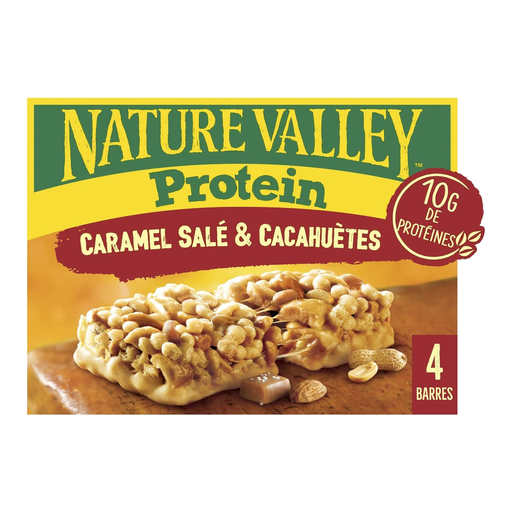 Image unavailable
This individually wrapped bar can accompany a lunch break, with other foods to complete the meal. Joybuy lists 10.4 g of protein per 40 g bar. Check the ingredients and allergens in this salted caramel and peanut recipe, which is different from the Peanuts & Chocolate version.
A bar isn’t automatically a complete lunch on its own. Manger Bouger emphasises variety at lunchtime; if you have a bar, consider what other foods you could pair it with to suit your situation.
Start by comparing the protein per bar to see what you’ll get from the portion you’re going to eat. Then look at its weight, sugars and ingredients, without assuming that a ‘recovery’ claim guarantees an effect on your performance.
No: a gluten-free description doesn’t tell you about other allergens. The Nature Valley Protein Peanuts & Chocolate recipe described by Auchan also contains peanuts, soya and milk. Always check the label for the exact product.
It isn’t enough to establish how a bar will affect you in your particular situation. The DGCCRF notes that nutrition and health claims on food are regulated, while the European Commission lists the permitted claims and the conditions for using them. When choosing, rely on the ingredients and portion size shown on the label.