Who is this choice for?

Parents choosing a snack

They want to understand where a chocolate bar fits into their child’s diet, rather than making it a daily snack just because it carries a protein claim. Manger Bouger advises limiting foods that are high in fat and sugar, and adapting children’s diets to their age.

Parents of sporty teenagers

They’re comparing a convenient snack to take along for a sports activity. However, the amount of protein listed on a bar doesn’t, on its own, tell you what a teenager needs or guarantee better recovery.

Shoppers keeping an eye on sugar and ingredients

They want to compare sugar content without overlooking sweeteners and allergens. Ingredients vary by recipe, so always check the list on the packaging of the specific product you choose.

What should you compare before buying?

When choosing a bar for a child, first consider how it fits into their snack, then check the portion size and ingredients of the specific recipe. A protein claim is no substitute for making these comparisons.

Consideration What to check Who is this for?
How it fits into a snack The whole portion and the nutritional values per 100 g, particularly sugar and energy. For an everyday snack, the priority is not to make a chocolate bar the automatic choice. Around 50% of shoppers would put its place in a child’s diet first.
A snack around sports The protein content per bar, as well as the ingredients in that same portion. If a teenager wants to take a snack along for an activity, convenience matters, but it doesn’t guarantee better recovery. This would be the main consideration for around 20% of shoppers.
Sugar and ingredients Sugar per 100 g and per bar; the ingredients list, allergens and any warnings. If the choice depends mainly on sugar content or an ingredient to avoid, the exact recipe matters more than the range name. Around 30% of shoppers would prioritise these points.

Mistakes to avoid

  • Assuming “high in protein” means a balanced snack

    Under EU rules on nutrition claims, this wording means a product meets a criterion relating to the proportion of energy provided by protein. On its own, it says nothing about sugar, fat or how the bar fits into a snack.

    Compare the nutritional values per 100 g and for the whole bar. For children’s snacks, Manger Bouger recommends limiting foods that are high in fat and sugar.

  • Making your decision based only on the Nutri-Score

    France’s Ministry of the Economy states that displaying the Nutri-Score is optional in France. So its absence doesn’t mean a bar is illegal or less suitable.

    If it appears on the packaging, use it to compare similar products. Check the nutrition declaration and ingredients too.

  • Overlooking sweeteners and warnings

    A lower sugar content doesn’t tell you everything about a product’s ingredients. Carrefour’s listing for a Barebells Soft Protein Bar includes a warning about the possible laxative effects of excessive consumption. This applies to that specific product.

    Read the ingredients list and warnings for the bar you’re considering, rather than generalising from a different recipe.

  • Relying on the flavour to assess allergens

    Recipes for protein bars listed by Carrefour include milk, soya, peanuts or nuts, depending on the product. Changing the flavour may also change the ingredients and warnings.

    Check the label on every pack you buy, particularly if there’s an ingredient that needs to be avoided.

A few ranges to know

Snickers Hi Protein

A range of protein bars inspired by Snickers; nutritional values vary by variant.

  • Carrefour’s listing for the Low Sugar variant states 20 g of protein, around 2 g of sugar and 217 kcal per 57 g bar.
  • These figures apply to this specific variant, not classic Snickers bars or the entire range. Check the recipe and allergens for the product you choose.

Mars Hi Protein

A Mars range of protein bars for people comparing this type of snack.

  • The range name distinguishes these bars from classic Mars chocolate bars.
  • Don’t assume figures given by a retailer for a Snickers Hi Protein product also apply to Mars Hi Protein. Check the label for the specific Mars bar and flavour.

FULFIL

A range of chocolate protein bars with several different recipes.

  • Carrefour states that the chocolate and salted caramel recipe listed contains 20 g of protein and 1.5 g of sugar.
  • The weight shown differs from the weight in the description on this listing. Check the portion size on the packaging before comparing values per bar.

Barebells

A range of protein bars marketed as snacks, with each recipe worth checking separately.

  • Carrefour’s listing for the Soft Protein Bar salted caramel identifies the specific product and its warnings.
  • The listing warns of possible laxative effects if consumed in excess. Also check the ingredients and allergens in the recipe you buy.

A protein bar on Joybuy

This selection features a chocolate protein bar to consider if you’re looking for a portable snack for a teenager. On its own, it doesn’t help you decide between protein bars and classic chocolate bars for a child’s snack.
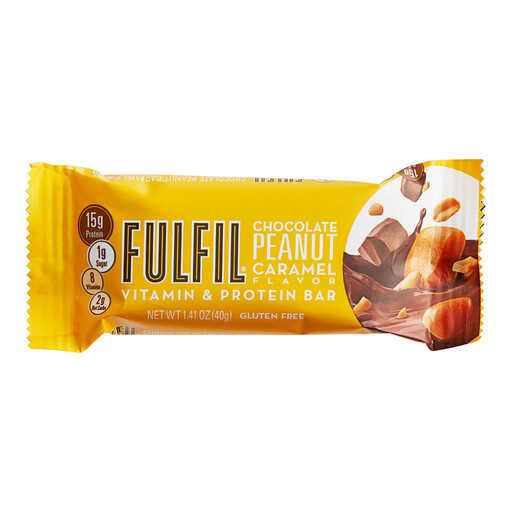
FULFIL chocolate, peanut and caramel protein bar

FULFIL Protein Bar Chocolate Peanut & Caramel, 3 × 40 g

Consider it as a portable snack to have around a sports session, but don’t assume it meets the nutritional needs of a particular teenager. The title says 3 bars of 40 g, while the accompanying description suggests a different pack size, so check how many bars are included. Also check the packaging for nutritional values per 100 g, polyols, allergens and any warnings.

View on Joybuy

Frequently asked questions

Does the “soda tax” apply to a chocolate bar?

No, not under the drinks tax set out in Article 1613 ter of the General Tax Code, published on Légifrance: a solid chocolate bar is not a drink. However, its sugar content is still worth comparing when choosing a snack.

Does a chocolate bar have to display the Nutri-Score in France?

No. France’s Ministry of the Economy says the Nutri-Score logo is optional, while a nutrition declaration is compulsory for prepacked foods. If the logo isn’t displayed, check the nutrition table and ingredients list.

How do you compare two bars of different sizes?

First compare their values per 100 g, then compare the values for each whole bar: energy, sugar, fat including saturates, protein and salt. The DGCCRF states that nutrition declarations for prepacked foods are given per 100 g or 100 ml. Values per portion then help you take account of the amount you’ll eat.

What should you check if a child needs to avoid an allergen?

Read the ingredients and allergen information on the packaging of the exact product, including whenever the flavour or format changes. Carrefour’s listings for some FULFIL recipes mention milk, soya, peanuts or nuts, for example. Their presence varies by product.