
Livraison le jour même ou le lendemain

Qualité garantie

Débloquez vos offres de bienvenue: Livraison GRATUITE | Jusqu'à -80 % | 30 jours d'essai gratuits à JoyPlus
Téléchargez l'application
A protein energy bar slips easily into a gym bag, a jersey pocket or a desk drawer. But not all bars are designed for the same purpose. A bar rich in carbohydrates is better suited to endurance exercise, while a protein snack is more appropriate after a workout. Meal bars, on the other hand, are formulated to occasionally replace a meal.
Before ordering a pack of protein bars, it’s worth keeping three common pitfalls in mind.
The right approach is to choose the bar based on when you plan to eat it: before training, during prolonged activity, after your session, or to occasionally replace a meal.
For a sports nutrition bar intended for running, cycling or hiking, carbohydrates usually play a central role, especially during endurance exercise. The CLIF bars featured here provide, per 68 g bar, approximately 256 to 265 kcal, 35 to 39 g of carbohydrates and 9 to 11 g of protein, depending on the flavour.
After training, a bar providing 15 to 20 g of protein can be more relevant for a satisfying snack. The FULFIL bar (40 g) gives you 15 g, while the nu3 bar (55 g) provides 17.6 g. Always compare these figures per equivalent serving, not just per 100 g.
Look through the ingredients list, which is presented in descending order by quantity. Chocolate protein bars may contain milk, soya, collagen, cereals or tree nuts. Some use maltitol, sorbitol or other polyols. These ingredients help reduce the stated sugar content, but they aren’t necessarily well tolerated by everyone when consumed in large amounts.
An energy bar based on oats and rice syrup will often have a softer texture and a useful carbohydrate content. Conversely, a bar high in protein and low in sugar may work well between meals, but less so as a main energy source during a long outing.
For nutrition on the go, check the weight of each bar, whether it comes individually wrapped, and the storage conditions. A pack of 12 x 68 g bars is suitable for regular consumption, while a 40 to 55 g format is easier to fit in a bag.
The “Contains” and “May contain traces of” statements should be taken seriously. The bars featured here contain peanuts, milk, soya, almonds, hazelnuts or oats. If you have an allergy or intolerance, always rely on the label of the product you receive rather than its online description.
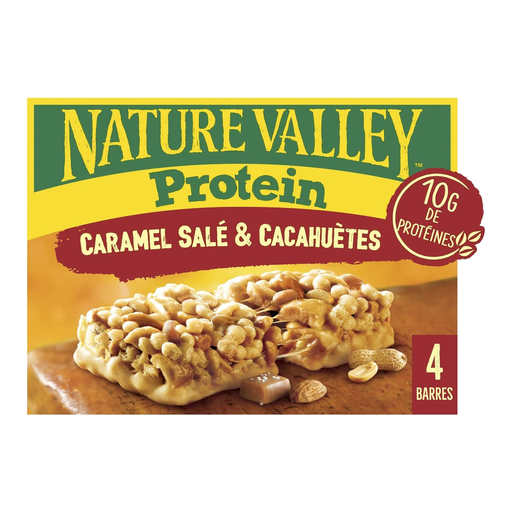
Why this choice suits this profile: With four individual portions, this pack lets you try a salted caramel bar without committing to a large quantity straight away. Each 40 g bar provides 10.4 g of protein and 198 kcal.
The values given per serving prevent you from confusing the figures per 100 g with what you actually eat. The allergens listed are peanuts, soya, milk and almonds.
Individual portions, 4.3 g of fibre per bar and a handy format for journeys or a desk break.
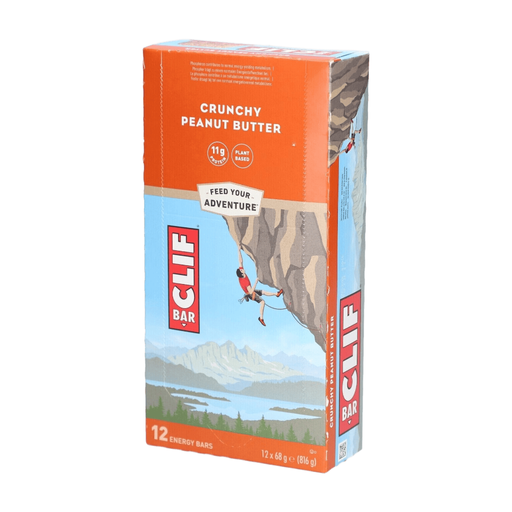
Why this choice suits this profile: This pack is aimed at people who regularly eat an energy bar before, during or after activity. The flavour combines peanut butter with peanut pieces.
The nutritional information clearly states 265 kcal, 35 g of carbohydrates, 11 g of protein and 5.2 g of fibre per 68 g bar.
A pack of 12, an oat-based recipe and 11 g of protein per bar. Contains oats, barley, soya and peanuts.
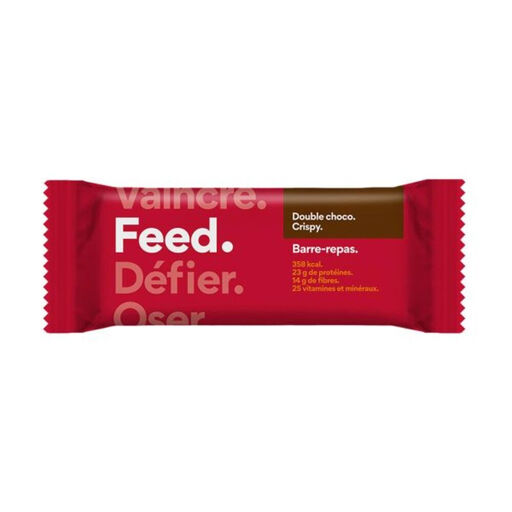
Why this choice suits this profile: This 100 g meal bar is designed for days when organising a proper meal is tricky. It provides 405 kcal and 23 g of protein per 100 g.
It is presented as a meal replacement, not simply a protein bar. The product page recommends incorporating it into a varied and balanced diet.
A 100 g format, chocolate pieces stated at 12 % and a contribution of vitamins and minerals. Contains gluten and milk.
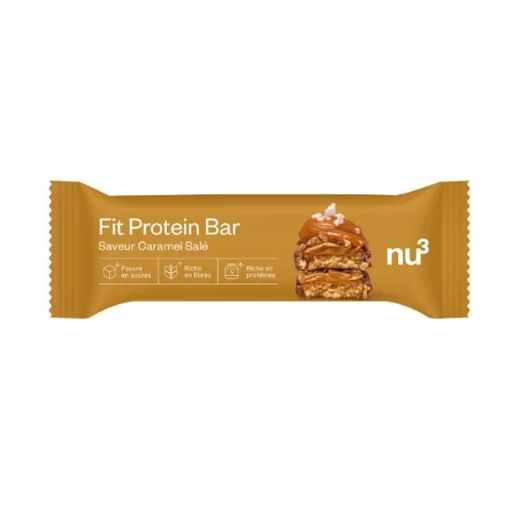
Why this choice suits this profile: Its 55 g size and nutritional profile make it a handy option after a gym session, fitness class or while travelling.
The product page clearly distinguishes the 17.6 g of protein, 2.3 g of sugars and 12.1 g of polyols per bar. This data helps you better assess the product’s use and your tolerance.
A salted caramel flavour, 189 kcal per bar and 4.3 g of fibre. Contains milk, soya and almonds.
We’ve put together a comprehensive, real-time selection of products that meet these exacting criteria and comply with European safety regulations.
Before exercise, choose a bar containing carbohydrates if you want an easy snack to take with you. During a long activity, pick a product that’s easy to chew and that you’ve tried before. After training, a bar higher in protein can complement a snack, without necessarily replacing a balanced meal every time.
It depends on the date on the packaging and the storage conditions. Keep bars in a dry place, at a moderate temperature and away from sunlight. An opened bar should generally be eaten quickly, especially if it contains moist ingredients that give it a soft texture.
Only bars labelled as meal bars or meal replacements are designed for this purpose, according to the manufacturer’s instructions. A standard protein bar remains a snack. Before using one occasionally in place of a meal, check its calorie, protein, carbohydrate, fibre, vitamin and mineral content.