People who exercise and want to compare protein content
Whether you’re looking for a post-workout or late-night snack, you want to check the protein per serving, the energy content and whether the ‘high protein’ claim can be verified.


When choosing a chocolate bar for its protein content, compare protein and energy per serving. Under the EU regulation published on EUR-Lex, a ‘high protein’ claim requires protein to provide at least 20% of the product’s energy. For a late-night snack, also check the sugars, serving size, ingredients and allergens; the word ‘protein’ on the pack doesn’t answer these other questions.
Whether you’re looking for a post-workout or late-night snack, you want to check the protein per serving, the energy content and whether the ‘high protein’ claim can be verified.
You enjoy chocolate, caramel and peanut flavours, but want to tell a classic chocolate bar apart from one chosen for the proportion of its energy that comes from protein.
The presence of milk, soya, peanuts, tree nuts or sweeteners may matter more to your choice than the advertised protein content.
Start with the serving you plan to eat, then compare its protein content with the sugars, energy and ingredients.
| Criteria | What to check | Who is it for? |
|---|---|---|
| Proportion of protein | Compare protein and energy for the same serving. Under the EU regulation published on EUR-Lex, ‘high protein’ requires at least 20% of the energy to come from protein. | After exercising, I want to know whether the bar I’ve chosen really meets my needs for a protein-rich snack, rather than relying on the product name alone. Around 46% of consumers would put this check first. |
| Sugars and energy | Check the sugars and energy per serving, then compare the sizes of the bars you’re considering. | For a late-night snack, I prefer to know what the whole bar contains before deciding. This would be the priority for around 36% of consumers. |
| Ingredients and allergens | Check the ingredients list, allergens, ‘may contain’ warnings and sweeteners on the packaging. | If certain ingredients don’t suit me, the composition comes before the flavour or protein content. Around 18% of consumers would first need to check whether the product is suitable for them. |
A protein figure in grams, taken on its own, doesn’t prove that a bar meets the criteria for a ‘high protein’ claim.
Use the protein and energy figures for the same serving: multiply the grams of protein by 4 kcal, then divide the result by the kcal in that serving. Under the EU regulation published on EUR-Lex, the threshold for this claim is 20%.
In France, Nutri-Score is a voluntary label, as Santé publique France explains. Its absence doesn’t tell you what a bar contains.
If it appears on the packaging, use it as an additional guide. To compare two servings, also check their nutrition information and ingredients.
Depending on the product, recipes mentioned by Carrefour France and Auchan France include milk, soya, peanuts or almonds. You can’t tell what a bar contains from its protein content alone.
Check the allergens and any ‘may contain’ warnings on the packaging of the bar you choose.
Carrefour France includes a chocolate and coconut bar from this brand in its sports nutrition range.
A chocolate and almond bar from Nutri&Co is listed on Carrefour France by a partner seller.
Carrefour France features a bar combining seeds, almonds and dark chocolate.
Its classic chocolate, caramel and peanut bar offers a point of comparison with bars chosen for their protein content.
These products suit anyone looking for protein bars in chocolate-inspired flavours for a post-workout or late-night snack. Compare the serving size and ingredients of each variety before choosing.
 Image unavailable
If you’re considering a chocolate and peanut bar after exercising, this 55 g format makes it easy to compare a whole serving. Check the packaging for its nutrition information, allergens and any sweeteners.
 Image unavailable
If you fancy a salted caramel snack, compare the nutrition information for this 55 g bar with the other formats you’re considering. Also check the packaging for allergens and sweeteners.
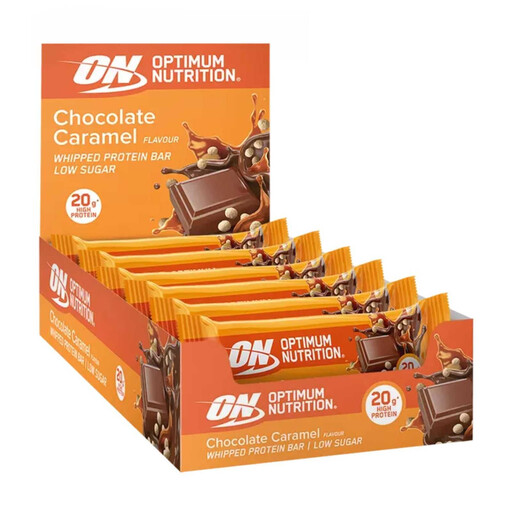 Image unavailable
If you’re looking for a multipack in a chocolate and caramel flavour, compare the figures per 60 g bar rather than for the whole pack. Also check the allergen information and sweetener list.
 Image unavailable
For a recipe sold as Marshmallow Crunch, check the figures for the bar you’ll eat rather than the 650 g pack. Also check the ingredients and allergens if they’re important to your choice.
 Image unavailable
If you prefer the combination of peanut and salted caramel, first check that the figures per serving match the format shown on the packaging. Check the allergens too, especially if peanuts affect your choice.
Under the EU regulation published on EUR-Lex, protein must provide at least 20% of a food’s energy for this claim to be used. To check the figures for a serving, multiply the grams of protein by 4 kcal, then divide by the kcal in that same serving.
No. Santé publique France explains that displaying a Nutri-Score is voluntary. The European Commission states that nutrition declarations are required for most pre-packed foods. To compare bars, check the energy, sugars and protein on the same basis.
Check the ingredients, allergens and any ‘may contain’ warnings on the packaging of the product you choose. The bar recipes mentioned by Carrefour France and Auchan France contain different ingredients, including milk, soya, peanuts or almonds, depending on the product.