People looking to round out a quick lunch
If you’re short on time or don’t have a kitchen at work, an individually wrapped bar can go with other foods. On its own, it doesn’t provide the variety of a lunch as described by Manger Bouger.


For lunch at work, a protein bar is better suited as a snack or an addition to your meal than as a meal on its own. Manger Bouger recommends putting together a varied lunch. When choosing a portion to take with you, check the nutritional information, ingredients and allergens. A multipack of individual bars lets you plan several breaks without changing the role each bar plays in your meal.
If you’re short on time or don’t have a kitchen at work, an individually wrapped bar can go with other foods. On its own, it doesn’t provide the variety of a lunch as described by Manger Bouger.
If this is your main priority, compare the protein content per bar and per 100 g. A heavier serving and a higher protein content per 100 g don’t answer the same question.
Whether you’re choosing based on ingredients you like or avoiding an allergen, check the recipe for each product and flavour, including those in an assortment. Fibre and other ingredients vary from bar to bar.
First decide what role the bar will play in your lunch, then compare specific portions and recipes rather than relying on the word “protein” alone.
| What matters | What to check | Who is it for? |
|---|---|---|
| Its place in your lunch | Plan what you’ll have with the bar if it’s part of your lunch break. | When I have a quick lunch at work, I want a convenient portion without making the bar my only food. Around 40% of consumers prioritise what their lunch is made up of. |
| Protein per portion | Check the amount per bar you’ll eat, then the value per 100 g to compare different pack sizes. | If my main aim is to know how much protein I’m taking with me, the amount per portion matters more than a claim on the packaging. This is a priority for around 30% of consumers. |
| Ingredients and allergens | Check the ingredients list, allergens, possible traces and fibre in the recipe you choose. | A flavour I like isn’t enough if its ingredients don’t suit my dietary requirements. Checking ingredients is the main concern for around 20% of consumers. |
| Portions for several days | Check how many bars are in the pack, their individual weight and which flavours it contains. | If I want to keep several snacks at work, I’m mainly looking for individual portions in flavours I’ll enjoy. Around 10% of consumers prioritise this kind of planning. |
The protein content alone doesn’t tell you what your lunch will consist of. Manger Bouger encourages people to eat a variety of foods at lunchtime.
Before you buy, decide whether the bar will be a snack or an addition to a meal, and plan other foods accordingly.
Bars that weigh different amounts can’t be compared using only the grams of protein per bar.
Check the nutritional values per 100 g, then those for the portion you plan to eat, especially the protein, sugars, fat and salt.
Depending on the recipe, the products listed by Carrefour and Auchan contain milk, peanuts, soya or nuts. The ingredients in one flavour don’t tell you what’s in another.
Check the ingredients, allergens and any “may contain” information for every bar in the pack before putting it in your desk drawer.
A product listing or catalogue doesn’t guarantee that the bar will be available when you’re planning your lunches.
Before planning several days around the same pack, check that it’s currently available and how many portions it contains.
Carrefour’s Carrefour Sensation range includes, among other products, a 45 g individually wrapped bar.
Carrefour stocks Nature Valley bars in individual wrappers, including an assortment of four 40 g portions.
Auchan stocks a 50 g InShape Nutrition bar with peanuts and dark chocolate.
E.Leclerc Parapharmacie stocks a box of six Milical chocolate bars.
E.Leclerc stocks, among other products, a 46 g Eafit chocolate protein bar and a 90 g “gainer” bar.
These bars are suitable for taking to work individually or as part of a multipack. Choose the portion and recipe that suit you, whether you want a snack or something to add to your lunch.
 Image unavailable
This multipack is a good choice if you want to keep several individually wrapped bars ready to take to work. Each bar weighs 60 g. Check the nutritional information and allergens for the recipe before adding it to your lunch.
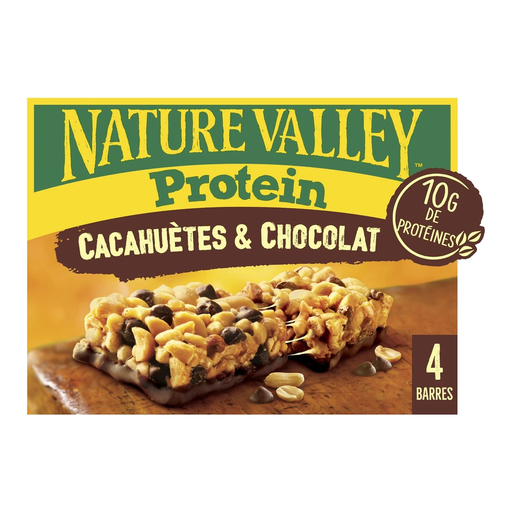 Image unavailable
This pack gives you four portions for separate breaks at work. Each bar weighs 40 g. Check the recipe and nutritional values for this portion size.
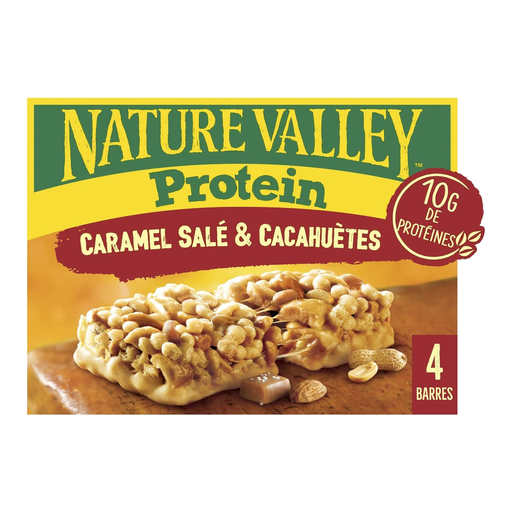 Image unavailable
This format is a good choice if you want several individual portions of the same flavour to keep at work. The pack contains four 40 g bars. Check the ingredients list in particular if you need to avoid certain allergens.
Don’t assume it’s a complete lunch. Manger Bouger recommends a varied lunch break, so if you take a bar with you, decide how it fits in with the other foods in your meal.
Compare their nutritional information per 100 g, then check the values for the portion you’ll eat. The DGCCRF says that nutrition declarations include energy, fat, sugars, protein and salt, among other details.
Check the ingredients, highlighted allergens and any “may contain” information for every recipe, even within an assortment. The Ministry of the Economy reminds consumers that allergenic ingredients must be identified and highlighted on the label.
Yes, if the number of portions, their weight and each recipe suit what you want to take with you. A multipack makes it easier to plan several snacks, but you should still consider how each bar fits into the lunch you’re having it with.