People planning a break between meetings
A bar is easy to carry when you fancy a quick bite. If protein content matters to you, check how much protein is in the whole bar, along with its sugar and fat content.


For a quick bite at work, choose a protein cereal bar by comparing the protein per bar first, then the sugars, fat, energy and allergens. If you’re having one as a quick lunch, think of it as part of a meal and add something else depending on how hungry you are. The words ‘high protein’ alone don’t tell you everything about what’s in it.
A bar is easy to carry when you fancy a quick bite. If protein content matters to you, check how much protein is in the whole bar, along with its sugar and fat content.
The format can be handy to take to work. Compare the protein per serving, but don’t assume that the words ‘high protein’ prove it will help with recovery.
The recipes mentioned may contain milk, soya, peanuts or tree nuts. Check the ingredients and allergens for the exact recipe, including when you switch flavour.
Start with the portion you’ll actually eat, then use the nutritional information to compare recipes that come in different weights.
| What to consider | What to check | Who is this useful for? |
|---|---|---|
| Protein per bar | The grams of protein and the serving weight, rather than just the figure per 100 g. | For an easy-to-carry snack, you’ll want to know how much protein is in the bar you’ll eat. Around 31% of consumers would put the amount per serving at the top of their list of priorities. |
| What’s in the snack | Energy, sugars, fat, fibre and salt per serving; figures per 100 g make it easier to compare. | If the bar is part of my lunch, its overall nutritional profile matters just as much as its protein. This would be the main consideration for around 25% of consumers. |
| Ingredients to avoid | The ingredients list, highlighted allergens and, if needed, whether the exact recipe is labelled gluten-free. | Before comparing nutritional content, I need to rule out any recipe containing an ingredient I avoid. Around 25% of consumers would put this compatibility first. |
| Format for work | The weight and number of bars in the pack, as well as storage instructions. | If I want to keep a snack in my bag or desk drawer, I’m mainly looking for a format that suits my breaks. This convenience would be the top priority for around 19% of consumers. |
A protein claim doesn’t tell you how much sugar or fat the bar contains, and it doesn’t automatically make it a complete meal.
For a lunch break, compare the nutritional information per bar and decide what you’d like to have with it, depending on how hungry you are.
The products reviewed may also contain peanuts, milk, soya or tree nuts. The fact that a bar contains cereal doesn’t tell you what else is in it.
Read the ingredients list for the exact recipe whenever you switch product or flavour. The DGCCRF reminds consumers that allergenic ingredients must be listed and highlighted.
Two bars of different weights may show similar figures per 100 g without providing the same amount in the portion you eat.
Use the figures per 100 g to compare recipes, then check the figures per bar to choose your snack.
Some recipes contain polyols. Joybuy Insights notes that consuming a lot of polyols may cause digestive problems for some people.
If this is a concern for you, check the ingredients and the amount of polyols listed for the portion you plan to eat.
Kellogg's France offers products including a 35 g High Protein Salted Caramel bar and a 28 g Special K Protein Coconut, Cocoa & Cashew bar.
The Protein range includes peanut-based bars, including a Salted Caramel & Peanuts recipe in a 40 g serving.
Auchan France lists an Eat Natural protein cereal bar with peanuts, almonds, caramel and sea salt, described as gluten-free.
Auchan France lists Eat'N Move caramel protein cereal bars in a pack of 5 × 32 g.
These two Nature Valley Protein formats, each containing four 40 g bars, are handy for a snack at work. If you’re having one for lunch, check the nutritional profile of the recipe you choose and what you’d like to eat with the bar.
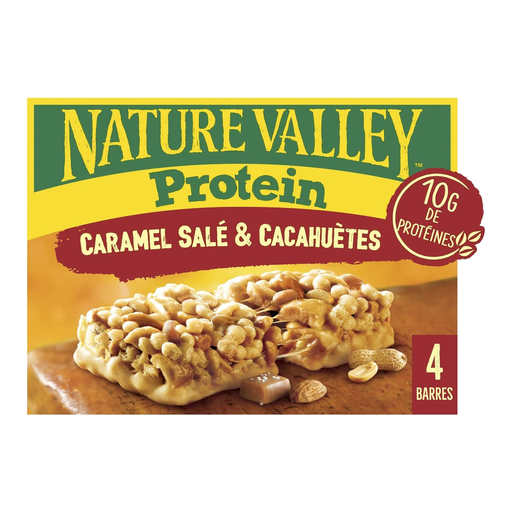 Image unavailable
A format to consider for a quick bite at work, if this recipe fits your ingredient preferences. The Joybuy France listing gives 10.4 g of protein per 40 g bar; check the other nutritional values and allergens before buying, too.
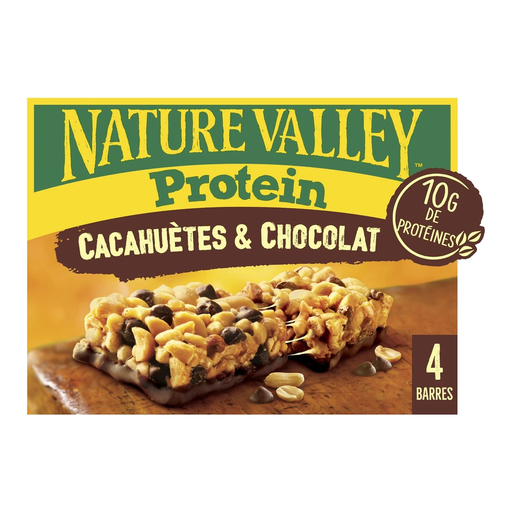 Image unavailable
This pack of four 40 g bars is another format to consider for breaks at work. Check the exact recipe, its protein per bar, other nutritional values and allergens to see whether it meets your needs.
No. The DGCCRF reminds consumers that nutrition claims are regulated, but this claim doesn’t describe the whole nutritional profile. Compare the protein, energy, sugars, fat, fibre and salt per serving.
Don’t automatically consider it a complete lunch. A bar can be a snack or part of a lunch that you add to depending on how hungry you are. Check the serving size and nutritional profile rather than relying on the name alone.
First compare the nutritional information per 100 g, then check the amounts per bar to see what you’ll get in the portion you eat. The DGCCRF states that nutritional information is given per 100 g or 100 ml.
Check the exact recipe: the products mentioned may contain peanuts, milk, soya or tree nuts, and some contain cereals with gluten. Always check the ingredients list, even if you already know the brand.
No. Sugar content alone isn’t enough to make your choice. Check the serving size and the rest of the nutritional profile, including any polyols listed. Joybuy Insights notes that consuming a lot may cause digestive discomfort for some people.