
Livraison le jour même ou le lendemain

Qualité garantie

Débloquez vos offres de bienvenue: Livraison GRATUITE | Jusqu'à -80 % | 30 jours d'essai gratuits à JoyPlus
Téléchargez l'application
Between a protein bar, an energy bar and a complete meal bar, the differences go far beyond taste. Whether you are a runner, cyclist, fitness enthusiast or hiker, the right choice depends mainly on when you plan to eat it, the nutritional intake you are looking for, and any dietary restrictions you may have.
Packaging often highlights a high protein content, a low sugar level or the addition of vitamins. However, these claims deserve to be put into context. Here are the criteria to examine so you can avoid making unsuitable purchases.
A bar that is high in protein is not necessarily designed to provide fast carbohydrates during prolonged exercise. Endurance-focused products usually contain more carbohydrates, such as CLIF bars made with oat flakes and syrups.
Conversely, a protein snack eaten after a workout may focus more on protein and fibre, with a more limited amount of carbohydrates. For a bike ride or a multi-hour hike, check the energy content per serving and the carbohydrate amount, rather than relying solely on the protein level.
A low-sugar protein bar may contain polyols such as maltitol, sorbitol or isomalt. These substances replace some of the sugars, but they must be listed separately in the nutritional table. In large quantities, they can also cause digestive issues for some people.
Always compare, for the same serving:
The phrase "no added sugars" does not necessarily mean the product is low in carbohydrates or low in calories.
Peanuts, milk, soya, nuts, oats, barley and wheat are very common in protein and energy bars. If you have an allergy or need to avoid certain ingredients, read the ingredient list carefully, as well as any "may contain traces" statement.
The size also matters. A 40 g bar, a 55 g bar and a 100 g meal bar do not serve the same purpose. Individual portions slip easily into a sports bag, while a pack of 12 units can reduce the price per portion if you regularly consume this type of product.
For a post-workout snack, start by looking at the amount of protein per bar. The products in this selection provide between 9 and 22 g per serving, depending on their weight and category. A 40 g bar containing 10 g of protein is not in the same league, in absolute terms, as a 100 g bar that provides 22 or 23 g.
The source of protein can also vary: milk protein, whey, soya, pea, hydrolysed collagen or a blend of several sources. This is information to consider if you are vegetarian or wish to avoid certain ingredients.
Before or during an endurance activity, an energy bar rich in carbohydrates may be more suitable than a bar that is very high in fibre or polyols. CLIF bars of 68 g provide around 256 to 265 kcal each, with a substantial amount of carbohydrates.
For a break between meals, a 40 to 55 g bar will often be easier to fit in. If you are looking for a recovery bar after training, look at both the protein content, the total energy intake and how digestible it feels. Try a new product during an ordinary session, not on the morning of a competition.
In France, the label must show the list of ingredients, allergens highlighted, the nutritional declaration, the net quantity, the best-before date — or the use-by date where applicable — as well as storage conditions.
Nutritional claims such as "high in protein" or "source of fibre" are governed by European regulations, notably Regulation (EC) No 1924/2006. They do not replace checking the nutritional table. Store bars in a cool, dry place away from sunlight, following the manufacturer's recommendations.
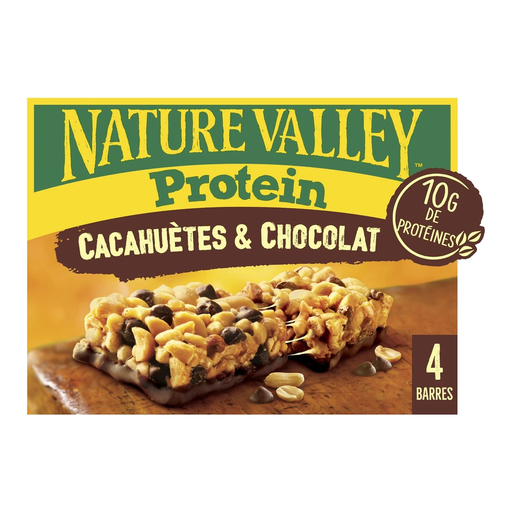
Why this choice suits this profile: Its format of four individual portions lets you try a protein bar without committing to a large box straight away. Each bar provides 10.2 g of protein and 4.4 g of fibre.
The quantity is stated per 40 g bar, making it easier to compare with the actual amount consumed, rather than just the percentage shown.
Peanuts and chocolate, 196 kcal per portion, individual sachets and 6.9 g of sugars per bar.
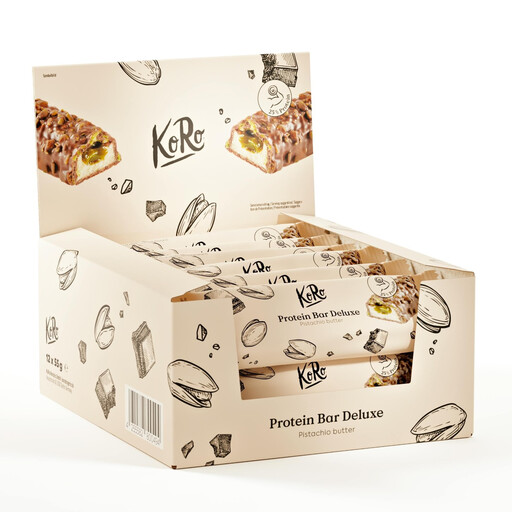
Why this choice suits this profile: Its pistachio filling and milk chocolate coating appeal to those looking for a refined texture and a flavour close to dessert.
The table clearly separates the 2 g of sugars from the 12 g of polyols per 55 g bar: these two figures should not be confused.
14 g of protein, 220 kcal and 5 g of fibre per bar. The presence of milk, pistachios and soya should be noted.

Why this choice suits this profile: The pack of 12 bars is ideal for cyclists, runners and hikers who regularly need an energy boost during long outings.
This is a bar designed to provide energy, with 38 g of carbohydrates and 11 g of protein per 68 g serving: it does not present itself as a simple low-sugar snack.
256 kcal, 5 g of fibre and a blueberry flavour. The presence of oats, soya, barley, almonds and milk should be checked according to your diet.
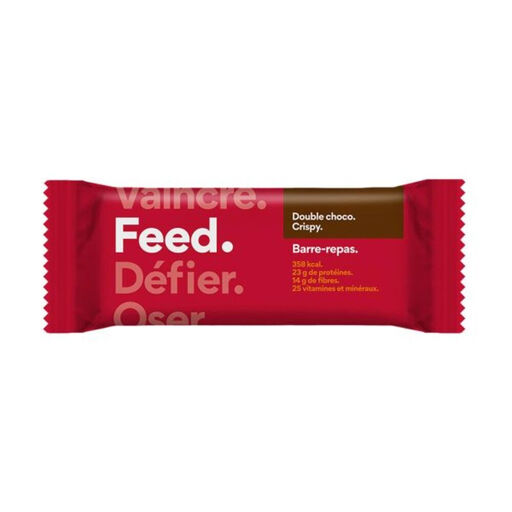
Why this choice suits this profile: This complete meal bar at 100 g is suitable for days on the move, short breaks or activities that require a more substantial product than a standard snack.
Its 100 g format and composition enriched with vitamins and minerals clearly set it apart from a small snack bar.
405 kcal and 23 g of protein per 100 g. Contains oats and milk; to be consumed as part of a varied and balanced diet.
We have put together a complete selection, updated in real time, of products that meet these demanding criteria as well as European food safety regulations.
It can serve as a snack between meals or be eaten after a session, depending on its composition and your needs. Before or during an endurance effort, look instead at its carbohydrate content and how digestible it is.
Not necessarily. Low-sugar recipes sometimes contain polyols or sweeteners. Check the ingredient list and start with a moderate portion if you do not usually consume them.
A complete meal bar is designed for a different purpose than a standard protein snack. Check the manufacturer's recommendations, the energy content and the allergens, then accompany it with water. However, it does not replace a varied and balanced diet throughout the day.