People planning a post-workout snack
If you take a snack with you for after your workout, check the amount of protein listed for the whole bar, then look at its size and the rest of its nutritional information. A bar is a snack, not a meal.


For Friday drinks and nibbles, a protein cereal bar is best suited as an individual snack, not something to share. If the amount of protein per serving matters more to you, particularly for a post-workout snack, compare the different recipes without overlooking the bar size, other nutritional values and allergens.
If you take a snack with you for after your workout, check the amount of protein listed for the whole bar, then look at its size and the rest of its nutritional information. A bar is a snack, not a meal.
An individually wrapped bar can satisfy a small appetite on a Friday. However, the recipes featured here are individual sweet snacks; they may not be a substitute for food to share.
Before offering a bar to someone, check the exact recipe, particularly if they have an allergy or avoid milk, soya, peanuts or tree nuts.
To compare a cereal bar with a protein bar, start with how you plan to use it: the portion you’ll eat, the ingredients you’re happy with and how the snack fits in with your drinks and nibbles.
| Criteria | What to check | Who is it for? |
|---|---|---|
| Protein per serving | The grams of protein per bar and the serving weight; to compare two different sizes, also check the values per 100 g. | After a workout, I want to know what the bar I’ll actually eat provides. Around 36% of consumers rank this amount per serving as their top priority. |
| Ingredients and allergens | The ingredients list and allergens for the flavour you’ve chosen, particularly milk, soya, peanuts and tree nuts. | If a bar needs to be suitable for a guest with an allergy or dietary restriction, its recipe matters more than the word “protein”. This is the main requirement for around 29% of consumers. |
| Nutritional profile | Energy, sugars, fat and salt per serving and per 100 g, as well as any sweeteners. | A high protein content isn’t enough on its own to make me choose a bar: I also want to check the other values and the ingredients. Around 21% of consumers prioritise this overall information. |
| For drinks and nibbles | Whether it’s an individual bar or multipack, and whether a sweet recipe goes with the food planned for your guests. | For Friday, I’m mainly looking for a snack that’s easy to take with me or offer separately, rather than something to confuse with shared nibbles. Around 14% of consumers put convenience for this use first. |
Two bars of different weights won’t necessarily provide the same amount of protein per bar. The wording on the front doesn’t tell you the whole nutritional story either.
Compare the protein per bar first, then check the nutritional information per 100 g and for the portion you’ll eat.
Depending on the product, the recipes mentioned contain milk, soya, peanuts or tree nuts. A bar that’s suitable for you may not be suitable for someone else.
Keep the packaging and check the allergens for each flavour before offering it; provide a separate food option if needed.
Maltitol is listed as an ingredient in one of the INSHAPE NUTRITION products featured here. Its presence alone doesn’t tell you everything about the bar’s nutritional values.
Read the ingredients list and compare the values that matter to you, rather than drawing conclusions from a single ingredient.
These individual portions may satisfy a small appetite, but they might not suit someone looking for savoury food, variety or something to share.
Keep the bars for anyone who wants this kind of snack, and choose separate food to share with everyone.
Kellogg's France features products including High Protein Salted Caramel bars and Special K Protein coconut-cocoa-cashew bars, sold in individual portions.
The chocolate and hazelnut protein bar featured by Auchan.fr comes in an individual 55 g format.
The caramel and chocolate product featured by Auchan.fr is an individual 45 g protein bar.
Carrefour.fr features products including Protein seed and chocolate cereal bars, sold in packs of four 32 g bars.
E.Leclerc’s protein bar range includes Eafit bars in several sizes.
This selection includes protein bars and energy bars to enjoy as an individual snack, alongside drinks and nibbles or around a workout. The format alone doesn’t tell you whether the ingredients are suitable for everyone.
 Image unavailable
An individual bar to consider if you’re looking for a protein snack to take with you after a workout or to satisfy a small appetite.
Check the ingredients if you need to avoid milk, soya or almonds; this product also lists polyols.
 Image unavailable
A pack of individual portions to consider if you want to keep some snacks handy to take with you.
The listed ingredients include soya, milk and wheat, and may contain traces of egg, tree nuts and peanuts. Check the label of the flavour you buy.
 Image unavailable
This pack of individual portions may suit you if you want to take a bar with you for a workout.
To compare the protein per bar accurately, check the label of the flavour you buy: the description lists 20 g, while the nutrition table lists 21 g. Also check the allergens and whether it contains polyols.
 Image unavailable
An individual energy bar to consider if you prefer this type of snack to a protein bar.
The listed recipe includes oats, soya, barley, almonds, wheat and milk, among other ingredients. Check the packaging for ingredients and nutritional information before offering it to a guest.
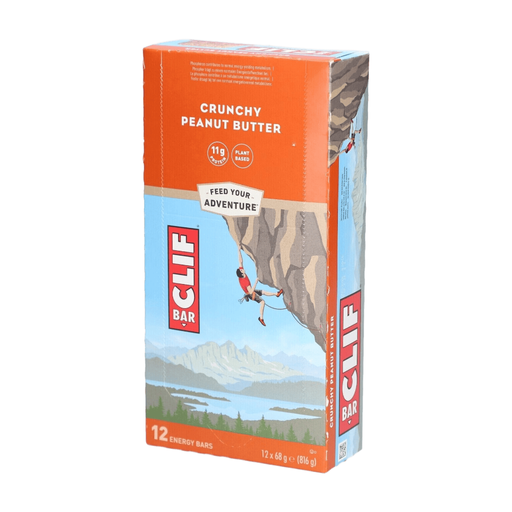 Image unavailable
Another individually portioned energy bar to take with you if you’re after a snack on the go rather than something to share with drinks and nibbles.
This recipe lists peanuts, soya, oats and barley, among other ingredients, and may contain traces of other allergens. Check the label of the flavour you buy.
First, check the nutritional information per 100 g to compare the recipes on a like-for-like basis, then look at the values for the portion you’ll eat. The DGCCRF states that nutrition information is given per 100 g or 100 ml; the figures per bar then help you take its actual weight into account.
Here, a protein bar is chosen as a snack, not as an automatic meal replacement. E.Leclerc also describes protein bars as snacks; consider the portion and the rest of your diet rather than deciding based on the protein claim alone.
Check the ingredients and allergens for each recipe, as well as how many people you plan to offer it to. Some products mentioned contain milk, soya, peanuts or tree nuts; an individual sweet portion may not be what people expect from food to share, either.