Households planning several snacks
If several people eat protein bars, check the number of bars, the weight of each portion and the ingredients before choosing a large multipack.


When choosing protein bars in multipacks as part of shopping for a diabetes-friendly diet, start by comparing the carbohydrates and sugars in the portion you’ll actually eat, then check the ingredients and allergens. Next, choose a pack size that suits your household’s habits: a large pack is only useful if every portion is suitable for the people who will eat it. Assurance Maladie reminds us that diets should be tailored to each individual; “no added sugars” does not mean “sugar-free”.
If several people eat protein bars, check the number of bars, the weight of each portion and the ingredients before choosing a large multipack.
To compare what you’ll actually eat, check the “carbohydrate” and “of which sugars” figures per bar, not just per 100 g. Assurance Maladie recommends looking at nutritional information in relation to the amount consumed.
Before buying several bars, check the exact recipe if anyone in your household needs to avoid an ingredient or wants to take sweeteners into account.
For a bar eaten as a snack, Assurance Maladie advises checking nutritional information against the amount actually eaten. Compare portion sizes before deciding how many bars to buy.
| What to check | Look for | Who is it for? |
|---|---|---|
| Carbohydrates and sugars per bar | The size of the bar and the “carbohydrate” and “of which sugars” figures for that portion. | If I eat a bar as a snack, I want to know the amounts in the bar I’ll be eating; around 33% of consumers put tracking these figures per portion first. |
| Pack size | The number of bars, their individual weight and how many the household expects to eat. | If we’re planning several snacks at home, I prefer a multipack where every portion will be used; around 27% of consumers prioritise pack size. |
| Protein and fibre | The figures per portion, followed by the other nutritional information, particularly fat and salt. | For a snack, I want to compare protein and fibre without overlooking the rest of the label; around 20% of consumers prioritise this balance of factors. |
| Ingredients and allergens | The ingredients list, declared allergens and “may contain” warnings for the exact product. | If a recipe isn’t suitable for someone in my household, I need to know before buying several bars; around 20% of consumers make ingredient suitability their first check. |
According to Anses, this claim does not mean that the product contains no sugars at all.
For the portion you’ll eat, also check the “carbohydrate” and “of which sugars” figures, as well as the ingredients list.
A pack of eight 40 g bars and a pack of larger bars do not contain the same number of portions. For example, Auchan’s Nature Valley Protein listing describes eight 40 g bars.
Check both the number of bars and the weight of each one before comparing nutritional information.
Protein content alone does not tell you about the carbohydrates, sugars or other ingredients in the recipe. Assurance Maladie stresses that the diet of people with diabetes should be tailored to the individual.
Look at the whole label and consider how the bar fits into your planned meals or snacks.
Auchan and E.Leclerc product listings show that ingredients such as allergens and sweeteners vary between products.
Before buying several bars, check the ingredients, allergens and any “may contain” warnings on the exact packaging.
If the recipe isn’t suitable for someone in your household, several bars in the multipack could go to waste.
These examples refer to specific products: pack sizes and ingredients can vary within the same brand.
The Protein Peanuts & Chocolate product listed by Auchan comes in a pack of eight 40 g cereal bars.
The Salty Peanut bar listed by Auchan is a single 55 g portion.
The Chocolate & Salted Caramel bar listed by Auchan weighs 55 g.
E.Leclerc Parapharmacie lists a chocolate product in a pack of six bars.
E.Leclerc Parapharmacie lists, among other options, a 46 g chocolate protein bar.
These multipacks contain several individually portioned protein bars. To choose a pack that suits your household, compare the weight of each bar and its nutritional label before deciding on a format.
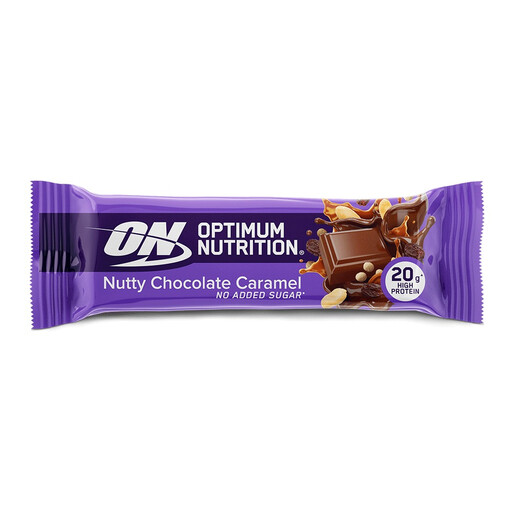 Image unavailable
This multipack may suit you if you’re planning several individual portions. Check the carbohydrates, sugars, ingredients and allergens in each bar before choosing this format.
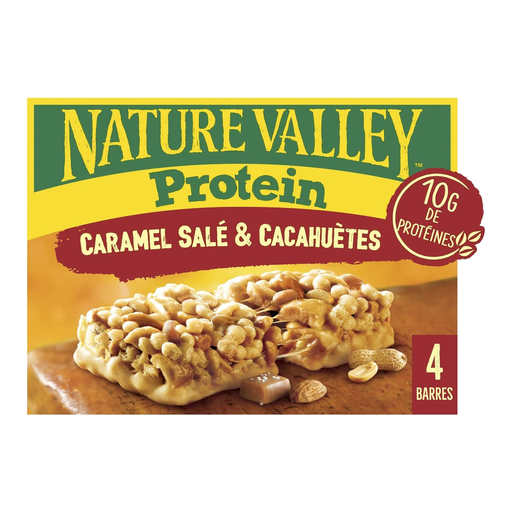 Image unavailable
The four-bar pack is a smaller option than the ten-bar packs featured here. Check the nutritional information and allergens for this particular flavour: figures for another Nature Valley recipe may not apply.
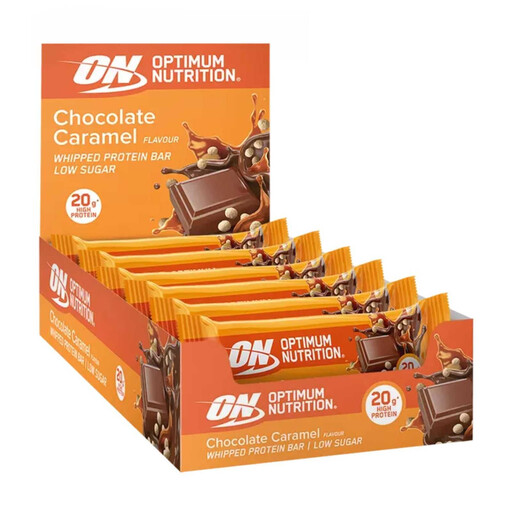 Image unavailable
This multipack is for a household planning to eat several 60 g bars. Check the carbohydrates, sugars and polyols on the label for the exact variant; the protein figures in its description and nutrition table do not match.
No. Anses explains that this claim does not mean the product contains no sugars. For the bar you’re considering, check “carbohydrate”, “of which sugars” and the ingredients list, taking the portion size into account.
Both are useful: figures per 100 g provide a consistent basis for comparing products, while figures per bar correspond to the portion you plan to eat. Assurance Maladie recommends checking nutritional information against the amount actually consumed.
No. Assurance Maladie says that diets should be tailored to individual needs and that no food is generally forbidden. So, consider how a bar fits into your usual meals and the portion you’ll eat; don’t assume it’s suitable just because it’s labelled “high protein”.
Check the ingredients, declared allergens and any “may contain” warnings for the exact product. Auchan and E.Leclerc product listings show that these details, as well as the sweeteners used, vary between recipes.