Hikers looking for a post-exercise snack
After a strenuous walk, you’ll want a bar with protein and carbohydrate levels suited to how you plan to use it. Decathlon and Carrefour product pages describe some options as snacks for after exercise.


For a snack during your walk, start by choosing a bar that’s easy to carry, then compare its carbohydrates, sugars and protein per bar. If you’re looking for a snack after a challenging hike, consider protein and carbohydrates together, rather than assuming the bar with the most protein is also the best choice while walking. In either case, check the ingredients, allergens and storage instructions for the variety you choose.
After a strenuous walk, you’ll want a bar with protein and carbohydrate levels suited to how you plan to use it. Decathlon and Carrefour product pages describe some options as snacks for after exercise.
You want to pop a bar in your bag and compare what a whole serving provides, rather than relying on the words ‘high protein’ alone.
You check allergens, sugars and sweeteners before choosing your snacks. The exact recipe matters: two protein bars can have different ingredient lists.
First decide whether you’ll eat the bar during your walk or afterwards, then compare the nutritional values per serving and the ingredients list.
| What to consider | What to check | Who is it for? |
|---|---|---|
| When you’ll eat it | Suggested use on the packaging; protein and carbohydrates per bar. | After a strenuous walk, I look for a snack suited to when I plan to eat it. Around 29% of consumers prioritise a post-exercise snack. |
| Portable portion size | Weight of one bar; grams of protein per serving. | While walking, I want a snack that fits easily in my bag, with nutritional values I can check per bar. This is a priority for around 29% of consumers. |
| Sugars and sweeteners | Sugars per serving; sweeteners in the ingredients. | If I’m keeping an eye on these ingredients, a claim on the front of the pack isn’t enough to help me choose. Around 21% of consumers prioritise checking this. |
| Allergens and storage | Allergens in the exact variety; instructions for protecting it from heat and moisture. | Before packing my bag, I need to know whether the recipe is suitable for me and how to store the bar. For around 21% of consumers, this suitability comes before other criteria. |
Bars of different sizes won’t necessarily provide the same amount of protein per bar.
Compare the nutritional values per bar to see what’s in the portion you’ll be carrying.
Decathlon describes its recovery bar, and Carrefour describes its Andros Sport bar, as options to eat after exercise. That doesn’t mean they’re intended for use throughout a hike.
Decide when you plan to eat the bar before buying, then check the protein and carbohydrates per serving.
Auchan’s product page for the Barebells Salty Peanut bar lists maltitol and sucralose.
Check the ‘sugars’ line in the nutritional information separately from the ingredients list.
Allergen ingredients vary by product. Auchan’s product page for the Eat'n Move bar also says to protect it from heat and moisture.
Check the label on the variety you buy and follow its storage instructions while carrying it.
The products reviewed include a 35 g High Protein Salted Caramel bar and a 28 g Special K Protein Coconut & Cashew bar.
Carrefour describes the chocolate and peanut bar reviewed as a snack to have after exercise.
The caramel-flavoured protein bar featured by Carrefour lists 15 g of protein per bar.
The Salty Peanut variety featured by Auchan lists 20 g of protein per bar.
The caramel protein cereal bar reviewed weighs 32 g.
These portable bars cover two different uses: an oat-based energy bar for a break during your walk, and protein bars to consider depending on when you plan to eat them. The latter aren’t necessarily cereal bars.
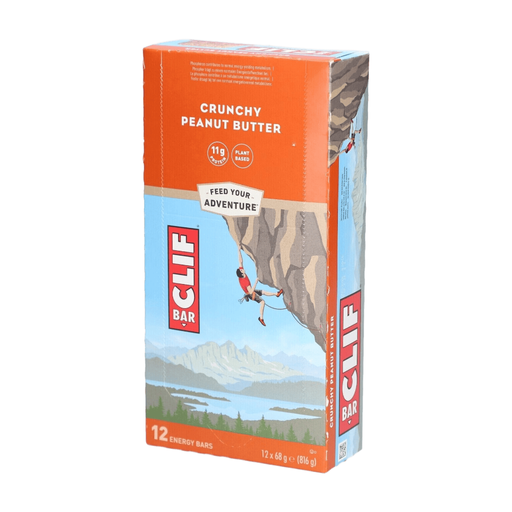 Image unavailable
For a break on a long walk, bear in mind that each bar is a 68 g serving. Compare the sugars and carbohydrates per bar, then check the allergens on the packaging for this recipe.
 Image unavailable
If you’re considering taking a protein bar with you, compare its 60 g serving with other sizes. Check the polyols and allergens in the recipe; if you follow a vegetarian diet, check the ingredients’ sources on the packaging too.
 Image unavailable
For a protein-rich snack to take with you, check the weight and nutritional values per bar, not just those for the whole pack. Read the list of sweeteners and allergens before choosing this recipe.
 Image unavailable
If you’d rather take a 55 g bar, compare its values per serving with those of other sizes. Also check the sweeteners and allergens listed for this variety.
No. The protein content alone doesn’t determine when you should eat the bar. For a break during your walk, compare the serving size, carbohydrates and sugars too. For a snack after a strenuous walk, check the suggested use and nutritional values per bar.
Check the figures per bar before comparing those per 100 g. Kellogg's France lists 5,9 g of protein in a 28 g Special K Protein bar, while Carrefour lists 15 g of protein per bar for the HiPRO variety reviewed. Only the per-serving figure tells you how much is in the bar you’ll be carrying.
Read the ingredients list for the exact variety, as well as any warnings about possible traces. In France, the Directorate-General for Competition Policy, Consumer Affairs and Fraud Control reminds food businesses that allergenic ingredients must be highlighted on food labels.
No. Auchan’s product page for the Barebells Salty Peanut bar lists maltitol and sucralose. Check the ingredients list as well as the ‘sugars’ line in the nutritional information.
Follow the storage instructions for each product and keep the packaging away from moisture. Auchan’s product page for the Eat'n Move caramel bar also says that it should be protected from heat.