Hikers splitting out snacks
You’re packing several rucksacks or lunchboxes. The number of bars, whether they’re individually wrapped and the recipe for each portion all matter just as much as the pack size.


To choose a multipack of hiking snacks, start by deciding what you need it for. If you’re mainly looking for protein, compare protein bars; if you need carbohydrates for your walk, consider energy bars too. Then check the nutritional values per bar and per 100 g, how many portions you’ll actually need, and the allergens in the exact recipe before preparing snacks to share.
You’re packing several rucksacks or lunchboxes. The number of bars, whether they’re individually wrapped and the recipe for each portion all matter just as much as the pack size.
You’re looking for a snack focused on protein, perhaps after your walk. Compare the protein and sugar per bar rather than relying solely on claims on the front of the pack.
If your priority is a snack to eat while you’re active, compare energy bars too, looking at their portion size and carbohydrate content rather than choosing based on protein alone.
First decide when you’ll eat the bars, then check whether the pack lets you prepare suitable portions for everyone.
| What to consider | What to check | Who this matters to |
|---|---|---|
| Purpose of the snack | Decide whether the bar is for eating during your walk or as a protein-focused snack; check the carbohydrates and energy per portion. | If I plan to eat my bar while walking, I want to know what it provides per portion, not just that it’s labelled “high-protein”. Around 33% of consumers put fuel for exercise at the top of their list of needs. |
| Protein and sugar | Compare the nutritional values per 100 g, then per bar if the portions are different sizes. | For a snack after a walk, I want to compare the protein content without overlooking the sugar. This is thought to be a priority for around 25% of consumers. |
| Splitting up the pack | Count how many bars you need and check their individual weight and whether they’re individually wrapped if you need to share them out. | When I’m packing several rucksacks or lunchboxes, everyone needs to be able to take their own portion. Around 25% of consumers are thought to prioritise ease of sharing the pack. |
| Dietary requirements | Read the ingredients, highlighted allergens and any possible traces listed for the product you’ve chosen. | Before sharing a pack, I need to know whether the recipe suits everyone taking part. For around 17% of consumers, this is thought to be their main priority. |
The protein content alone doesn’t tell you how many carbohydrates or how much energy you’ll get from the portion you take on your walk.
Decide when you’ll eat the bar, then compare the nutritional information per portion for the protein and energy bars you’re considering.
Two bars of different sizes may show amounts per bar that aren’t directly comparable with their values per 100 g.
First compare the values per 100 g on a like-for-like basis, then check the values for the portion you’ll actually eat, especially for protein and sugar.
Flavours and formulations can affect the ingredients and allergens. A range name alone doesn’t tell you whether another variety is suitable for your group.
Ask about dietary requirements before packing the lunchboxes, then check the label on the product you’ve bought, including any possible traces listed.
Carrefour offers a multipack of chocolate protein bars, with 4 × 32 g bars.
Auchan offers a multipack of caramel protein cereal bars, with 5 × 32 g bars.
Auchan offers a peanut and chocolate multipack of 4 × 40 g bars, as well as an eight-bar pack in its range.
E.Leclerc stocks Eafit protein bars in different weights and flavours.
E.Leclerc offers a box of six chocolate high-protein bars.
These two multipacks of ten Optimum Nutrition protein bars are suitable for preparing several snacks for a day out or for lunchboxes. If you’re sharing them, compare the recipes for the two flavours and check the labels on the bars you receive.
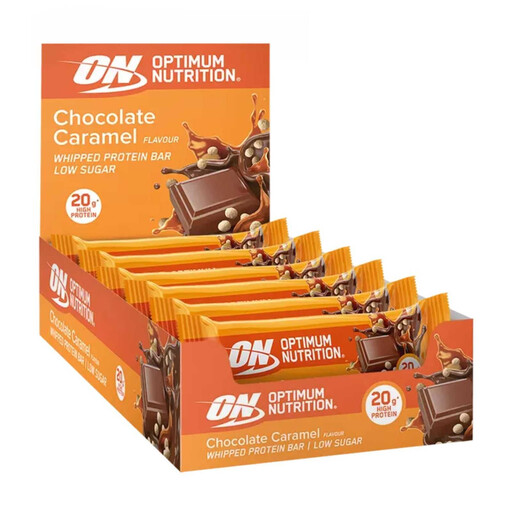 Image unavailable
Consider this multipack if you’re preparing ten protein-rich snacks to share out. Check the protein content on the label before making a detailed comparison with another flavour. If you’re sharing the bars, check the allergens in each recipe; the product information also warns that excessive consumption of polyols may have a laxative effect.
 Image unavailable
This multipack also gives you ten protein-rich snacks, in a different flavour. If you’re sharing them, check the label for peanuts in particular. Check the protein content per bar before comparing the nutritional values; the product information warns that excessive consumption of polyols may have a laxative effect.
Not necessarily: choose according to what you need the snack for. Decathlon describes energy bars as a category designed for exercise. To compare an energy bar with a protein bar, check the carbohydrates, energy and protein per bar.
First compare the nutritional values per 100 g, then check the values per bar for the portion you’ll actually take with you. In France, the Directorate-General for Competition, Consumer Affairs and Fraud Control states that nutrition declarations for the relevant foods are given per 100 g or 100 ml.
Check the ingredients, allergens and any possible traces listed for each product you’ve bought, then count how many portions you need. The Directorate-General for Competition, Consumer Affairs and Fraud Control states that allergenic ingredients must be highlighted on food labels.