You compare fat content first
For a mid-morning break, you check the fat content per 100 g and then per bar, before comparing recipes by their protein and sugar content.


If your first priority is to limit fat, compare protein bars per 100 g, then check the nutritional values for the bar you’ll actually eat. The word ‘protein’ on the front of the pack doesn’t tell you how much fat a bar contains: a lower-fat recipe may contain more sugars, while a low-sugar recipe may contain polyols. Check the ingredients on the exact product too, especially if you need to avoid certain allergens.
For a mid-morning break, you check the fat content per 100 g and then per bar, before comparing recipes by their protein and sugar content.
You’re looking for a serving that provides protein and is low in sugars, without assuming it will also be lower in fat. Polyols and saturated fatty acids are also worth comparing.
You need to check certain ingredients or traces, or you’re looking for a plant-based recipe. In that case, fat content alone won’t tell you whether a bar is right for you.
When comparing bars of different sizes, start with the nutritional information per 100 g, then check the values for the portion you’ll eat.
| What to compare | What to check | Who is it for? |
|---|---|---|
| Fat | The amount per 100 g, followed by the amount in a whole bar. The DGCCRF notes that nutrition information per 100 g makes it easier to compare products. | For my morning break, I want to compare recipes by their fat content before looking at their protein content; around 36% of consumers prioritise this. |
| Protein and sugars | Protein and sugars per bar; also check polyols and saturated fatty acids when they’re listed in the nutritional information. | If I’m mainly looking for protein without choosing a very sugary bar, I need to check several values for the same portion. Around 29% of consumers prioritise this. |
| Ingredients | The ingredients list, allergens and any ‘may contain’ warnings on the packaging of the exact product. | Before comparing nutritional figures, I need to know whether the ingredients meet my requirements; around 21% of consumers put this first. |
| Format | The number of bars in a pack and the weight of each one, depending on the portion you want to take with you. | To pop a portion in my bag and eat it mid-morning, I first look for a format that works for me. Around 14% of consumers prioritise this convenience. |
These two qualities don’t necessarily go hand in hand. Carrefour’s product listing for the CARREFOUR SENSATION Protein Graines et Chocolat cereal bar states that it contains 44 g of fat per 100 g, while Auchan’s listing for the Isostar HP 25 Strawberry protein bar gives a figure of 3.1 g per 35 g bar.
Compare fat per 100 g, then per bar, before looking at the protein content.
According to Auchan’s product listing, a 55 g Joyfuel Cookie Dough bar provides 20 g of protein and 1.4 g of sugars, but also 8.3 g of fat and 15 g of polyols. So a low sugar content doesn’t, on its own, meet a priority to limit fat.
Look at all the figures for the portion you plan to eat.
A recipe that suits your nutritional preferences may not meet your ingredient requirements. Recipes and trace warnings vary from one product to another.
If you have an allergy or need to avoid an ingredient strictly, check the ingredients and ‘may contain’ warnings on the pack you receive before eating the bar.
The HP 25 Strawberry protein bar is sold in a pack of three 35 g bars, according to the Auchan listing consulted.
Auchan lists the 55 g Cookie Dough protein bar among its products.
Carrefour lists a Crispy Caramel & Milk Chocolate protein bar.
Protein Graines et Chocolat is a cereal bar, so it’s worth distinguishing it from a protein bar.
Carrefour’s listing describes its Avoine Cacao Protéiné cereal bar as vegan.
This selection features a multipack of bars that are easy to take with you. To see whether it meets your preference for a lower-fat option, compare the nutritional information for the exact product; its format alone doesn’t mean it’s ‘reduced in fat’.
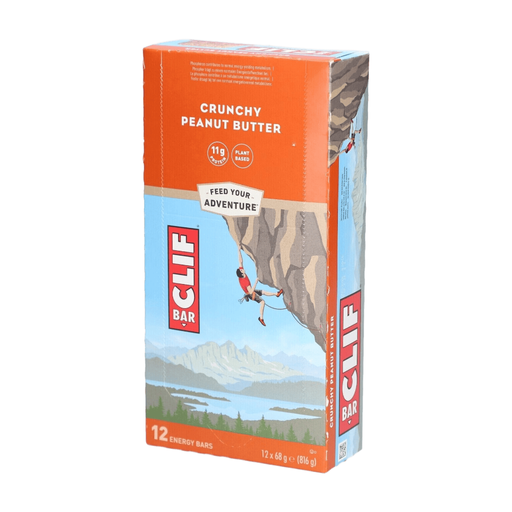 Image unavailable
This multipack may suit you if you want to keep individual bars handy for mid-morning breaks. The pack contains 12 bars weighing 68 g each. The listing notes that the bars contain peanuts and may contain traces of wheat, rye, milk and tree nuts: check the label on the pack you receive. If you’re looking for a ‘reduced in fat’ claim, check that it appears on the packaging of the exact product and look at the comparison it gives.
No. Protein and fat content are two separate things. Compare fat per 100 g, then per serving: Auchan’s listing for the Isostar HP 25 Strawberry bar gives a figure of 3.1 g per 35 g bar, while Carrefour’s listing for the CARREFOUR SENSATION Protein Graines et Chocolat cereal bar gives a figure of 44 g per 100 g.
First, look for this claim on the exact product, then check the comparison it makes and the fat content per 100 g. The DGCCRF notes that nutrition claims are regulated: neither a product name nor the word ‘protein’ alone means a bar is lower in fat.
Read the ingredients list and trace warnings on the packaging of each product, even if you already know the brand. Also check for polyols if that matters to you: Auchan’s listing for Joyfuel Cookie Dough gives a figure of 15 g per 55 g bar.
No, a protein bar isn’t essential for a snack. Anses notes that there is a lack of robust studies on the effects of how food intake is spread throughout the day. Instead, choose something that suits your needs in terms of ingredients, portion and format.