Runners planning their race fuel
For a marathon or a long run, your priority is to plan the carbohydrates you’ll consume during exercise, rather than choosing the bar with the fewest calories.


When choosing fuel for a marathon, don’t pick a protein bar just because it’s low in calories. First check how many carbohydrates it provides per serving and how it fits into your race plan. A protein bar may be better suited to a snack outside your run, depending on its nutritional values and ingredients. If you plan to eat it while running, try it during training first.
For a marathon or a long run, your priority is to plan the carbohydrates you’ll consume during exercise, rather than choosing the bar with the fewest calories.
Between meals or after training, you’ll want to compare the energy and protein in the portion you’ll actually eat.
If you need to avoid an ingredient or want to check for sweeteners and polyols, the ingredients in the specific flavour matter just as much as its nutritional values.
If you plan to eat a bar while running, start with the carbohydrates per serving and how often you plan to eat. For a snack outside exercise, compare the values for the whole bar first, then check its ingredients.
| Criteria | What to check | Who is it for? |
|---|---|---|
| Carbohydrates during exercise | Carbohydrates per bar and the amount planned per hour; whether you can eat the portion while running. | If I plan to eat during a marathon, I need a carbohydrate intake that fits my fuelling plan. Around 36 % of consumers put this need first. |
| Nutrition per snack | kcal and weight per bar, followed by the protein in that same portion. | For a snack between meals or after training, I want to know what I’ll get from a whole bar. This is the priority for around 29 % of consumers. |
| Ingredients and tolerance | Ingredients list, allergens, polyols and warnings for the exact product. | If I need to avoid an ingredient or am considering eating the bar during exercise, its ingredients and how well I tolerate it come first. Around 21 % of consumers prioritise this criterion. |
| Protein and sugars | Protein and sugars per bar; don’t assume the protein content tells you how many carbohydrates are available. | For a snack outside a run, I mainly want to compare the protein and sugars in the portions available; around 14 % of consumers make this their priority. |
A bar’s calorie content doesn’t tell you how many carbohydrates it provides per serving. The Journal of Sports Sciences provides guidelines in grams of carbohydrates per hour for prolonged exercise, not a target for the fewest calories per bar.
Before considering a bar for use during a race, compare its carbohydrates per serving with your hourly fuelling plan.
Two bars of different weights aren’t the same portion. Values per 100 g alone therefore don’t tell you how much you’ll actually eat.
Compare the weight, kcal, carbohydrates, protein and sugars in a whole bar side by side.
The products mentioned have different ingredients, particularly when it comes to allergens and sweeteners. Some also carry a warning about excessive consumption of polyols.
Read the label for the flavour you’ve chosen. If you plan to eat the bar during exercise, try the intended portion during training.
This claim doesn’t tell you the total energy content or the carbohydrates per bar. It isn’t enough to establish whether a product suits your fuelling plan.
Check the nutritional information per serving and choose according to when you plan to eat the bar.
The figures below relate to the specific products mentioned, not every bar from each brand. They make it easier to compare portions without assuming they’re suitable for fuelling during a race.
Carrefour France lists 15 g of protein and 162 kcal per bar for its Crispy Cookies & Milk Chocolate bar.
Carrefour France lists 13 g of protein for its Peanut Chocolate protein bar.
Carrefour France lists 96 kcal and 1,2 g of sugars per bar for its Chocolate Protein bar.
Auchan France lists 16 g of protein for its Peanut Caramel bar and describes it as having ‘no added sugars’.
Auchan France lists 19 g of protein and 1,1 g of sugars for its 55 g Hazelnut Chocolate bar.
These two nu3 bars may suit a snack between meals or after training. If you’re thinking of taking them along for a marathon, first check the carbohydrates per serving and try your planned intake during training.
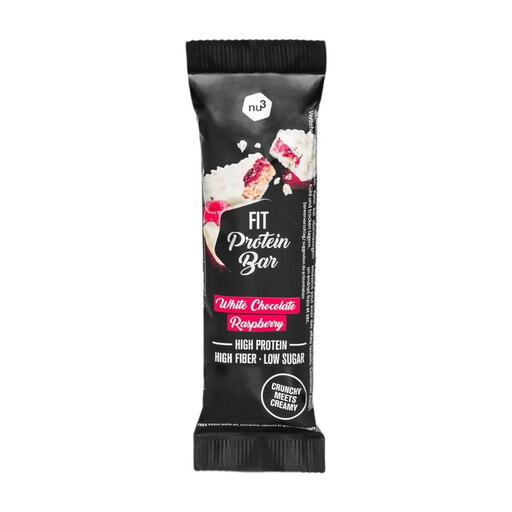 Image unavailable
Worth considering as a snack between meals or after training. The bar weighs 55 g. If you’re thinking of eating it during a run, compare its carbohydrates per serving with your hourly plan. Also check the ingredients list and how well you tolerate polyols.
 Image unavailable
Compare this as a snack outside exercise or after training. This flavour weighs 55 g. If you plan to eat it during a marathon, check the carbohydrates per bar rather than looking only at its calorie content. Read the ingredients for this flavour and try the intended portion during training.
Not on the basis of its calorie content alone. The Journal of Sports Sciences gives a guideline of 30 to 60 g of carbohydrates per hour for endurance sports. Check the carbohydrates in each bar and how much you plan to eat per hour before adding it to your plan.
First compare the weight and kcal per whole bar, then the carbohydrates, sugars, protein, fibre and fat in that same portion. Values per 100 g alone can hide differences in bar size.
Trying it during training lets you see whether you can eat the planned portion during exercise. Check the ingredients and warnings too: some products contain polyols and warn that excessive consumption may have a laxative effect. This doesn’t predict how you’ll react individually.