Parents preparing an occasional lunchbox
You’re looking for portions that are easy to share or take with you now and then, without treating a protein bar as a sweet or a snack to include every day.


For a child, don’t choose a protein bar as a sweet or a regular snack: Manger Bouger recommends limiting foods that are high in fat, sugar or salt, as well as ultra-processed foods, in children’s diets. If a multipack suits an occasional sharing occasion, check the exact recipe, allergens and portion size rather than relying on the ‘protein’ claim; a bar marketed for after exercise isn’t necessarily suitable for a child’s lunchbox.
You’re looking for portions that are easy to share or take with you now and then, without treating a protein bar as a sweet or a snack to include every day.
Before sharing a pack, check the ingredients and precautionary allergen information for each recipe, particularly for peanuts, tree nuts, milk or soya.
You’re considering a pack for several members of the household. A bar’s sports-focused positioning should be distinguished from its suitability for a younger child.
For a lunchbox, start with who will eat the bar and how often you plan to serve it. Then compare the recipes and portions rather than relying on the claims on the front of the pack.
| Consideration | What to check | Who is it for? |
|---|---|---|
| Ingredients and allergens | Read the ingredients list for the exact recipe, check which allergens are highlighted and look for precautionary allergen information. The DGCCRF reminds consumers that allergens in prepacked foods must be emphasised. | If a bar might be shared with a child who needs to avoid certain foods, I need to be able to check its ingredients before putting it in a lunchbox; around 50% of consumers put this check first. |
| Portions and sharing | Compare the number of bars, their individual weight and, if needed, the nutrition information per portion. Figures per 100 g provide a common basis for comparison, as the DGCCRF explains. | When splitting a pack between several lunchboxes, I want to know how much each bar contains; around 30% of consumers make pack size and portions their priority. |
| Sports use or a snack | Check who the recipe is intended for and read the ingredients, sugar content and any sweeteners in particular; being marketed as an ‘after-exercise’ snack doesn’t establish that it’s suitable for a child. | If a pack might also be eaten by a sporty teenager, I want to distinguish this use from a snack for a younger child; around 20% of consumers prioritise this question of suitability. |
This claim alone doesn’t tell you everything about the recipe. Manger Bouger recommends limiting foods that are high in fat, sugar or salt, as well as ultra-processed foods, in children’s diets.
First decide whether a bar suits the intended use, then read its ingredients and nutrition information. Don’t present it as a sweet or as something every child needs.
Ingredients and precautionary allergen information can vary from one flavour to another, even within the same range.
Check the label of the flavour you’ve bought before sharing it, and follow the child’s specific allergy guidance.
Two packs with the same number of bars may contain different portion sizes and recipes.
Check the weight per bar and the nutrition information per 100 g, then look at the figures per portion if they’re shown on the packaging.
A product listed by a retailer isn’t necessarily available in every shop or through every ordering channel.
Check local availability and read the listing for your chosen recipe again before relying on the pack.
Carrefour France lists, among other products, Protein cereal bars in Seeds and Chocolate, in a pack of 4 × 32 g.
Carrefour France lists, among other products, a Protein assortment of 4 × 40 g; ingredients vary depending on the recipe you choose.
Auchan France lists caramel protein cereal bars in a pack of 5 × 32 g.
Carrefour France lists, among other products, a FULFIL chocolate, peanut and caramel protein bar in a pack of three.
These two formats suit different uses: a pack of four bars to consider for occasional sharing, and a pack of ten bars marketed for sports use. Their inclusion here doesn’t mean they’re suitable for a child; check the recipe and packaging guidance before choosing.
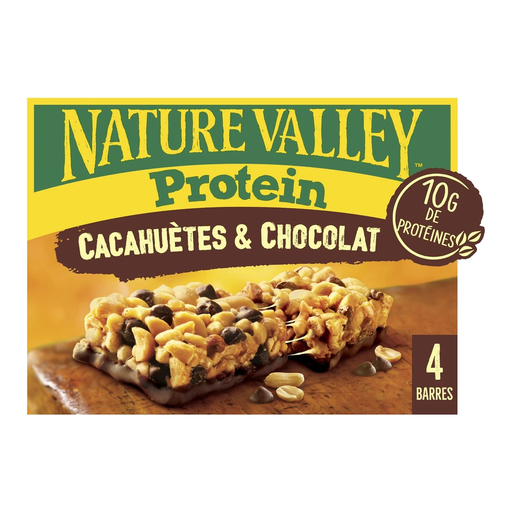 Image unavailable
This four-bar pack is worth considering if you’re looking to share portions occasionally. Each bar is listed as 40 g; check the exact recipe, allergens and age guidance before putting one in a child’s lunchbox.
 Image unavailable
This pack of ten bars is better suited to consider for a specific sports use within the household than as a child’s snack. The title states that each portion is 60 g and that the flavour is peanut and salted caramel. The listing advises keeping the product out of reach of young children; also check the ingredients, allergens and packaging guidance before sharing.
Its stated protein content isn’t enough to make it a suitable everyday snack. Manger Bouger recommends limiting foods that are high in fat, sugar or salt, as well as ultra-processed foods, in children’s diets. If you buy a bar for an occasional treat, check its ingredients and portion size.
Read the ingredients list for the exact product, check which allergens are highlighted and look for precautionary allergen information, then follow the child’s specific guidance. The DGCCRF reminds consumers that allergens must be emphasised in the ingredients list of prepacked foods; some of the recipes mentioned by Carrefour and Auchan contain milk, soya or tree nuts.
Compare the nutrition information per 100 g, then check the weight of each bar, the figures per portion if they’re shown on the packaging, and the ingredients list. According to the DGCCRF, information per 100 g provides a common basis for comparison on nutrition labels; it doesn’t replace checking how much is actually eaten.
That positioning alone doesn’t tell you whether it’s suitable for a child. For example, Auchan markets its Eat'N Move range for after exercise. Before considering sharing it with a child or teenager, check the recipe, portion size and guidance on the packaging.
No. A product listing or reference doesn’t guarantee availability in your chosen shop or ordering channel. Check the product and local availability before planning lunchboxes around a particular pack.