Before a long endurance session, don’t choose a bar based solely on the words ‘high protein’. Reviews published in Nutrients in 2020 and 2014 link carbohydrate intake before exercise with benefits mainly during prolonged activity. If you’re looking for a convenient protein-rich snack instead, compare the protein and carbohydrate content per bar, then check the ingredients and choose a suitable time to eat it.
Who are these bars for?
People preparing for a long endurance session
If you’re planning prolonged exercise, look at the carbohydrate content and when you’ll eat your snack, not just its protein content. Reviews published in Nutrients in 2020 and 2014 include research on carbohydrate intake before this type of exercise.
People looking for a portable protein-rich snack
A bar lets you check how much protein you’ll get from the whole portion. To compare two specific recipes, Auchan lists 20 g of protein for a 55 g Barebells Salty Peanut bar and 15 g for a 45 g HiPRO caramel bar.
People who pay attention to ingredients
If you need to avoid certain ingredients, choose based on the exact recipe. Auchan’s product pages for the Barebells Salty Peanut and HiPRO caramel varieties list different allergens and sweeteners.
What should you check before choosing?
For a pre-exercise snack, start with what matters most to you: carbohydrates before a long session, an easy-to-check amount of protein, or a recipe that suits your dietary needs.
| What to consider | What to check | Who is it for? |
|---|
| Carbohydrates before a long session |
Carbohydrates per bar and how long before your session you’ll eat it. |
Before a long endurance session, I look for a snack suited to this need rather than one with a protein claim alone; around 45% of consumers put carbohydrates before a long session at the top of their list of priorities. |
| Protein per serving |
Grams of protein in the whole bar and the serving size. |
When I want a snack I can take with me and eat without any preparation, I want to know what I’ll get from the bar I’m going to eat; around 33% of consumers prioritise the amount of protein per serving. |
| Ingredients and tolerance |
Allergens, possible traces and sweeteners in the exact recipe. |
If I need to avoid certain ingredients, their presence determines my choice before other features; around 22% of consumers make ingredients their top priority. |
Mistakes to avoid
-
Choosing a bar solely because it says ‘high protein’ before a long session
This claim alone doesn’t tell you how many carbohydrates the bar contains. Reviews published in Nutrients in 2020 and 2014 suggest that carbohydrates consumed before exercise are most beneficial during prolonged endurance activity.
Compare the protein and carbohydrate content per serving, then try the recipe during training, leaving the same amount of time before exercise as you plan to on the day.
-
Assuming ‘no added sugars’ means no sweeteners
Auchan describes the Barebells Salty Peanut bar as having ‘no added sugars’, but its recipe also lists maltitol and sucralose.
Check the sugar claims and ingredient list separately, and don’t try a new recipe just before an important session.
-
Comparing only the values per 100 g
Serving sizes affect how much you actually consume: Auchan lists 20 g of protein for a 55 g Barebells bar, compared with 15 g for a 45 g HiPRO caramel bar.
Compare the nutrition information per bar first, then use the values per 100 g to assess recipes on an equal-weight basis.
-
Relying on a product listed on an old product page
Aldi France’s product page for a 45 g filled protein bar says it’s unavailable.
Check which product the retailer currently stocks before planning to buy it for your session.
Brands and ranges to know
Barebells
For its 55 g Salty Peanut bar, Auchan lists 20 g of protein per bar.
- The protein content is given for this specific serving.
- This recipe contains milk, peanuts, maltitol and sucralose; it may also contain traces of gluten, soya and other nuts.
HiPRO
Auchan lists 15 g of protein for its 45 g caramel bar, which can be eaten chilled or at room temperature.
- The serving size and protein content are given for the caramel variety.
- This recipe contains milk, soya, maltitols and sucralose; follow the storage instructions.
Andros Sport
Carrefour lists a 55 g chocolate and peanut bar in its Nutrition and Protein section.
- The weight of this individual bar is specified.
- To compare its nutritional content, check the grams of protein and other nutrition information for the product you buy.
Carrefour Sensation
Carrefour lists ‘Protein’ cereal bars with seeds and chocolate, or seeds and red berries, in packs of 4 × 32 g.
- These recipes let you explore a cereal bar format that differs from an individual protein bar.
- Check the nutrition information for each recipe before comparing protein and carbohydrate content per bar.
Aldi
An Aldi France product page lists 15 g of protein for a 45 g filled protein bar.
- The stated amount is for a whole bar.
- The product page says this item is unavailable; check what’s in stock when you shop.
A bar to consider on Joybuy
This FEED chocolate bar is described as a meal replacement. If you’re looking for a pre-exercise snack, check whether its serving size and ingredients suit how you plan to use it.
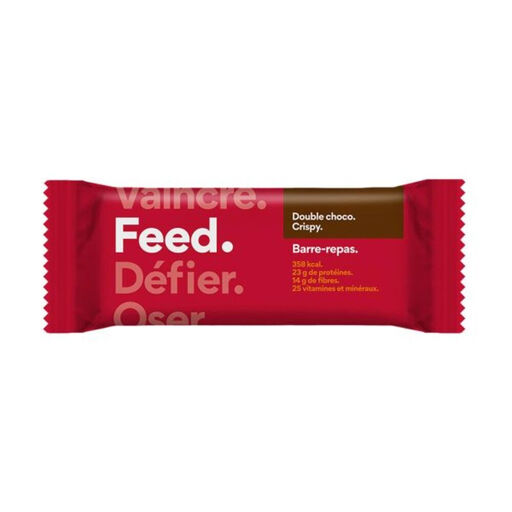 Image unavailable
FEED Chocolate Meal Bar 100g
At 100 g, this is for someone considering a bar rather than a small snack before exercise. It’s described as a meal replacement, so check the protein and carbohydrate content per serving, the ingredients and whether this serving size suits your needs.
View on Joybuy
Frequently asked questions
What does ‘high in protein’ mean for a bar sold in France?
Under European Regulation (EC) No 1924/2006, this claim requires at least 20% of the food’s energy value to come from protein. So it doesn’t mean the same number of grams for every bar: check the serving size too.
Is a ‘high protein’ bar enough before a long session?
Its protein content alone can’t answer this question. Reviews published in Nutrients in 2020 and 2014 link carbohydrate intake before exercise with benefits mainly during prolonged activity. So compare the carbohydrate content per bar and consider when you plan to eat it.
Which ingredients should you check before buying?
Read the ingredients list and allergen information for the exact variety. Auchan’s product pages for the Barebells Salty Peanut and HiPRO caramel bars list milk, other allergens depending on the recipe, and sweeteners. Don’t assume these details apply to every product from the same brand.
Does ‘no added sugars’ mean ‘no sweeteners’?
No. Auchan describes the Barebells Salty Peanut bar as having ‘no added sugars’, but its ingredients list includes maltitol and sucralose. Check both details separately for the recipe you’re interested in.


