Hosts keeping an eye on portions
If the bar is being served alongside other aperitif food, check the kcal per bar and the weight of each bar. A claim such as “low-calorie” is no substitute for the nutritional information.


To round off an aperitif on the terrace with a protein bar, first compare the energy and weight of each bar, then check the protein, sugars and ingredients against your guests’ needs. A portion with a calorie count that suits you does not necessarily qualify as “low energy”: that claim has a separate threshold, expressed per 100 g.
If the bar is being served alongside other aperitif food, check the kcal per bar and the weight of each bar. A claim such as “low-calorie” is no substitute for the nutritional information.
The amount per bar makes it easier to compare different sizes: Auchan’s product listings for INSHAPE Nutrition and FULFIL state 15 g and 19 g of protein per bar respectively. Remember to compare portion size and energy content too.
When several people are helping themselves, keep the packaging to hand so you can check the ingredients, declared allergens and any ‘may contain’ warnings. Check the exact product rather than relying on the brand name alone.
For an aperitif, start with the portion you plan to serve. Protein content and ingredients can then help you choose between bars that come in a suitable size.
| What matters | What to check | Who is it for? |
|---|---|---|
| Energy per portion | The kcal and weight per bar, followed by the kcal per 100 g. | Some people want to keep track of each bar served, so they can round off the aperitif without losing sight of portion size. Around 42% of consumers prioritise portion size. |
| Protein per bar | The grams of protein per bar and the size of that bar. | If protein content matters more than other factors, the words “protein bar” alone won’t tell you how much protein you’ll consume. This is the main priority for around 33% of consumers. |
| Ingredients and allergens | The ingredients list, declared allergens and any ‘may contain’ warnings. | Before offering bars to a group, others will want to make sure everyone can choose something that suits their dietary needs. This comes first for around 25% of consumers. |
Auchan’s listing for an INSHAPE Nutrition bar gives 162 kcal for 45 g, or around 360 kcal per 100 g. The European regulation published by EUR-Lex reserves the “low energy” claim for solid foods containing no more than 40 kcal per 100 g. This bar does not meet that threshold.
To choose your portion, compare the kcal per bar. To assess a nutrition claim, also check the value per 100 g.
A stated amount of protein won’t tell you about the energy, sugars or ingredients. The INSHAPE Nutrition and FULFIL products described by Auchan contain 15 g and 19 g of protein per bar respectively, but they are different products.
Compare the values per portion alongside its weight, then check the ingredients of the variant you’re considering.
Anses explains that no added sugars does not mean there are no sugars at all. The claim also doesn’t tell you which allergens or sweeteners are in the recipe.
Before serving the bar to a group, check the “of which sugars” line, the ingredients list and the allergens on the packaging.
Auchan’s listing for a 45 g crispy bar gives 162 kcal and 15 g of protein per bar: two useful figures when comparing portions.
Auchan’s listing for the 55 g Fit Salted Caramel bar states that it contains at least 32% protein and no more than 202 kcal per bar.
Auchan lists a peanut and caramel bar containing 16 g of protein and carrying a “no added sugars” claim.
Auchan’s listing for the 55 g chocolate and hazelnut bar gives 19 g of protein and 1.1 g of sugars per bar.
These protein bars can be compared as individual snacks for an aperitif. The size of each product gives you an idea of the portion; check its nutritional information and ingredients before serving it to your guests.
 Image unavailable
At 55 g, this salted caramel bar can be compared with the other portions on offer for an aperitif. If sweeteners or allergens matter to you, check the nutritional values per bar and the ingredients list for this variant.
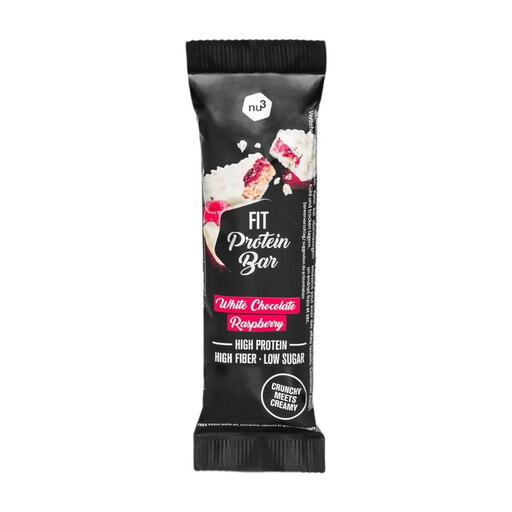 Image unavailable
This white chocolate and raspberry variant weighs 55 g per bar. Even if you’re comparing it with the other nu3 product, check its nutritional values and allergen information separately.
 Image unavailable
This pack of ten 60 g bars is best compared by the individual bar, not the weight of the whole pack. If you’re planning to serve them to several people, check the values per bar as well as the ingredients and allergens for this flavour.
 Image unavailable
This pack contains ten bars weighing 650 g in total, so check the information per bar before planning portions for your aperitif. Also check the ingredients list and allergens for this variant.
No, not under the rules for this claim on solid foods. The bar listed by Auchan contains around 360 kcal per 100 g, while the European regulation published on EUR-Lex sets the “low energy” threshold for solid foods at no more than 40 kcal per 100 g. You can still decide whether 162 kcal per bar suits the portion you want to serve.
Start with the kcal and weight of each bar, then compare the protein and sugars for the same serving size. Finally, check the ingredients and allergens: two bars of a similar weight don’t necessarily have the same ingredients.
No. Anses explains that ingredients can contain naturally occurring sugars even when no sugar has been added. To find out how much sugar a bar contains, check the “of which sugars” line in the nutritional information.
Check the allergens and any ‘may contain’ warnings on the packaging for each product, then leave it where guests can refer to it. Some variants listed by Carrefour and Auchan mention milk, soya or possible traces of nuts and sesame. Don’t assume these details apply to every bar from the same brand.