If you’re choosing a protein bar as a lighter snack for the new school year, start by comparing the calories and protein in the whole bar. A bar containing no more than 90 kcal meets a different calorie goal from one containing 162 to 189 kcal with a stated protein content. Also check the sugars, sweeteners and allergens, and consider where the snack fits into your day.
Who is this choice for?
Pupils and students looking for a light snack
An individually wrapped bar fits neatly into a bag, but the word ‘protein’ doesn’t tell you how many calories are in the whole portion. For schoolchildren, Anses advises against adding food outside structured mealtimes, so a bar shouldn’t automatically be planned as an extra snack.
Active people keeping an eye on protein per portion
Whether you’re studying, working or exercising, the protein stated per bar makes it easier to compare different sizes. Auchan lists 15 g of protein and 162 kcal per INSHAPE NUTRITION milk chocolate caramel bar; Joybuy lists 17.6 g and 189 kcal for nu3 Fit Salted Caramel.
Shoppers who pay attention to ingredients
If sugars, sweeteners or particular allergens influence your choice, calories alone aren’t enough. Read the ingredients list and any precautionary allergen information for the exact recipe, especially if you’re switching flavours.
What should you look for first?
For a back-to-school snack, start with the bar you’ll actually eat: its weight, nutritional values per portion and ingredients list.
| What to check |
What to look for |
Who is it for? |
| Calories per bar |
The energy content of the whole bar, along with its weight if the values are given per 100 g. |
Between lessons, some people mainly want to know how much energy is in the portion they’re taking with them. Around 36% of consumers are said to make calories per bar their top priority. |
| Protein per portion |
The grams of protein and calories in the same whole bar. |
For a portable snack after an activity, the stated protein content can help guide your choice without overlooking total energy. This is said to be the top priority for around 29% of consumers. |
| Sugars and sweeteners |
The amount of sugars, whether it says ‘no added sugars’ and the sweeteners listed. |
If you compare products based on their sweetening ingredients, you can’t work out the calories from the front of the pack alone. Around 21% of consumers are said to put sugars and sweeteners first when choosing. |
| Allergens and the school setting |
Highlighted allergens, possible traces and, for a child, whether a snack is part of the school-day routine. |
If an allergy or the school’s mealtime arrangements determine what you buy, the recipe and how it will be used take priority over other factors. This is said to be the main need for around 14% of consumers. |
Things to avoid getting wrong
-
Assuming ‘high protein’ means ‘low calorie’
Protein content doesn’t tell you the energy value. Among the products listed by E.Leclerc, Auchan and Joybuy, stated calories range from no more than 90 kcal to 189 kcal per bar.
Compare the calories and protein in the whole bar before choosing one for your break.
-
Taking ‘no added sugars’ to mean low calorie
This claim doesn’t tell you the total energy content, and a recipe may contain sweeteners. Anses has found no proven benefit of intense sweeteners for weight management.
Check the sugars, ingredients and calories per bar together, rather than drawing conclusions from the claim on the front of the pack alone.
-
Overlooking allergens when you switch flavours
Depending on the product, the recipes mentioned contain milk, soya, peanuts or tree nuts, and may also carry warnings about possible traces.
Check the highlighted allergens and trace warnings on the pack of the recipe you’re buying, including when you switch flavour or size.
-
Automatically packing an extra bar for school
For schoolchildren, Anses considers it inadvisable to add food outside structured mealtimes.
For a child, first consider their mealtime routine and the school’s rules rather than treating a bar as a necessary school snack.
Brands to consider when comparing recipes
Milical
A chocolate option sold in a pack of six, worth considering when calories per bar are your main priority.
- E.Leclerc lists an energy value of no more than 90 kcal per bar.
- The recipe contains sugars and sweeteners. Check the protein content per bar on the pack before comparing it with other options.
INSHAPE NUTRITION
The milk chocolate caramel bar weighs 45 g, with nutritional values provided per bar.
- Auchan lists 15 g of protein and 162 kcal per bar.
- The recipe includes milk- and soya-derived ingredients, as well as maltitol. Check the allergens for your chosen flavour.
nu3
The Fit range includes several recipes, so the values for one flavour don’t apply to the others.
- Joybuy lists 17.6 g of protein and 189 kcal for the 55 g Fit Salted Caramel bar.
- This recipe contains milk, soya, almonds and sweeteners, among other ingredients. Check the full label.
BAREBELLS
The Cookies & Crème recipe lets you consider the ‘no added sugars’ claim separately from the calories per bar.
- Auchan lists 20 g of protein and the claim ‘no added sugars’ for this recipe.
- It contains sweeteners. Check the calories per bar and allergen information before choosing it as a light snack.
FULFIL
The chocolate and hazelnut bar can be compared using its stated values for a 55 g bar.
- Auchan lists 19 g of protein and 1.1 g of sugars per bar.
- The recipe contains milk, soya, hazelnuts, peanuts and sweeteners, among other ingredients. The amount of sugars alone isn’t enough to judge its calories.
Protein bars available on Joybuy
These portable protein bars can be compared by portion size, nutritional information and the ingredients in each recipe.
 Image unavailable
nu3 Fit Protein Bar Salted Caramel 55 g
For a snack on the go, this recipe makes it easy to compare the energy and protein in a whole bar. Joybuy lists 189 kcal and 17.6 g of protein per 55 g bar.
Check the label for milk, soya and almonds, any trace warnings and the sweeteners used in the recipe.
View on Joybuy
 Image unavailable
Andros Sport High-Protein Bar Chocolate Peanut 55 g
This 55 g bar could be an option for a snack on the go. If keeping calories down is your priority, compare the energy in the whole bar with that of other recipes.
Check the pack for ingredients and information about milk, peanuts and soya.
View on Joybuy
 Image unavailable
Optimum Nutrition Whipped Protein Bar Peanut & Salted Caramel 60 g, pack of 10
This pack makes it easy to compare individual 60 g portions without confusing the values for one bar with those for the whole pack. If you’re looking for a light snack, check the calories and protein per bar.
Also check the ingredients and allergen information for this recipe, particularly for milk and soya.
View on Joybuy
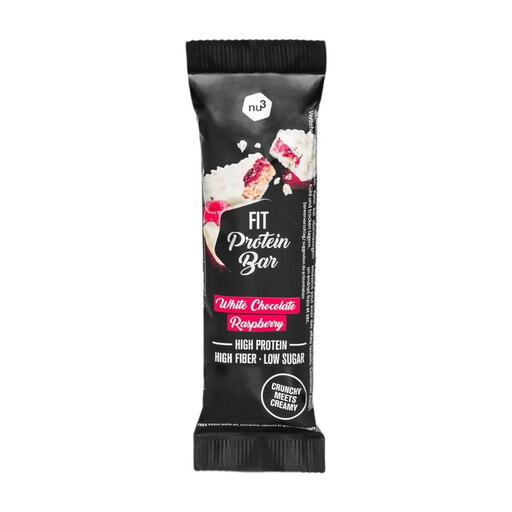 Image unavailable
nu3 Fit Protein Bar White Chocolate Raspberry 55 g
This 55 g bar gives you another flavour to compare for a snack on the go. Don’t assume it has the same nutritional values as nu3 Salted Caramel: check the information for the White Chocolate Raspberry bar.
Also check the label for sweeteners and information about milk, soya and almonds.
View on Joybuy
Frequently asked questions
Should you pack a protein bar as an extra snack for school?
Not as a matter of course. For schoolchildren, Anses considers it inadvisable to add food outside structured mealtimes. Consider the child’s needs and mealtime routine before planning a snack.
How do you compare the calories in two bars of different sizes?
Compare the energy in each whole bar, then check the protein listed for those same portions. Values per 100 g can help you understand the difference between recipes, but they don’t necessarily reflect what you’ll eat during a break.
Does ‘no added sugars’ mean a product is low in calories?
No. This claim is about added sugars, not total calories, so check the energy per bar and the ingredients list. A recipe carrying this claim may also contain sweeteners.
What should you check on the packaging of a pre-packed bar in France?
Check the ingredients list, nutritional information, net quantity and date shown on the product. The DGCCRF states that allergenic ingredients must be highlighted. Check these on the flavour you’re buying, even if you already know another recipe from the same brand.


