Before a workout, choose a bar based on how much you plan to eat, when you’ll have it, and its carbohydrate, fat and ingredient content. A protein claim alone won’t tell you whether it’s right for you. For recreational exercise, a protein bar isn’t automatically necessary. If you’re comparing protein content, check the grams per bar in the context of your overall diet for the day.
Who is this choice for?
Recreational exercisers before a short session
You want a convenient snack, but don’t want to choose a bar just because it says “protein” on the label. According to VIDAL, recreational exercisers have the same protein requirements as the general population.
Exercisers comparing their intake after training
You check the grams of protein per serving to see how a bar fits into your diet. VIDAL points out that protein intake should also be considered over the course of the day, and that protein is most useful in the hours following exercise.
People who pay close attention to allergens and ingredients
If you need to avoid an ingredient, the exact recipe matters more than the product range’s name. The Kellogg's France product information for the two bars featured below lists several allergens, depending on the bar. Check the ingredients for the exact variety you buy.
What should you check before buying?
When choosing a snack before exercise, start with when you’ll eat the bar, then compare its serving size and ingredients with what you want from it.
| What matters |
What to check |
Who is it for? |
| Serving size and snack timing |
Check the bar’s weight, carbohydrate and fat content per serving, and how long before your session you’ll be eating it. |
If I’m eating shortly before I exercise, I want to know what a whole bar adds to my snack. Around 27% of consumers prioritise serving size and when they’ll eat it. |
| Protein per bar |
Compare the grams of protein per serving, and distinguish between a snack before exercise and protein intake you’re considering after training. |
When I compare bars for my daily intake or after training, the amount in the bar I’ll actually eat matters more than the claim on the front. Protein is a priority for around 33% of consumers. |
| Allergens and ingredients |
Read the ingredients and the allergens highlighted on the packaging of the exact recipe. |
I need to be able to rule out a recipe containing an ingredient I avoid, even if its nutritional values appeal to me. This compatibility comes first for around 20% of consumers. |
| Pack size |
Check the number of bars, the weight of each one and the information for the variety you’ve chosen. |
If I’m preparing several snacks, I need to know the size of each bar and what’s in the pack, not just the name of the range. Around 20% of consumers prioritise this practical format. |
Mistakes to avoid
-
Choosing a bar based only on the “high protein” claim
This claim doesn’t tell you what serving size you’ll eat or how the bar fits into your pre-workout snack. Regulation (EC) No 1924/2006 governs the “high protein” claim according to the proportion of the food’s energy provided by protein. It doesn’t make it a measure of whether the bar suits every type of activity.
Compare the serving size, carbohydrates and fats before looking at the protein content.
-
Comparing protein per 100 g only
Bars of different weights won’t necessarily provide the same amount per snack. According to Kellogg's France, Special K Protein coconut-cocoa-cashew contains 5.9 g of protein per 28 g bar, compared with 9.1 g per 35 g bar for High Protein salted caramel.
Use the per-100 g figures to compare recipes, then check the per-bar figures for the serving you’ll eat.
-
Assuming every flavour has the same ingredients
The Kellogg's recipes mentioned have different ingredient lists. For pre-packed food sold in France, the Directorate General for Competition Policy, Consumer Affairs and Fraud Control (DGCCRF) states that allergenic ingredients must be highlighted.
If you have an allergy, check the label of the exact variety before eating it.
-
Relying on the product range name alone
A range can include several recipes and formats. The name shown on a shelf doesn’t replace the nutritional information and ingredient list for the product you’ve chosen.
Check the details for the exact product or its packaging, including the number and weight of the bars.
Brands to consider for these types of bars
Kellogg's
Kellogg's France offers, among other products, Special K Protein coconut-cocoa-cashew in a 28 g bar and High Protein salted caramel in a 35 g bar.
- The product information for these bars gives their protein content as 5.9 g and 9.1 g per bar, respectively.
- Their serving sizes and ingredients differ, so these figures don’t apply to every bar from the brand.
Carrefour Sensation
Carrefour France offers Protein cereal bars with seeds and chocolate, as well as seeds and red berries, in packs of 4 × 32 g.
- These two recipes offer different options to compare in the same format.
- Check the product information or packaging for each one to compare its protein content and allergens.
Auchan Eat'n Move
Auchan France offers Eat'n Move caramel protein cereal bars in a pack of 5 × 32 g.
- The number of bars and their individual weight give you a clear idea of the pack size.
- Check the nutritional information and allergens for this product on its product page or packaging.
Sports bars and snacks available on Joybuy
This selection includes protein bars and cereal-based energy bars. When choosing a snack before exercise, check the ingredients and serving size of each product rather than treating these categories as interchangeable.
 Image unavailable
Andros Sport High-Protein Bar Chocolate Peanut, 55 g
Worth considering if you’re looking for an individual protein bar as a sports-related snack. The stated serving size is 55 g. Check the ingredients and allergens in this recipe before choosing it.
View on Joybuy
 Image unavailable
nu3 Fit Protein Bar Salted Caramel, 55 g
This individually wrapped bar gives you another protein-bar recipe to compare. It weighs 55 g; check the label if the ingredients or the presence of polyols could affect your choice.
View on Joybuy
 Image unavailable
CLIF BAR Blueberry Energy Bar, 12 × 68 g
This energy bar is worth considering if you’d prefer a recipe from this category rather than one marketed as a protein bar. The pack contains 12 bars of 68 g each. Check the nutrition information per bar and the allergens in the blueberry recipe.
View on Joybuy
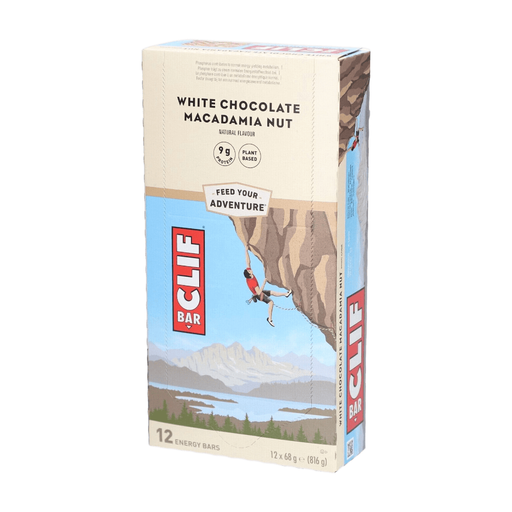 Image unavailable
CLIF BAR Macadamia Nut and White Chocolate Energy Bar, 12 × 68 g
When comparing another energy bar recipe, bear in mind the ingredients specific to this variety. The pack contains 12 bars of 68 g each. Check the label for this recipe if you avoid tree nuts or other allergens.
View on Joybuy
 Image unavailable
Optimum Nutrition Whipped Protein Bar Peanut & Salted Caramel, 10 × 60 g
This protein bar comes in a pack of 10, with 60 g per serving. Before choosing it for its protein content or eating it if you have an allergy, check the packaging: available descriptions differ on the amount of protein per bar and how peanuts are listed among the allergens.
View on Joybuy
Frequently asked questions
What does “high protein” mean on a bar sold in France?
Under Regulation (EC) No 1924/2006, at least 20% of the food’s energy value must come from protein for this claim to be used. It doesn’t set the same protein content per bar, nor does it tell you whether the recipe is suitable for a snack before exercise.
Do you need a protein bar before recreational exercise?
No, not necessarily. VIDAL states that recreational exercisers have the same protein requirements as the general population. Choose your snack based on the serving size, when you’ll eat it and your overall diet, rather than the protein claim alone.
How should you compare the nutritional information for two bars?
First compare the values per 100 g, then look at the figures for the bar you’ll actually eat. The DGCCRF states that nutrition information for pre-packed food is given per 100 g or 100 ml, so the weight of each bar is also useful when assessing the actual serving size.
Where can you check a bar’s allergens before eating it?
Read the ingredients list on the packaging for the exact flavour and format. The DGCCRF states that allergenic ingredients must be highlighted on pre-packed food sold in France. Don’t assume that another recipe from the same brand has the same ingredients.


