People who plan their snacks
If you’d like to cut down on buying bars individually, choose a quantity that suits your routine. A small multipack lets you check that you like the recipe before stocking up.


To choose a multipack without ending up with unused bars, start by working out how many portions you’ll eat, then check the nutritional information per 100 g and per bar. A small pack is handy for trying a recipe or preparing a few lunchboxes; a larger box is better suited to planned consumption, once you’ve checked the flavour, portion size and allergens.
If you’d like to cut down on buying bars individually, choose a quantity that suits your routine. A small multipack lets you check that you like the recipe before stocking up.
The number of portions and how they’re packaged matter when you’re splitting bars between several bags. If you’re sharing them, check the ingredients and allergens for the specific product too.
The protein content per portion can help you choose, but be sure to consider it alongside the bar size and other nutritional information. A bar marketed as a sports snack doesn’t automatically replace a meal.
First work out how many bars you’ll actually use, then check the portion size and ingredients for each product you’re considering.
| What matters | What to check | Who is it for? |
|---|---|---|
| Getting the quantity right | Number of bars and weight of each; how quickly you’ll get through the multipack. | If you haven’t tried the recipe before, a large box could end up half-used. Around 31% of consumers put choosing a quantity that suits their needs top of their list. |
| Sharing out portions | Number of portions and whether the bars come in individual wrappers. | When preparing several lunchboxes, you need to be able to split up the bars and know what each person is getting. This is the main priority for around 25% of consumers. |
| Protein per bar | Amount listed for the portion you’ll eat and the weight of that portion. | If you’re having the bar as a snack around your workout, the amount in one bar matters more than the range name alone. This is the main consideration for around 25% of consumers. |
| Ingredients and dietary tolerance | Ingredients, allergens and warnings; nutritional information per 100 g and per portion. | If you need to avoid certain ingredients or are sensitive to some sweeteners, buying several bars means committing to the same recipe. Around 19% of consumers prioritise these checks above all else. |
A box intended to last for several weeks of snacks is a bigger commitment than a small pack. If you don’t like the flavour, some of the bars may go uneaten.
Start with a smaller pack when trying a new recipe, then choose the number of bars to suit how many you expect to eat.
Portion sizes and recipes vary. For example, the Isostar product listing published by Auchan gives 8.8 g of protein and 13 g of sugars per 35 g bar. These figures apply to that product, not to all protein bars.
Read the nutritional information per 100 g and per portion, paying particular attention to energy, sugars, fat, protein and salt.
Ingredients and allergens vary between products and flavours. Carrefour also notes on its PowerBar product listing that excessive consumption may have a laxative effect.
Check the label and warnings for the exact flavour before sharing the bars with your household.
A claim on the front of the pack doesn’t tell you everything about the portion, ingredients or nutritional values. The DGCCRF notes that only authorised nutrition and health claims may be used.
Choose according to how you plan to use the bar — as a snack to take with you, for a lunchbox or to have after a workout — and read the full ingredients list.
The box of four 40 g bars featured by Carrefour is a small pack for trying a recipe or preparing a few snacks.
The HP 25 product described by Auchan comes in a pack of three 35 g bars, designed as a snack around exercise.
The caramel product featured by Auchan is a protein cereal bar sold in a pack of five 32 g bars.
The chocolate product described by E.Leclerc comes in a pack of six bars.
The Protein Plus Bar 30 % Vanilla Caramel featured by Carrefour is available in a box of 15 55 g bars.
These two multipacks suit different needs: four bars for a few snacks, or ten bars for more carefully planned consumption. In both cases, check the recipe before deciding how many to buy.
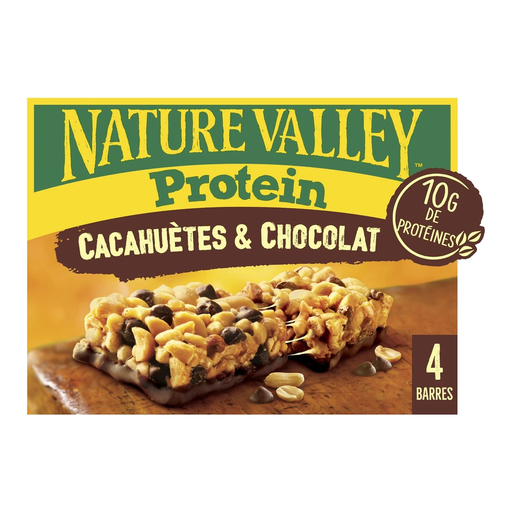 Image unavailable
This four-bar pack is ideal for trying the recipe or preparing a few lunchboxes. The product is listed as coming in individual wrappers. Before sharing it, check the label if peanuts, soya or milk are a concern.
 Image unavailable
This pack of ten bars may suit planned snacks around your workout. Check the label for the exact product to confirm the protein content per bar, as two figures on the product listing differ. Also check the allergens, the warning about polyols and whether the bars are individually wrapped if you plan to share the pack.
No. Compare the portion size, ingredients and nutritional values, particularly protein, sugars and fat. The DGCCRF notes that nutrition claims are regulated; a claim on the front of the pack is no substitute for reading the label.
Read the ingredients and allergens for the flavour you’ve chosen, then check the portion size and packaging. The DGCCRF states that allergens must be highlighted on the labels of prepacked foods. Don’t assume that two recipes in the same range are identical.
This pack size suits regular consumption if you already know the flavour and ingredients of the product. If you’re choosing the box of 15 PowerBar bars featured by Carrefour, read the warning about excessive consumption before planning to eat several portions.
No. The products featured here are described as snacks or products to have around exercise, and their portion sizes and ingredients vary. Treat the bar as one of the foods you eat as part of a meal or throughout the day, rather than assuming what it’s for based on its protein content alone.