Cyclists planning a post-ride snack
You want to pack several portions for upcoming training sessions. Tell apart a bar intended for after exercise from an energy bar designed for a different occasion.


For post-ride snacks or lunchboxes, start by choosing a bar whose ingredients and portion size suit the occasion, then pick a multipack you’ll actually use. If carbohydrates are your priority on a ride, compare energy bars too: a protein bar and an energy bar may not meet the same needs. Before buying a large box, check the nutritional information, allergens and storage instructions.
You want to pack several portions for upcoming training sessions. Tell apart a bar intended for after exercise from an energy bar designed for a different occasion.
You’re portioning individual snacks for several days, either for yourself or to share. The weight of each bar, its packaging and how it should be stored matter just as much as the number of bars.
You want to compare these values per portion and per 100 g, rather than relying on the product name alone. Check the ingredients list and any warnings on the packaging too.
Decide when you’ll use the bar before choosing the pack size. When comparing portions of different weights, the Directorate General for Competition Policy, Consumer Affairs and Fraud Control says that nutritional values per 100 g make comparisons easier.
| Factor | What to check | Who is it for? |
|---|---|---|
| When you’ll use it | Recommended use on the packaging; carbohydrates and protein per bar. | After a ride, I want a snack intended for that occasion, rather than a bar chosen just for its name. Around 36 % of consumers prioritise a post-exercise snack. |
| Portions to take with you | Number of bars, weight of each bar and individual packaging. | To fill several lunchboxes, I need portions that are easy to divide up, without buying more bars than I need. Preparing individual snacks is the priority for around 29 % of consumers. |
| Nutritional content | Values per 100 g and per bar, particularly protein, carbohydrates and sugars. | If I’m comparing two recipes in different sizes, I want to know what’s actually in each portion. Around 21 % of consumers prioritise this nutritional comparison. |
| Ingredients and storage | Allergens, warnings, date shown and storage instructions. | Before sharing or storing a multipack, I need to make sure its ingredients and storage instructions suit how I plan to use it. This is the top priority for around 14 % of consumers. |
Their ingredients and recommended uses may differ. Decathlon’s x6 recovery bar combines protein and carbohydrates and is intended for after exercise; this positioning doesn’t apply to all protein bars.
First decide when you want to eat the bar, then compare the carbohydrates and protein per portion.
A multipack of identical bars is best if you already know that the flavour, ingredients and format suit your needs.
If you haven’t tried the recipe before, consider a small pack before choosing a larger box.
If you don’t like the recipe, you could end up with several bars left unused.
Two bars may have different weights and different amounts of carbohydrates or sugars. A single value shown on the front doesn’t tell you everything about the portion.
Compare the nutritional information per 100 g with the values given per bar.
The Directorate General for Competition Policy, Consumer Affairs and Fraud Control says that allergenic ingredients must be clearly highlighted on food labels. Carrefour’s product page for the PowerBar Protein Plus Bar 30% also warns that excessive consumption may have a laxative effect.
Read the label for the recipe you’ve chosen, especially if the bars are for several people or for a ride.
Multipacks of protein bars, including an x6 option presented for after exercise.
A pack of four salted caramel and peanut bars, handy for preparing a few individual portions.
Carrefour lists the Protein Plus Bar 30% in a box of 15 chocolate bars weighing 55 g each.
A pack of three hazelnut-flavoured protein bars, listed by Auchan.
These Joybuy products include multipacks of protein bars for snacks to enjoy after training or pack in lunchboxes, as well as a separate pack of energy bars to compare if carbohydrates during your ride are your priority.
 Image unavailable
A multipack for preparing several post-training snacks. The information provided for this product lists 20 g of protein, 17 g of carbohydrates and 3,8 g of sugars per bar. Check the ingredients and date shown on the packaging; store in a cool, dry place.
 Image unavailable
Another multipack of bars designed as a post-workout snack or to take with you. The information provided lists 18 g of carbohydrates per bar; check the protein content on the packaging before comparing this product with others. The recipe contains milk and soya, and a warning notes that excessive consumption of sweeteners may have a laxative effect.
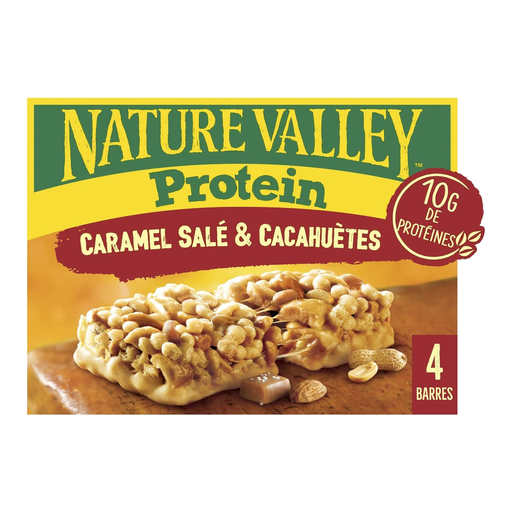 Image unavailable
Four individually wrapped portions for preparing a few lunchboxes or sharing as snacks. The information provided lists 10,4 g of protein and 6,3 g of sugars per bar. This recipe contains peanuts, soya, milk and almonds, among other ingredients: check the label before sharing.
 Image unavailable
This is an energy bar, not a protein bar specifically intended for after exercise, and is worth considering if you’re preparing portions for rides. The information provided lists 38 g of carbohydrates and 11 g of protein per bar. Check the packaging for ingredients and allergen warnings.
Don’t choose one based on its name alone: if you plan to eat during your ride, compare the carbohydrates per portion with those in energy bars. Also check the product’s recommended use and try any new recipe before an important ride.
Follow the instructions for the product you’ve chosen. Decathlon describes its x6 milk chocolate and caramel recovery bar as combining protein and carbohydrates, and recommends eating it within 30 minutes of exercise; this product-specific guidance doesn’t apply to all bars.
Check the number of bars and the weight of each one, then compare the nutritional values per 100 g and per portion where provided. The Directorate General for Competition Policy, Consumer Affairs and Fraud Control says that values per 100 g make it easier to compare food products.
Read the ingredients list, allergen information, warnings and storage instructions for the specific recipe. The Directorate General for Competition Policy, Consumer Affairs and Fraud Control says that allergenic ingredients must be clearly highlighted on food labels.