What should you check first?
For an occasional packaged snack, first check whether the pack size suits your household’s needs, then look at the bar’s ingredients and anything you need to avoid.
| What matters |
What to check |
Who it matters to |
| Pack size |
Compare the number of bars and the total net weight. Check that the portions suit how you plan to use them. |
When I need to prepare several snacks, I want convenient packaging, not a choice based only on the number printed on the box. Around 46% of consumers say a pack size that suits their needs is their main concern. |
| Its place in a snack |
Check the nutritional values per 100 g, particularly sugars, fat and salt. Consider how the bar fits into a varied snack. |
For my child’s usual snack, I don’t want the word “protein” to take the place of looking at the whole meal. Around 36% of consumers put the product’s place in their diet first. |
| Ingredients to look out for |
Check the ingredients list, any allergens highlighted on the label and whether the chosen flavour contains sweeteners. |
If certain ingredients are a concern in my household, the exact recipe determines whether I can consider this bar. Around 18% of consumers say ingredient suitability is their main concern. |
A multipack option on Joybuy
For an occasional packaged snack, this selection features a pack of small protein cereal bars. Choosing the right pack size doesn’t remove the need to consider how the bar fits into a varied snack and what’s in the flavour you choose.
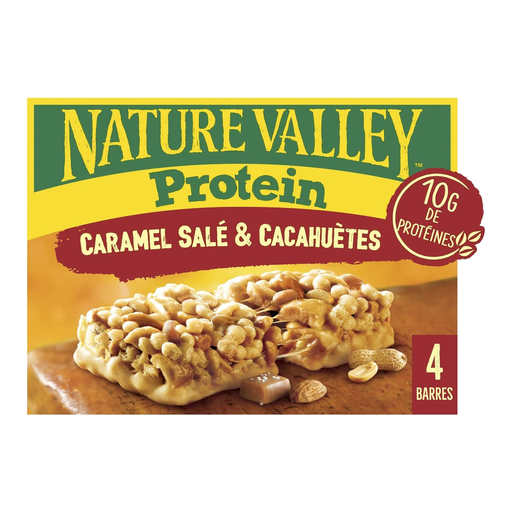 Image unavailable
Nature Valley Protein salted caramel and peanuts, 4 × 40 g
This pack may suit an occasional need for a packaged snack. It contains four 40 g bars; check the ingredients and allergens on the exact pack before offering it to a child.
View on Joybuy
Frequently asked questions
Is a protein bar suitable as an everyday snack for children?
The word “protein” alone doesn’t make it the right everyday choice for a child. Manger Bouger recommends varying snacks, for example with bread, a piece of fruit or fruit purée and a dairy product, while limiting foods that are high in fat and sugar. If you’re offering a bar occasionally, check its ingredients as you would for any packaged food.
Should I choose the box with the most bars?
No. The number of bars alone doesn’t tell you how much the box contains or how large each portion is. Compare the total net weight and the weight of each bar, then choose a pack size that suits the snacks you actually plan to prepare.
Which label details help you compare recipes?
The ingredients list and nutritional values per 100 g let you compare recipes in the same category. The DGCCRF says that nutrition declarations for prepacked foods include, among other things, fat, sugars, protein and salt. The French Ministry of the Economy also reminds shoppers that allergenic ingredients must be highlighted.
Should I check the allergens again if I choose a different flavour in the same range?
Yes, because the ingredients depend on the exact recipe. A FULFIL bar featured by Auchan lists milk and peanuts, and warns that gluten, soya and nuts may also be present. Don’t assume these details apply to every flavour without checking. If your child has an allergy, check the exact pack and follow the medical advice specific to them.
What should I check if a bar contains sweeteners?
Read the ingredients list and any warnings for the specific product. Don’t assume what it contains based on the sugar content alone. In France, EU rules require a statement about the laxative effects of excessive consumption for foods containing more than 10% of authorised polyols. This requirement doesn’t apply automatically to every bar containing a sweetener.


