A little treat with your coffee
You’d like to keep a chocolate bar for your afternoon snack and compare the kcal in the whole portion, rather than relying on the pack size alone or a ‘light’ claim.


If you’re keeping an eye on calories while enjoying a coffee, start by comparing the energy in the portion you’ll eat. Carrefour product pages list 226 kcal for a 51 g Mars bar and 244 kcal for a 50 g Snickers; the 510 kcal per 100 g listed for a 41.5 g KitKat works out at around 212 kcal per bar. If your priority is declared sugars and protein instead, look at protein bars, but don’t assume they’re lower in calories. Ingredients, allergens and warnings also matter when making your choice.
You’d like to keep a chocolate bar for your afternoon snack and compare the kcal in the whole portion, rather than relying on the pack size alone or a ‘light’ claim.
A protein bar may appeal if you’re comparing its declared sugars and protein. Remember to check the ingredients list and any warnings about polyols too.
If you need to avoid certain allergens, the exact recipe and any ‘may contain’ statements matter more than the calorie count. Ingredients can vary between flavours.
When choosing a bar to enjoy with your coffee, start with the portion you plan to eat, then compare the recipes according to your main priority.
| What to compare | What to check | Who is it for? |
|---|---|---|
| Calories per portion | The kcal per bar and the weight of each bar. If only the figures per 100 g are shown, calculate the amount for the portion you’ll eat. | With my coffee, I want to know the calories in the whole bar, not just per 100 g. Around 45% of consumers put this first. |
| Sugars and protein | The sugars, protein and kcal per bar for the exact recipe; check the ingredients too. | If I choose a protein bar, I look first at the declared sugars and protein, while considering its other characteristics too. This is the top priority for around 36% of consumers. |
| Ingredients and allergens | The ingredients list, declared allergens and any ‘may contain’ statements on the pack you buy. | If I need to avoid an ingredient or watch my intake of polyols, I check the recipe before looking at its calories. Around 19% of consumers prioritise checking this information. |
A smaller bar may mean fewer kcal consumed, but that doesn’t automatically justify a nutrition claim about the product.
Compare the kcal per portion, and only use the term ‘low calorie’ for products where the claim is applicable and can be verified on the packaging.
The recipes reviewed also contain sweeteners or polyols. Carrefour’s product page for Snickers Hi Protein Low Sugar warns that excessive consumption may have a laxative effect.
Read the ingredients and warnings, then compare the energy in the whole bar as well.
According to Santé publique France, displaying Nutri-Score is voluntary; it supplements the mandatory nutrition information.
If it appears, use it to compare similar products. Otherwise, check the nutrition declaration and ingredients list.
Depending on the recipe, the products reviewed list ingredients including milk, wheat, soya, egg, peanuts and tree nuts.
Check the packaging for the flavour and size you’re buying, including any statements about possible traces.
The range reviewed includes a classic chocolate, caramel and nougat bar, as well as a Mars Protein Low Sugar bar.
The products reviewed include a classic chocolate, caramel and peanut bar, as well as a Hi Protein Low Sugar version.
The wafer-based bar reviewed gives you a 41.5 g portion to compare with other single-serving sizes.
The chocolate and salted caramel product reviewed is a protein bar, so it’s different from a traditional chocolate confectionery bar.
This chocolate, peanut and caramel protein bar is another recipe to consider if you’re comparing sugars and protein for your coffee break. It isn’t a substitute for comparing calories per portion with a classic chocolate bar.
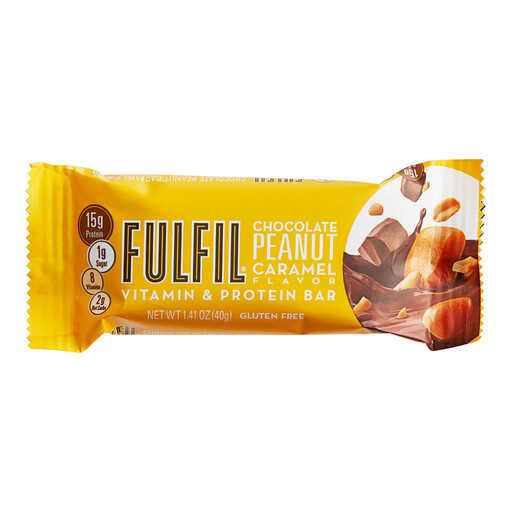 Image unavailable
Worth considering if you’d like to compare a protein bar with classic chocolate bars for your coffee break. Check the kcal, sugars and protein per bar on the packaging. The listed ingredients include milk, soya and peanuts, as well as maltitol; check for any statements about traces too. The title says 3 × 40 g, but the description also mentions a display case of 12 bars. Confirm the pack contents before buying.
Compare the kcal in the portion you’ll eat and check the weight of each bar. Figures per 100 g are useful for comparing recipes on an equal-weight basis, but they may not reflect the portion you’ll actually have as a snack.
Not necessarily: the declared sugars alone don’t tell you how much energy a bar contains. Compare the kcal per portion and read the ingredients, particularly if the recipe contains polyols or sweeteners.
Check the packaging for the exact recipe, including any ‘may contain’ statements. Depending on the product, the bars reviewed may contain milk, wheat, soya, egg, peanuts and tree nuts.
No. According to Santé publique France, Nutri-Score is voluntary. The nutrition declaration on pre-packed foods, on the other hand, is part of the mandatory labelling requirements set out by the DGCCRF. If the logo isn’t shown, compare the nutrition information and ingredients.
No, not within the scope of the contribution described in Article 1613 ter of the General Tax Code published on Légifrance. Subject to its conditions of application, the legislation covers drinks and liquid preparations for drinks, not solid chocolate bars.