
Livraison le jour même ou le lendemain

Qualité garantie

Débloquez vos offres de bienvenue: Livraison GRATUITE | Jusqu'à -80 % | 30 jours d'essai gratuits à JoyPlus
Téléchargez l'application
A pair of protective gloves should not be chosen solely based on price or appearance. Cycling, DIY, gardening, cleaning, cooking and winter sports all come with their own requirements. A thin glove often offers good precision, but may provide too little protection against abrasion. Conversely, a thicker model offers greater protection, but can restrict movement and make detailed tasks uncomfortable.
A soft, comfortable glove is not necessarily designed to withstand cuts, chemicals or heat. Gardening gloves, work gloves and household gloves do not necessarily meet the same requirements.
For demanding work, examine the material, thickness, lining and use recommended by the manufacturer. A triple-thickness latex construction may be suitable for certain mechanical or thermal tasks, but it does not replace protection specifically designed for chemicals or electrical hazards.
Descriptions such as ‘water-resistant’ or ‘windproof’ do not guarantee that gloves will stay dry in every situation. The membrane, seams, cuffs and care routine all affect how well they perform over time.
For cycling or electric scooter journeys, look for a sufficiently long cuff, a grippy palm and precise information about moisture resistance. For children’s ski gloves, the wrist fastening and the ability to dry them properly matter just as much as insulation.
A glove that is too loose reduces precision and can interfere with using the brakes. If it is too tight, it quickly becomes uncomfortable, especially when worn for long periods. The stated size — S, M, L or XL — should always be compared with the manufacturer’s size guide.
Touchscreen gloves should also be tried with your own smartphone. A conductive area on the thumb and index finger makes it easier to use the screen, but naturally does not remove the need to stop before checking your phone while on the move.
For cooking gloves, check the length, heat resistance and the exact use intended by the manufacturer. An oven glove is not a substitute for household or DIY gloves.
When dealing with personal protective equipment, check for the CE marking, read the instructions and, where relevant, check the European standards corresponding to the specific risk. A standard covering mechanical risks does not automatically guarantee protection against cuts, heat, chemicals or cold.
Commercial descriptions should be examined carefully. A pair may improve grip without constituting professional safety equipment. For electrical work, solvents, acids or sharp objects, use only protection explicitly designed for the intended application.
If the instructions permit it, rinse reusable gloves and leave them to air-dry, away from any direct heat source. Synthetic materials, water-repellent treatments and conductive fibres can deteriorate as a result of heat, repeated washing or friction.
For disposable gloves, check that they are not torn before use and throw them away afterwards. A box of 20, 50 or 100 gloves may be more economical for regular use, provided you choose the right material and size.
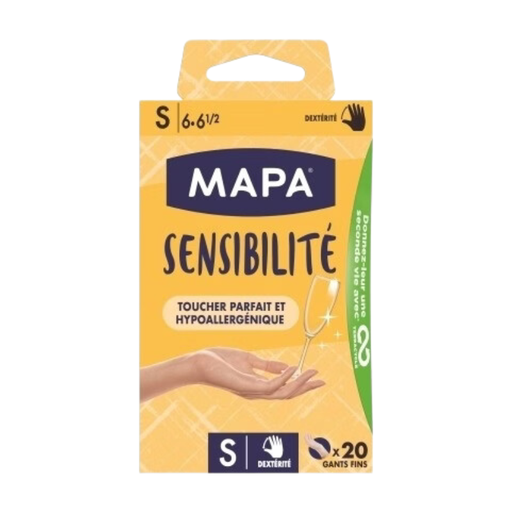
Why this choice suits this type of user: this pack of 20 vinyl gloves is suitable for occasional cleaning, cooking or light handling tasks.
The latex-free composition and powder-free formula are clearly stated, making it easier to compare these gloves with latex models.
Vinyl, size S, powder-free and single-use. Do not use with solvents, strong acids or sharp objects.
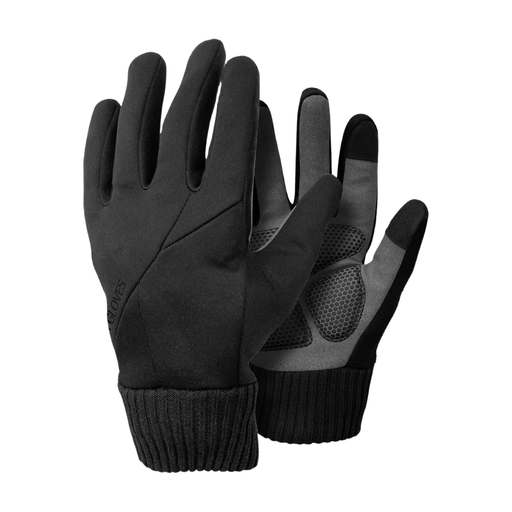
Why this choice suits this type of user: this model is aimed at people who alternate between cycling, electric scooters and urban travel in cool weather.
The product information distinguishes urban mobility features from professional motorcycling equipment and specifies the limitations of use.
Size M, touchscreen zones on the thumb and index finger, reflective strips, EVA foam padding and a long cuff.
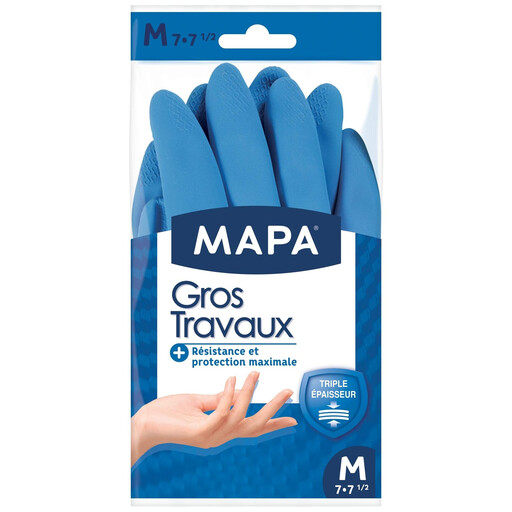
Why this choice suits this type of user: their design is intended for heavy-duty work, DIY, gardening and certain construction activities.
The triple thickness and cotton lining are clearly specified, rather than being hidden behind a simple promise of durability.
Natural latex, cotton lining and size M. Do not use with live electrical components, solvents or sharp objects.
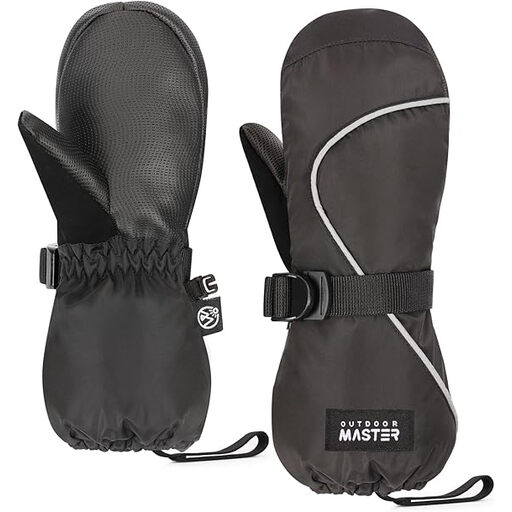
Why this choice suits this type of user: these size L mittens are designed for children aged 10 to 12 and activities in the snow.
The product information specifies the size, hand-washing instructions and air-drying requirements: three points often overlooked when buying.
120 g thermal cotton lining, TPU inserts advertised as waterproof, non-slip palm and anti-loss strap.
We have brought together a complete selection, updated in real time, of products that meet these exacting criteria, as well as European safety regulations.
For everyday tasks, latex gloves generally offer a soft and flexible material. Latex-free vinyl gloves are a good option for people who want to avoid natural latex. In the kitchen, check that the product is suitable for food contact and follow the information on the packaging. An oven glove should only be used within the temperature range specified in its instructions.
The glove should cover your hand without squeezing your fingers or creating creases in the palm. Make a fist as if you were holding handlebars and make sure your movements remain natural. For cycling gloves or touchscreen gloves, also check the palm’s grip and that you can access the controls.
There is no universal lifespan. Replace them as soon as you notice a tear, loss of grip, damaged lining or stiffening. Cold-weather and waterproof gloves must be completely dry before being stored. For UV-protection gloves, check the protection information and the condition of the fabric: wear can alter the stated characteristics.