
Livraison le jour même ou le lendemain

Qualité garantie

Débloquez vos offres de bienvenue: Livraison GRATUITE | Jusqu'à -80 % | 30 jours d'essai gratuits à JoyPlus
Téléchargez l'application
Whether for cleaning, DIY projects, cooking, or on the job, protective gloves are an essential reflex to keep your hands safe. Yet, faced with the vast array of options on the shelf, it's easy to make the wrong choice and end up with a product that's unsuitable, not durable, or uncomfortable. As a product expert at Joybuy, my mission is to help you make sense of it all.
Forget the marketing promises on the packaging and let's focus on what really matters. Here are the three most common mistakes that lead to a bad purchase, and more importantly, how to avoid them.
To make an informed choice, you need to master a few key concepts. Far from marketing jargon, here's what truly counts.
The choice of material is decisive for resistance, comfort, and safety.
Your intended use is the deciding factor.
Beyond the material, certain details make all the difference.
To help you visualise how these criteria apply, here are a few options tailored to distinct user profiles.
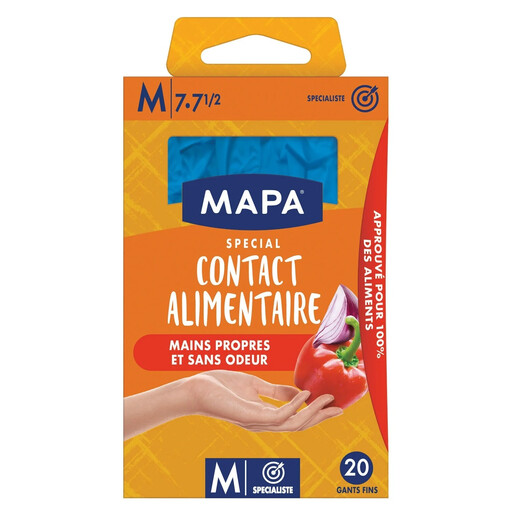
Why we recommend them: Perfect for juggling between preparing fish and cleaning the countertop. These disposable gloves guarantee perfect hygiene and protect hands from stubborn odours.
Certified for food contact, it makes no compromises on safety. Its nitrile composition eliminates both the risk of latex allergy and the danger of a 'do-it-all' glove unsuitable for the kitchen.
Its latex-free formula and its food-contact certification, validated by an independent laboratory, are guarantees of safety and hygiene.
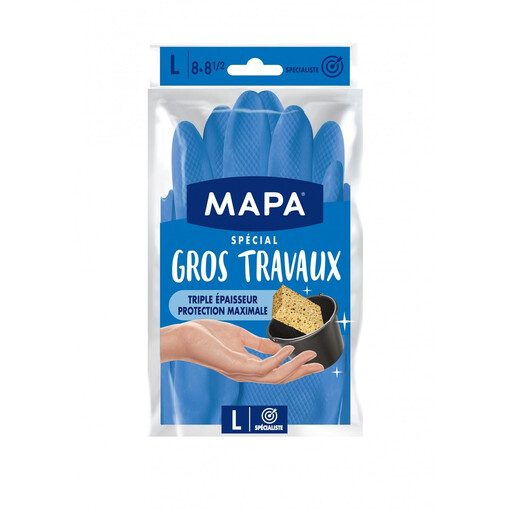
Why we recommend them: The perfect partner for intensive gardening sessions, construction sites, or major DIY projects. These reusable gloves shield hands from impacts and abrasion without sacrificing comfort.
As the opposite of a fragile disposable glove, its specific design for heavy-duty work solves the problem of premature wear and tear and the inadequate protection of basic models.
The triple-layer natural latex provides first-rate mechanical and thermal protection, while the cotton lining ensures maximum comfort, even after several hours.
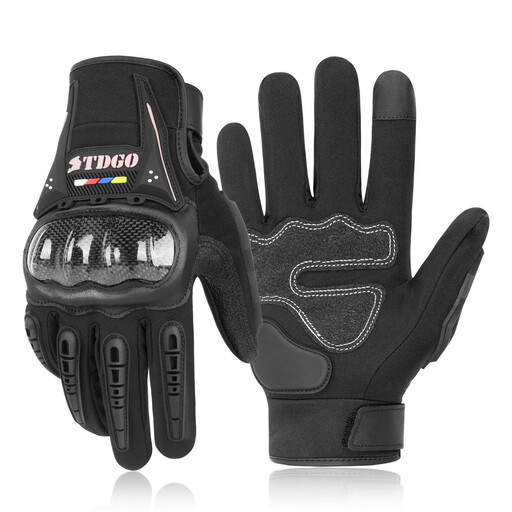
Why we recommend them: On two wheels, safety is non-negotiable. These gloves combine anti-shock protection with modern convenience, allowing you to operate your GPS without ever taking them off.
This is striking proof that a 'universal' glove is a critical mistake on a motorcycle. This model is built for the road, with specific reinforcements that a simple DIY glove could never offer.
The rigid carbon fibre knuckle guards, combined with touchscreen compatibility on the index finger for maximum practicality.
Our selection doesn't cover every scenario. For more specialised uses, we have prepared a comprehensive list of products that meet our strict criteria.
It's all a matter of resistance and flexibility. Nitrile is the champion of durability: it better withstands punctures and chemicals while remaining flexible. Vinyl, being more economical, is also more brittle and less elastic. It should therefore be reserved for very brief, low-risk tasks.
An ill-fitting glove is a guarantee of discomfort and reduced protection. For disposable gloves, S, M, L, XL are the standard sizes. For reusable ones, sizes are often given in numbers (e.g., 7/7.5 for a M). The foolproof tip to get it right: measure the circumference of your palm (without the thumb) with a tape measure. The ideal glove should fit snugly without ever feeling tight.
The answer is an emphatic no. These gloves are, by definition, single-use. Attempting to wash or reuse them creates micro-tears invisible to the naked eye that destroy their protective barrier. It would also mean giving up their main advantage: impeccable hygiene with every new pair.