
Livraison le jour même ou le lendemain

Qualité garantie

Débloquez vos offres de bienvenue: Livraison GRATUITE | Jusqu'à -80 % | 30 jours d'essai gratuits à JoyPlus
Téléchargez l'application
Whether for cleaning, DIY projects, or professional use, protective gloves are essential for taking care of your hands. But with the vast array of models available, it's easy to get lost and make the wrong choice. An ill-suited glove isn't just uncomfortable; it can be completely ineffective, or even dangerous. To help you make a clear-headed decision, let's break down the most common pitfalls to avoid.
Choosing a pair of gloves may seem simple, but beware of common misconceptions and marketing promises that often lead to disappointment.
To make the right choice, focus on these key points that determine the effectiveness and comfort of your future gloves.
This is the number one criterion. Each material has its strengths and weaknesses, catering to specific needs.
It all depends on the frequency and nature of your tasks.
These are the details that make all the difference in daily use:
To put theory into practice, here are products that meet specific needs, selected based on the criteria we've just covered.
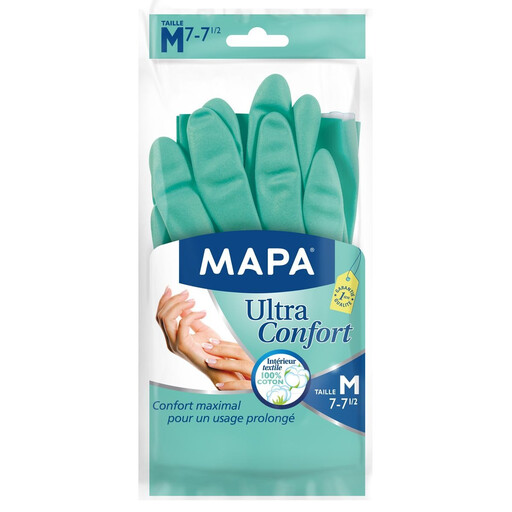
Why we chose it: Perfect for long cleaning sessions. Its cotton lining puts an end to the unpleasant feeling of sweaty hands, while its ergonomic shape ensures lasting comfort, even after an hour of washing dishes.
Instead of relying on disposables, this reusable model is designed for comfort and durability. Its textile lining makes all the difference compared to a simple plastic glove.
Its 100% cotton lining and its ability to be machine washed up to 15 times make it a choice that's as economical as it is practical.
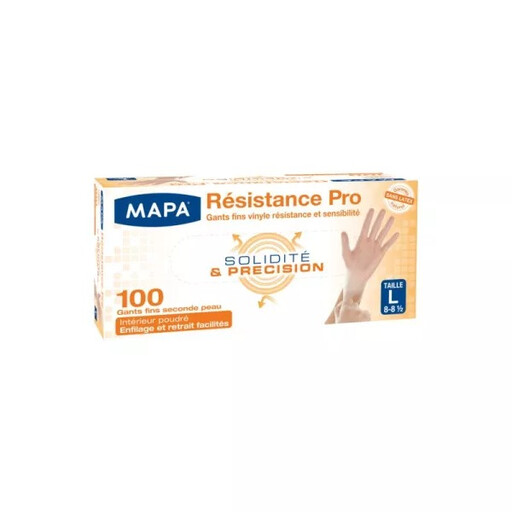
Why we chose it: The ideal solution for sensitive skin or latex allergies. These thin vinyl gloves maintain excellent dexterity for handling small objects, cooking, or doing crafts.
It bypasses the allergy problem with its latex-free composition, while ensuring a level of tactile sensitivity that thick gloves cannot offer.
The second-skin effect preserves maximum dexterity, an essential asset for all precision movements.
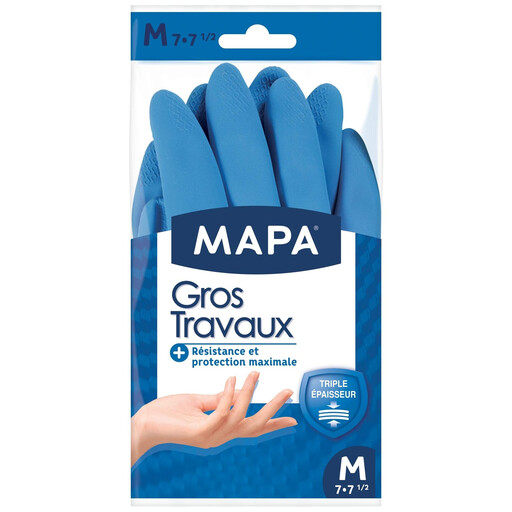
Why we chose it: For intensive gardening, masonry, or heavy-duty DIY, robustness is the priority. These gloves form a solid barrier against cuts, abrasions, and minor impacts.
No false promises of "resistance" here. Protection is guaranteed by a triple layer of latex, a technical feature that makes all the difference in the field.
The winning combination: a triple layer for unfailing durability, combined with a cotton lining for long-lasting comfort.
Discover our full selection of products that meet our selection criteria and current safety standards.
The main difference lies in resistance and flexibility. Nitrile gloves are more robust against punctures and chemicals, while also being more elastic. They are the best alternative to latex for demanding tasks. Vinyl gloves, which are less expensive and more rigid, are best for short, low-risk uses where budget is a priority.
A poorly fitting glove is a useless glove. To find your size, measure the circumference of your palm at its widest point, excluding the thumb. Most brands, like MAPA, provide a size guide (S, M, L, XL) with corresponding measurements in inches or cm (e.g., M for 7-7.5). A well-fitted glove should hug your hand without being tight and leave no empty space at the fingertips.
No, that's a very bad idea. Disposable gloves are, by definition, single-use to ensure perfect hygiene and prevent cross-contamination. Their thinness makes them susceptible to micro-punctures, invisible to the naked eye, after just one use, which negates their protective effect.