
Livraison le jour même ou le lendemain

Qualité garantie

Débloquez vos offres de bienvenue: Livraison GRATUITE | Jusqu'à -80 % | 30 jours d'essai gratuits à JoyPlus
Téléchargez l'application
Household chores, DIY projects, cooking, or professional use… finding the ideal pair of protective gloves can be a real challenge. The market is saturated with promises of "extreme durability" or "absolute comfort" that often fall flat once you put the gloves on. A poor choice is, at best, a waste of money and, at worst, a genuine safety risk. As a product expert at Joybuy, my mission is to help you separate fact from fiction.
Before you start, let's break down the most common pitfalls:
To avoid these issues, simply focus on three objective parameters. Here they are—be sure to check them before every purchase.
This is the number one criterion. Each material has distinct properties suited to specific needs.
Your choice here will depend on the frequency and nature of your tasks.
A well-fitted glove is fundamental to comfort and safety. It should conform to the shape of your hand without being restrictive. Manufacturers label sizes as S, M, L, XL, often with a numerical equivalent (e.g., 7/7.5 for size M). To find yours, measure the circumference of your palm (without the thumb) and refer to the brand's size guide. This is the only way to guarantee effective protection and maximum dexterity.
To help you see how these criteria apply in practice, here are a few recommended options, each tailored to a distinct user profile.
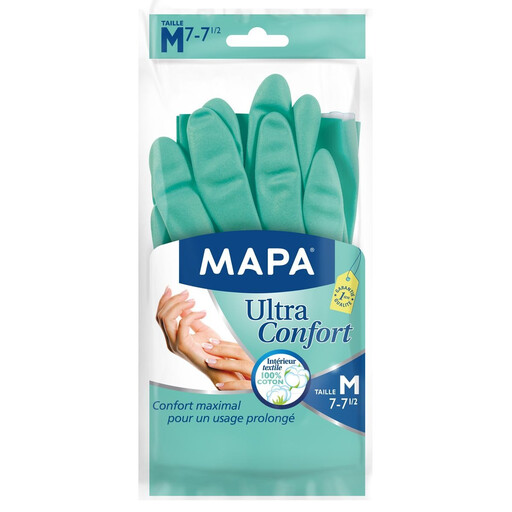
Why this model? For heavy-duty cleaning, comfort isn't an option. This reusable model combines the durability of natural latex with a 100% cotton lining that absorbs sweat and prevents discomfort during prolonged use.
Unlike disposable gloves that tear at the first sign of strain, its thick latex design and textile lining are all about durability and comfort. Say goodbye to premature rips and that unpleasant feeling of sweaty hands.
Machine washable: It can withstand up to 15 washes, which extends its lifespan and makes it as economical as it is practical.
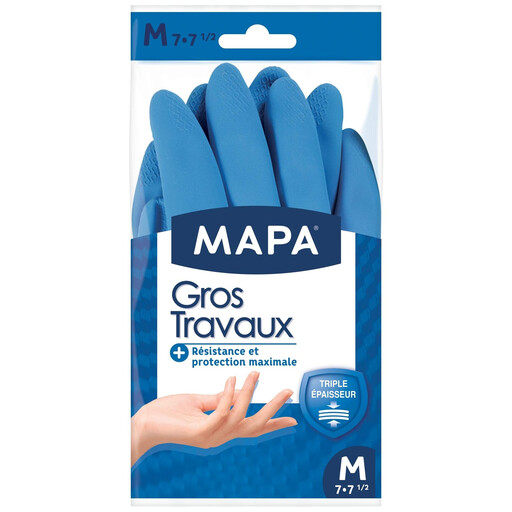
Why this model? For DIY, gardening, and major projects, toughness is non-negotiable. This model is specifically designed to withstand the harshest conditions thanks to its triple layer of latex.
It doesn't just make a vague promise of "resistance." Its triple-layer construction is a tangible technical feature that ensures far superior protection against cuts and abrasion where a standard glove would have already failed.
Protection and comfort: The cotton lining provides welcome comfort for long and strenuous jobs, while the thick latex keeps hands safe.
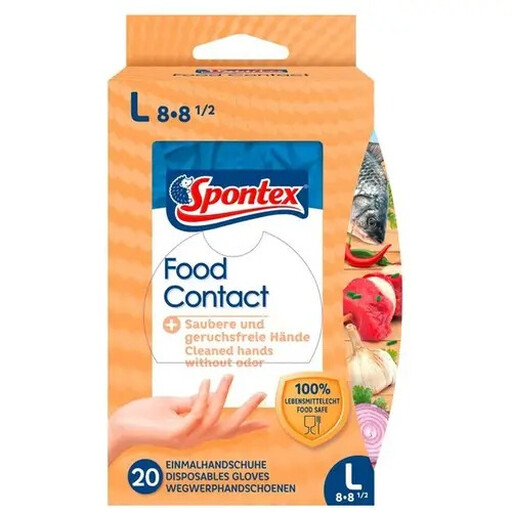
Why this model? In the kitchen, hygiene and food safety are non-negotiable. These nitrile gloves are certified for contact with all types of food (including greasy items) and are latex-free, making them ideal for cooking with complete peace of mind, even for guests with allergies.
It solves the problem by relying on nitrile, which is simultaneously durable, hypoallergenic, and food-safe. Certification by an independent laboratory is an objective guarantee, far more reliable than a simple claim on the packaging.
Certified food-safe: They are compliant for contact with all foods, including fatty substances, which is not the case for all gloves, especially those made of vinyl.
We have curated a complete selection of products that meet our selection criteria and current standards.
The most reliable method: measure the circumference of your dominant hand (the right if you are right-handed) with a tape measure, around the knuckles of your palm and excluding the thumb. Then, refer to the manufacturer's size guide to find the corresponding size (S, M, L...). This is crucial, as sizes can vary slightly from one brand to another.
Absolutely not. Disposable gloves are called that for a reason: they are for single use only and must be thrown away after use. Reusing them compromises hygiene and the integrity of the glove itself. The weakened material can develop micro-perforations invisible to the naked eye, rendering any protective effect useless.
Yes, and they are often a better choice. Nitrile gloves are an excellent alternative because they are hypoallergenic, eliminating the risk of a reaction to latex. They also offer superior resistance to punctures and many chemicals. While early generations lacked some elasticity, modern models have become very flexible and comfortable, easily rivalling latex.