
Livraison le jour même ou le lendemain

Qualité garantie

Débloquez vos offres de bienvenue: Livraison GRATUITE | Jusqu'à -80 % | 30 jours d'essai gratuits à JoyPlus
Téléchargez l'application
Cleaning, cooking, DIY projects, or gardening... for all these tasks, protective gloves are essential. Yet, choosing the right pair can often be a puzzle. Between materials with baffling names and vague marketing claims, it's easy to end up with gloves that tear on the first use or irritate your skin. This guide is here to help you see clearly, find the perfect glove for your needs, and avoid the most common pitfalls.
Making a good choice is, first and foremost, about avoiding common misconceptions. Here are the three classic mistakes that can turn protection into a hassle.
To make the right choice, focus on the few criteria that truly define a glove's effectiveness and intended use.
The choice of material is arguably the most important criterion. It determines the glove's durability, flexibility, level of protection, and allergy risks.
The choice will depend on the task at hand, as well as your hygiene requirements and budget.
To better illustrate which glove suits which need, here are a few concrete use cases with our recommended products.
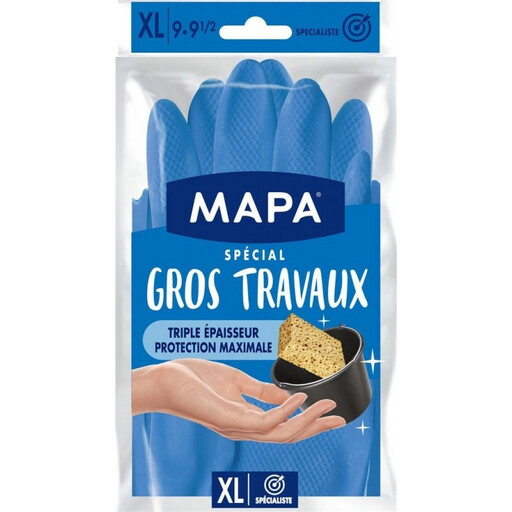
Our take: Designed for demanding tasks, these reusable gloves provide robust protection for DIY, gardening, or small construction jobs, while ensuring noticeable comfort over long periods.
No more disposable gloves that tear at the slightest friction. Here, the triple-thickness latex is designed to withstand mechanical stress and last.
The inner cotton lining makes all the difference: it absorbs sweat and significantly improves comfort during extended use. A detail that is crucial for heavy-duty work.
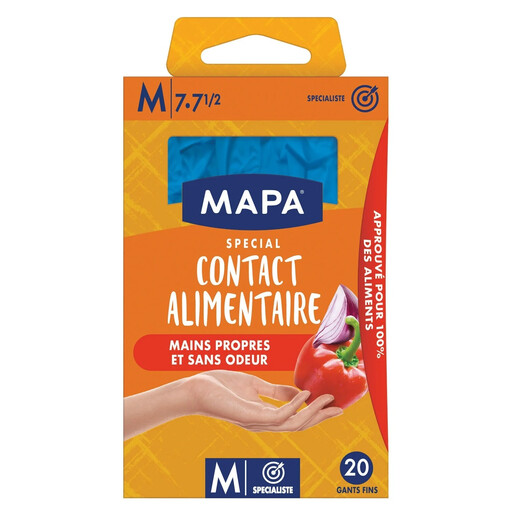
Our take: Perfect for meal prep, these disposable gloves ensure impeccable hygiene. They effectively protect hands from odours (garlic, fish...) and stains (beetroot...), while being suitable for sensitive skin.
There's no second-guessing the material here. Nitrile is the safest option for handling all foods, including greasy items. Its latex-free formula eliminates any risk of allergy.
Spontex states that these gloves have been tested by an independent laboratory and certified as compliant for contact with all types of food. This lets you cook with complete peace of mind.
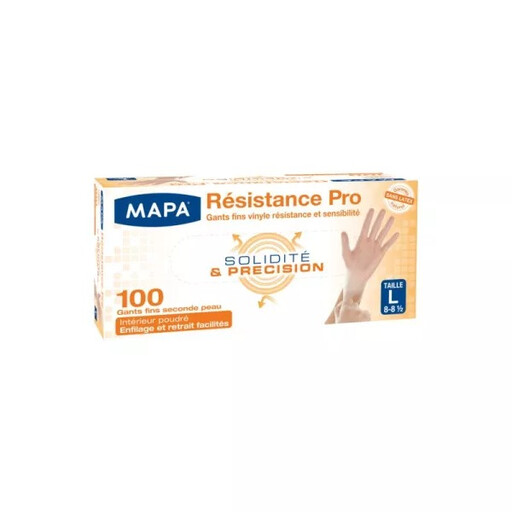
Our take: For tasks that require dexterity (precision cleaning, cosmetic applications, or light professional use), these thin vinyl gloves protect without sacrificing sensitivity.
Say goodbye to the "ski mitten" effect of overly thick gloves that hinder precision. The second-skin feel of this model preserves excellent tactile sensitivity, which is essential for detailed work.
Made of latex-free vinyl, they are the ideal solution for people with reactive skin or allergies to natural latex proteins.
For highly specific uses, such as handling aggressive chemicals, reinforced protection is essential. Discover our complete selection of gloves designed to meet the strictest safety standards.
Most manufacturers indicate sizes as S, M, L, XL, or with a number (e.g., 7, 8, 9). To find yours, measure the circumference of your dominant hand (the right hand for right-handed people) around the knuckles of your palm, excluding the thumb. Then, refer to the brand's sizing guide. A well-fitted glove should neither be too tight nor too loose.
Yes, nitrile gloves are considered safe for contact with all types of food, including fatty substances. That's why they are very popular in the restaurant and food processing industries. Always check that the packaging has a note or a pictogram (a glass and fork symbol) confirming their suitability for food contact.
It all comes down to durability and flexibility. Nitrile gloves are more robust: they offer better resistance to punctures, tears, and a wider range of chemicals, while also being more elastic. Vinyl gloves, which are less expensive, are perfect for short, low-risk tasks, but their durability is lower and their protective barrier is less reliable against certain products or microorganisms.