
Livraison le jour même ou le lendemain

Qualité garantie

Débloquez vos offres de bienvenue: Livraison GRATUITE | Jusqu'à -80 % | 30 jours d'essai gratuits à JoyPlus
Téléchargez l'application
Whether you're setting up your first home cinema, looking to optimise your creative studio, or simply need a reliable stand for your devices, choosing a projector stand might seem trivial. However, the market is flooded with models making attractive promises that often hide deal-breaking flaws. The wrong choice can not only damage your valuable equipment but also completely ruin your experience.
As the Head of Product Recommendations at Joybuy, my role is to help you navigate this maze. Let's break down the common pitfalls to avoid and the essential criteria for making an informed choice that's perfectly suited to your needs.
Many stands look perfect in photos but reveal their weaknesses right out of the box. Here are the three most common issues that lead to buyer's remorse.
To avoid these disappointments, focus on a few key technical points. These are the true guarantees of your future stand's quality and durability.
Your first step? Check the maximum load specified by the manufacturer and compare it to the weight of the heaviest device you plan to mount. Always allow for a safety margin. The materials are just as crucial: an aluminium alloy body will offer a much better weight-to-sturdiness ratio than plastic. For a floor-standing projector stand, a stable triangular structure and non-slip feet are essential.
A good adjustable projector tripod must offer a wide height range to adapt to any situation, whether it's placed on a table or directly on the floor. Pay close attention to the locking mechanism for the telescopic sections. Quick-release levers (or flip-locks) are generally more reliable and faster to operate than twist-lock systems, which can wear out or fail to lock properly over time.
The presence of a standard 1/4-inch mounting screw is essential to ensure compatibility with most projectors, cameras, and camcorders. But true flexibility comes from the ball head (the top of the tripod). A 360° rotating ball head, which also allows for significant tilting, is a major asset for a home cinema stand or a tripod for smartphones and cameras. It's what will allow you to fine-tune the projection or shooting angle with precision, even for projecting onto the ceiling.
To illustrate how these criteria apply in practice, here are a few models we recommend, each tailored to a specific need.
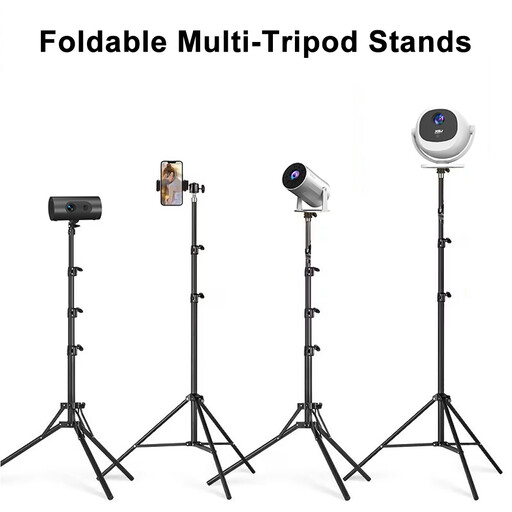
Why we chose it: Ideal for those seeking a robust, all-in-one solution for their home cinema setup. This floor stand can hold a projector, as well as a camera or smartphone, thanks to its included adapters. This makes it useful far beyond just movie nights.
Its aluminium alloy structure and wide triangular base overcome the "on-paper stability" trap. The included adapters (including the phone clamp) ensure out-of-the-box versatility.
Wide height range (from 60 to 160 cm) and a 360° ball head for ultra-precise positioning in any situation.
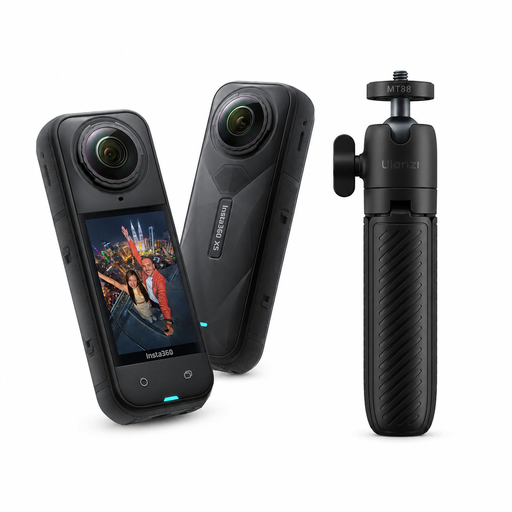
Why we chose it: For creators who film on the move, portability is king. The ULANZI MT88 mini tripod is the perfect tool: ultra-lightweight and compact, it attaches anywhere thanks to its Velcro strap, enabling unique shooting angles.
It shatters the "hidden bulk" trap with a feather-light weight of 138.5 g and a folded size of 15 cm. Its design is entirely focused on mobility and quick setup.
Velcro strap mounting system and 360° ball head for quick, stable setup on all kinds of surfaces (handlebars, tree branches, poles...).
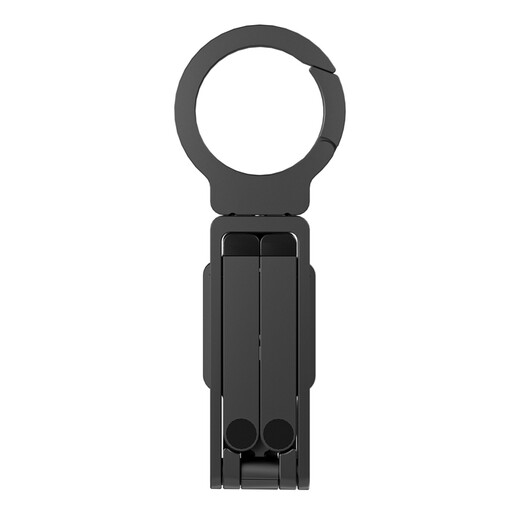
Why we chose it: For owners of iPhone 12 or newer, this mini tripod offers an impressively simple experience. The magnetic MagSafe attachment is instant and secure. Say goodbye to bulky clamps! It functions as both a selfie stick and a tabletop tripod.
It bypasses the "false versatility" trap by specialising. Instead of a flimsy universal solution, it offers seamless integration with the Apple ecosystem—a decisive advantage for its target users.
MagSafe compatibility for lightning-fast mounting. Foldable aluminium design with a carabiner to take it absolutely anywhere.
We have curated a full range of products that meet our demanding selection criteria and safety standards.
Yes, most stands use a standard 1/4-inch screw, which is compatible with the majority of cameras and camcorders. For a smartphone, you will simply need an adapter (a clamp) that screws onto the stand. Some models, like the 1.6m tripod featured above, already include this accessory, making them a ready-to-use solution.
For rock-solid stability, spread the tripod's legs as wide as possible to create the largest possible base. Place it on a flat, non-slip surface. Finally, a pro tip: when extending the legs, always extend the thickest sections (at the top) before the thinnest ones (at the bottom). This helps to keep the centre of gravity lower and therefore more stable.
The maximum load varies greatly from one model to another, ranging from under 1 kg for mini tripods to over 5 kg for the most robust aluminium models. It is crucial to check this information on the product's technical specifications and compare it to the weight of your equipment, always leaving a safety margin to prevent any accidents.