
Livraison le jour même ou le lendemain

Qualité garantie

Débloquez vos offres de bienvenue: Livraison GRATUITE | Jusqu'à -80 % | 30 jours d'essai gratuits à JoyPlus
Téléchargez l'application
Movie night at home, a killer professional presentation, or a streaming session? The secret to a perfect image is often the proper placement of your projector. An excellent projector floor stand elevates the experience, while a poor choice can turn it into a nightmare. The market is flooded with models making tempting promises, but be warned: not all are created equal. Our editorial mission: to help you cut through the noise and identify the criteria that truly make a difference.
To avoid buyer's remorse, here are the three most common pitfalls to avoid:
To avoid these disappointments, forget the marketing hype and focus on a few key technical points. These are the true guarantors of quality and longevity for your future projector stand.
This is the non-negotiable criterion. Stability rests on two pillars: materials and design.
The whole point of such a stand is to be able to place your projector exactly where you want it.
A good stand should be a long-term investment, compatible with your devices today and tomorrow. The absolute industry standard is the 1/4-inch mounting screw. This is the thread you'll find on almost all projectors, cameras, camcorders, and ring lights. A tripod equipped with this screw ensures maximum compatibility. If adapters are also included (like a smartphone clamp), your simple projector tripod transforms into a Swiss Army knife for all your creative projects.
Rather than an endless list, we've selected three models that meet specific needs, all vetted against the quality criteria we've just detailed.
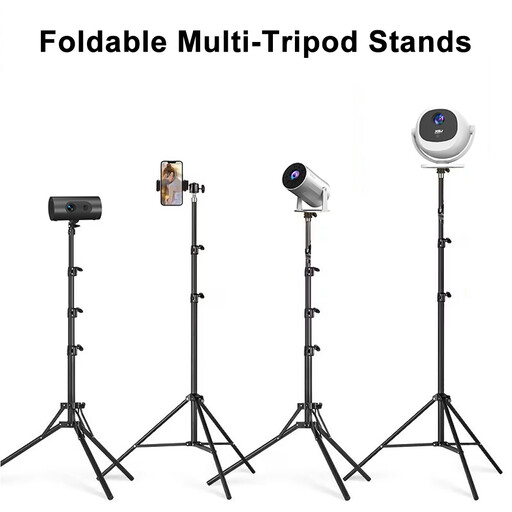
The Takeaway: The ultimate all-in-one solution. Perfect for home cinema, but also for dabbling in photography or streaming. Its versatility makes it a smart and future-proof investment.
Its aluminum alloy structure and triangular base tackle the instability problem at its root. The wide height range (60-160 cm) and 360° ball head ensure precise, compromise-free adjustments.
Total versatility thanks to the standard 1/4-inch screw and included adapters (smartphone, etc.), all at no extra cost.
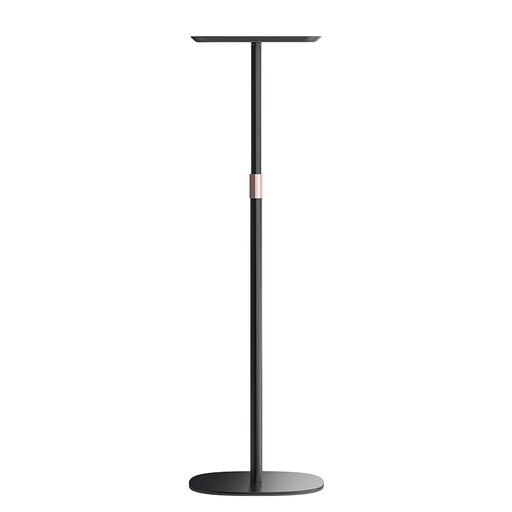
The Takeaway: Specifically designed for projectors, this model with a tray is the trusted solution for those who refuse to compromise on the safety of their often expensive and bulky equipment.
Its large tray provides a perfectly stable base, eliminating the tipping risk associated with a simple screw mount. Its robust design is built to handle the weight of the heaviest projectors without the slightest vibration.
Peace of mind. The tray secures the device and makes setup incredibly simple.
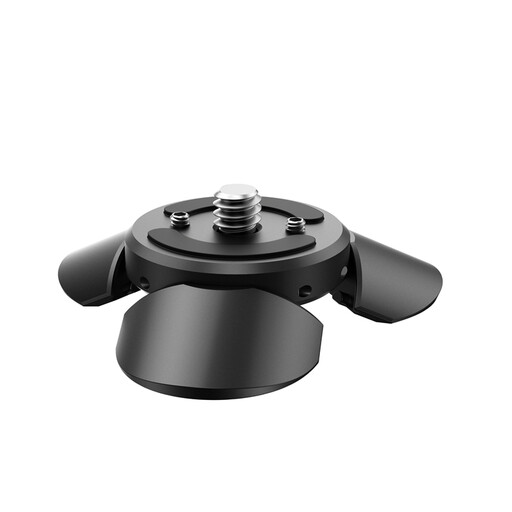
The Takeaway: The ally of vloggers, nomadic photographers, and pico projector users. An ultra-compact solution, ready in seconds on a desk or any flat surface.
It doesn't try to compete on height, but instead focuses on its strength: rock-solid stability in a pocket-sized format. Its sturdy construction avoids the pitfall of being a flimsy gadget that only lasts one season.
Ultimate portability. It slips into any bag, or even a large pocket, and deploys in a flash as a stand for cameras and phones.
Discover our complete selection of stands, all chosen by our experts for their value and reliability.
It all depends on your projected image size and the room layout. To be on the safe side, opt for a stand with a wide adjustment range (e.g., 60 to 160 cm). This guarantees you can always position the image at eye level, whether the tripod is on the floor or on a piece of furniture.
It's very simple: almost all projectors, cameras, and camcorders use a standard screw thread. Turn your device over and look for a small threaded hole. That's the famous 1/4-inch female thread. If the tripod you're considering has the corresponding male screw, it's 100% compatible.
For a projector, which is sensitive to the slightest vibration, the answer is yes. Aluminum alloy is far more rigid than plastic and is much better at absorbing micro-vibrations (caused by the floor or the device's own fan). It's the best guarantee of durability and, most importantly, stability for your image.