
Livraison le jour même ou le lendemain

Qualité garantie

Débloquez vos offres de bienvenue: Livraison GRATUITE | Jusqu'à -80 % | 30 jours d'essai gratuits à JoyPlus
Téléchargez l'application
Whether on a job site, in a warehouse, or for a home renovation project, a reliable professional utility knife isn't a luxury—it's a necessity. A blade that dulls too quickly, a faulty locking mechanism, or an uncomfortable grip can not only slow down your work but also pose a real safety hazard.
With the overwhelming number of models available, it's hard to know where to start. This guide is here to help you sort through the options?: we've broken down the essential selection criteria and chosen a lineup of utility knives that have proven their worth, so you can find the perfect cutting tool for your needs.
Before making your choice, let's review the technical features that separate a simple gadget from a truly robust and durable work knife.
The blade mechanism is the first criterion to consider, as it dictates how the tool is used.
A cutter's longevity depends on the quality of its components. For blades, high-carbon steels like SK5 blades are a benchmark. This Japanese tool steel is renowned for its hardness and its ability to maintain a sharp edge for much longer.
The handle is just as important, as it guarantees your comfort and safety. Aluminium models offer an excellent balance between lightness and strength, while handles with wood or rubber (TPR) inserts improve grip and reduce fatigue during prolonged use.
A safety cutter worthy of the name must include a flawless blade locking system. Mechanisms like the liner lock or the slide lock prevent the blade from accidentally folding or shifting during a cut, ensuring maximum safety.
Now for our selection of cutting tools that stand out for their design, materials, and ingenuity, meeting the demands of professionals and serious DIYers alike.
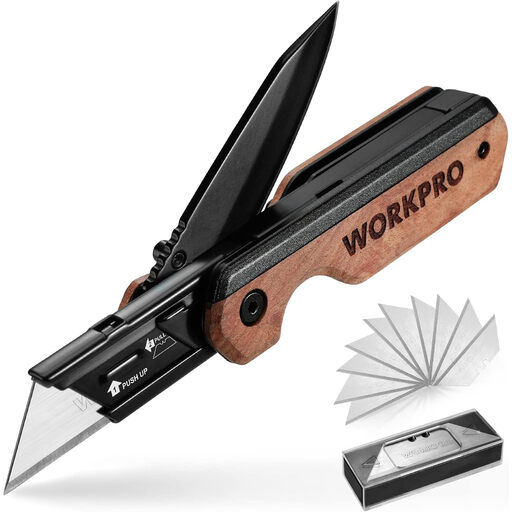
Why it stands out?: This model cleverly combines a folding pocket knife with an interchangeable trapezoidal blade cutter. This versatility makes it a formidable two-in-one tool for anyone looking to lighten their toolbox.
Advantages?:
Who is it for?? The tradesperson or DIY enthusiast looking for a versatile and elegant tool, capable of switching from precision cuts to more demanding jobs in the blink of an eye.
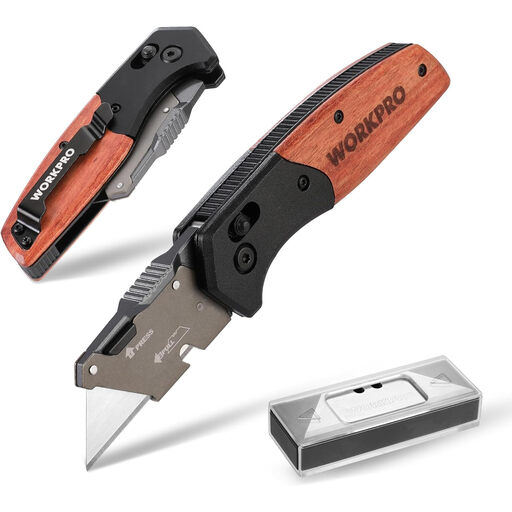
Why it stands out?: This folding knife stands out for its external Slide Lock mechanism, which allows for easy and secure one-handed operation. Its light weight makes it a discreet and efficient work companion.
Advantages?:
Who is it for?? The professional who prioritises speed and manoeuvrability. Ideal for repetitive cuts on materials like carpet, cardboard, or drywall.
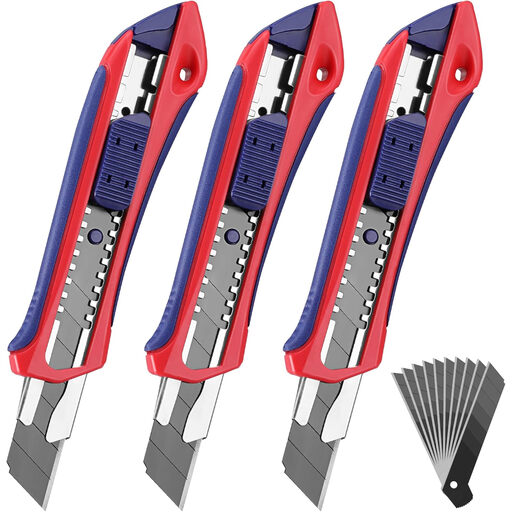
Why it stands out?: This cutter set is a smart, cost-effective solution for equipping a workshop, vehicle, or multiple workstations. Its simple and robust design is built for everyday efficiency.
Advantages?:
Who is it for?? Warehouses, teams of tradespeople, or regular DIYers who need several reliable cutting tools for various tasks like opening packages, or cutting paper, cardboard, or tape.
A good DIY knife is an essential foundation. Some jobs, however, require more specialised equipment. This is especially true for electrical work, where precise measurement and diagnostic instruments are indispensable to ensure your safety and the compliance of your installations.
If your projects involve electrical work, consider equipping yourself accordingly. Discover our selection of electrical tester tools to work with complete confidence.
Safety first?! Make sure the locking mechanism is fully engaged. If your model has a quick-change button, press it to release the old blade. Always handle the new blade by its non-sharp side. Insert it firmly into its housing until it clicks into place. Finally, dispose of the old blade in a suitable sharps container.
SK5 steel is a high-carbon tool steel of Japanese origin. It is highly valued in cutlery for its exceptional hardness, which allows it to hold a very sharp edge longer than standard steels. It also offers excellent wear resistance, making it ideal for heavy-duty cutting.
Yes, but it depends on the type of use. For repeated cuts of soft materials (cardboard, thin plastic, wallpaper, packing films), it is very effective because it allows you to get a fresh edge in an instant. However, for very hard or thick materials like carpet or drywall, a trapezoidal blade, which is thicker and more rigid, will often be more suitable.