
Livraison le jour même ou le lendemain

Qualité garantie

Débloquez vos offres de bienvenue: Livraison GRATUITE | Jusqu'à -80 % | 30 jours d'essai gratuits à JoyPlus
Téléchargez l'application
Whether you are a mechanic, plumber, tradesperson, maintenance technician or experienced DIY enthusiast, choosing professional tools is not simply a matter of counting the number of pieces in a case. A very comprehensive set may be packed with accessories you rarely use, while a more compact tool can sometimes be far more practical day to day.
Before adding to your workshop, take the time to identify the most common pitfalls and check the technical specifications that really matter.
A socket set or tool case containing dozens of pieces does not guarantee that it includes the sizes you will need most often. In automotive mechanics, metric sizes from 8 to 19 mm are very common. In plumbing, the maximum opening of a pair of pliers is often far more important than the number of accessories supplied.
So check the exact list of sizes, the bits included and compatibility with the jobs you usually carry out.
A chrome or polished finish makes cleaning easier and helps limit oxidation, but it is not enough to assess a tool’s strength. The type of steel, heat treatment, jaw geometry and quality of the joint are much more revealing indicators.
Chrome vanadium steel, generally identified by the marking “Cr-V”, is widely used for pliers and hand tools. For sockets used with an impact wrench, look instead for Cr-Mo steel and check that the accessories are specifically designed to withstand impact.
A tool that is too long can be awkward to use in an engine compartment, under a sink or inside a cabinet. Conversely, a compact model may not provide enough leverage when dealing with a tightly fastened assembly.
Ratchets with a small return angle, short wrenches and angled-nose pliers can help overcome these constraints. However, their specifications must genuinely match the space available to you.
For tools intended for automotive repairs or maintenance, look for precise information about the material and treatment applied. Non-slip handles improve control, while an anti-corrosion coating makes maintenance easier and extends the tool’s service life.
For pliers, check in particular:
For example, the WORKPRO nail-cutting pliers specify a maximum cutting capacity of 3 mm for medium-hard wire, an opening of 18 mm and a blade hardness of HRC 60-62. Stay within these limits to prevent premature wear or deformation of the tool.
A versatile set of pliers can be perfectly suitable for routine household maintenance. However, a plumber will more often need adjustable water pump pliers with a wide opening and quick adjustment. When working on hoses, hose-clamp pliers must also be suitable for the pipe material and its diameter.
For wrenches, compare the following:
A 72-tooth mechanism combined with a stated 5-degree return angle can make it easier to work in confined spaces. This does not remove the need to observe the maximum torque recommended by the manufacturer.
For a cordless drill-driver or battery-powered impact wrench, check the voltage, battery capacity, stated torque, chuck or drive square type, and the availability of accessories.
A small 12 V electric wrench delivering 45 N·m can be practical for motorcycle maintenance, assembling furniture or working in hard-to-reach areas. However, it should not be confused with a genuine impact wrench designed to loosen tightly fastened nuts.
Whatever power tool you use, follow the manufacturer’s instructions, use compatible accessories and never work on a live installation. For an electric drain cleaner, also check the length of the cable or flexible shaft, the accepted diameter and the cleaning procedure after use.

Why this choice suits this profile : This case brings together five tools for small repairs, light plumbing, DIY projects and routine maintenance. It gives you the essentials without having to buy each pair of pliers separately.
The contents are clearly specified: water pump pliers, combination pliers, wire cutters, long-nose pliers and an adjustable wrench. It is easier to assess what you are getting than with a case that focuses solely on a high piece count.
Treated alloy steel, non-slip TPR+PP handles and five tools covering a range of uses.
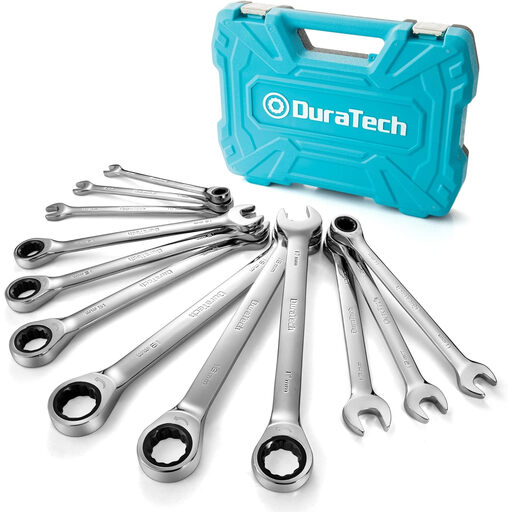
Why this choice suits this profile : Anyone who regularly carries out mechanical work will appreciate this well-organised metric set, designed to reduce the need to change tools.
The 12 sizes, from 8 to 19 mm, are clearly marked and stored in a case. You can therefore check the set’s exact coverage before buying.
Chrome vanadium steel, heat treatment, a 72-tooth mechanism and a stated 5-degree return angle.
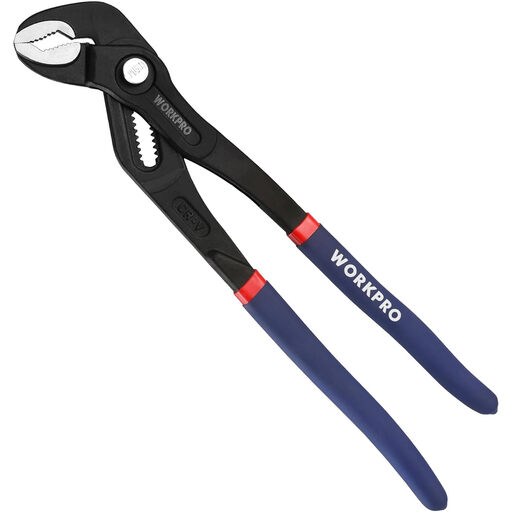
Why this choice suits this profile : At 305 mm long, with a stated maximum opening of 50 mm, these pliers are suitable for working on pipes, fittings and parts with a variety of shapes.
The maximum opening and button adjustment are clearly specified. This helps you avoid choosing pliers that are too small for your planned plumbing work.
Treated chrome vanadium steel, serrated jaws and ergonomic plastic handles.
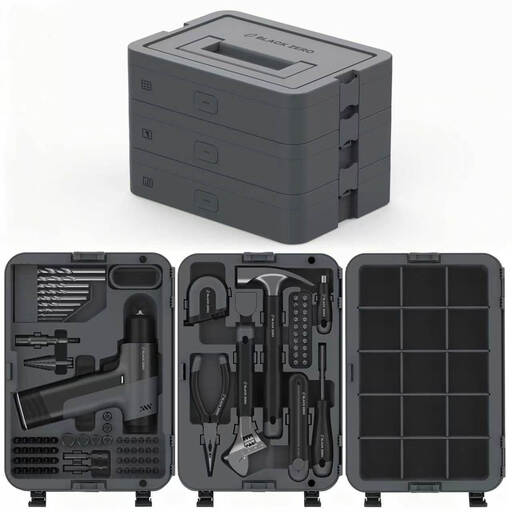
Why this choice suits this profile : The cordless drill-driver and hand tools are combined in a compartmentalised case, making it practical for home repairs and occasional travel.
The dedicated compartment for the drill and the individual slots make it easier to check the contents and prevent accessories from becoming scattered.
Stated voltage of 16 V, 1,600 mAh battery and a case measuring 329.5 × 236.5 × 75 mm.
We have put together a complete, real-time updated selection of products that meet these strict criteria and European safety requirements.
A tool’s longevity depends as much on how it is made as on the conditions in which it is used. Clean your tools after every job, remove any grease or plumbing-product residue, then store them somewhere dry. If they are to be stored for a long period, a thin layer of oil on the metal parts can help prevent corrosion.
Never exceed the cutting capacity, maximum opening or torque specified by the manufacturer. Pliers are not a substitute for an insulated tool when carrying out electrical work, and a hand wrench should not be used as a striking tool unless it was designed for that purpose.
For household use, choose a case containing pliers, a screwdriver, an adjustable wrench and a set of bits. A cordless drill-driver can also be useful if you regularly assemble furniture or put assemblies together. For mechanical work, make sure the case includes metric sockets and a suitable ratchet.
Open-ended spanners are suitable for clear, accessible areas and provide a simple grip on the nut. Ratcheting spanners include a mechanism that means you do not have to remove the tool completely after each movement. This saves time, especially when working space is limited.
Compare battery capacity, charging time, accessories supplied and whether the battery can be replaced. For occasional use, a complete case can save you from making multiple purchases. For regular use, focus above all on accessory compatibility and the tool’s torque limits.