
Livraison le jour même ou le lendemain

Qualité garantie

Débloquez vos offres de bienvenue: Livraison GRATUITE | Jusqu'à -80 % | 30 jours d'essai gratuits à JoyPlus
Téléchargez l'application
For a dedicated table tennis player, the choice of ball is a critical component, not a minor detail. It dictates the quality of rallies, the precision of trajectories, and the overall feel of the game. Whether you're deep in preparation for a competition or in an intensive training session, not all balls are created equal. Navigating the different standards, materials, and classifications can be complex.
This guide aims to clarify the essential criteria to help you select the professional table tennis balls best suited to your game, focusing on factual information and recognised standards.
Before reviewing our selection, here are a few key points to help you make an informed decision.
The most important distinction is the star rating. This classification is not a mere marketing gimmick; it corresponds to very strict quality and consistency criteria.
In recent years, celluloid has been replaced by plastic materials, primarily ABS, for safety and performance reasons. 40+ ABS balls have become the standard. The "40+" indicates a diameter slightly larger than 40 mm. This material provides a more predictable bounce and a more stable trajectory, although it generates slightly less spin than the old celluloid balls. For any serious play, it is advisable to focus exclusively on this type of ball.
For clubs, coaches, or players who train several hours a week, buying ping pong balls in bulk is a clear choice. Packages of 100 or more balls significantly reduce the cost per unit while ensuring a sufficient supply for multi-ball sessions, a cornerstone of modern training.
As a Joybuy Product Recommendation Officer, my role is to sift through the market to present you with options that meet specific needs, with complete objectivity. Here is a selection of Double Fish balls, a renowned brand on the professional circuit.
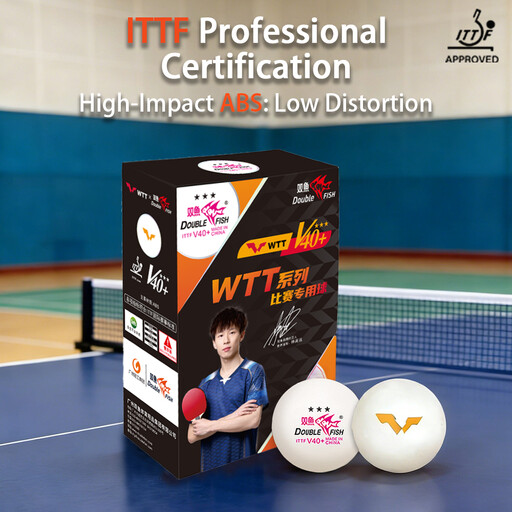
Why we recommend it: This ball is the choice for uncompromising performance. It holds dual ITTF and WTT (World Table Tennis) certification, making it the official ball used in major international tournaments. It allows you to perfectly replicate the in-game feel encountered in competition.
Advantages:
Who is this product for? Competition players who refuse to compromise on the quality of their equipment and club players who want to train under the exact conditions of official matches.
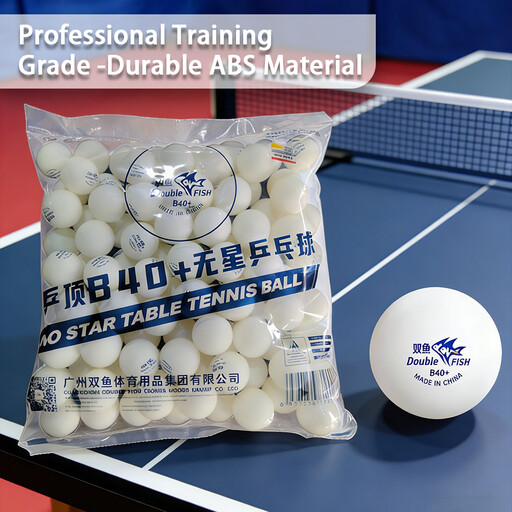
Why we recommend it: For training, durability and volume are key. This pack of 100 balls is designed to withstand thousands of high-intensity hits. It's a cost-effective and reliable solution for clubs and academies.
Advantages:
Who is this product for? Table tennis clubs, coaches for multi-ball sessions, and players who want to practice their drills without worrying about premature wear and tear on their balls.
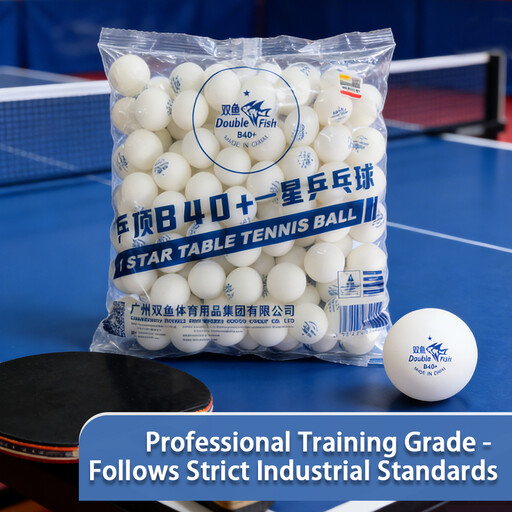
Why we recommend it: This 1-star ball represents an excellent balance. It offers superior consistency and manufacturing quality compared to a no-star ball, while remaining very affordable, especially in a pack of 100. It's the sensible choice for serious and regular training.
Advantages:
Who is this product for? Dedicated club players and competitors looking for a high-quality training ball for their practice sessions, offering a feel close to that of a match ball.
If you participate in a variety of sports or wish to explore a wider range of accessories for your activities, our Outdoor Equipment & Gear category brings together a diverse selection to complete your kit.
What is the practical difference between a 3-star ball and a training ball? The difference lies in the rigor of the selection process. A 3-star table tennis ball has successfully passed all ITTF tests (weight, hardness, bounce, sphericity) within very tight tolerance margins. A training ball (1-star or no-star) comes from the same production lines but did not meet one or more of these strict criteria. However, it remains perfectly playable and durable for training.
Why are professional balls made of 40+ ABS plastic? The switch from celluloid (which is highly flammable and more fragile) to ABS plastic was driven by safety and standardisation concerns. 40+ ABS balls offer better durability, a more consistent bounce, and a more readable trajectory. They are also less sensitive to changes in temperature and humidity, which ensures fairer playing conditions.