
Livraison le jour même ou le lendemain

Qualité garantie

Débloquez vos offres de bienvenue: Livraison GRATUITE | Jusqu'à -80 % | 30 jours d'essai gratuits à JoyPlus
Téléchargez l'application
Switching to a professional shampoo is often seen as the magic bullet for achieving gorgeous, salon-worthy hair. Yet, the hair care aisle can often feel like a maze. Between tempting marketing claims and endless ingredient lists, it's easy to make the wrong choice and end up with an expensive, unsuitable product. As a Product Expert at Joybuy, my mission is to help you navigate the options.
Together, let's break down the common pitfalls and essential criteria for choosing a treatment that will truly meet your hair's needs.
Before you set your heart on a bottle, it's crucial to know how to sidestep certain misconceptions and marketing strategies that lead straight to disappointment.
To make an informed choice, two factors are paramount: your hair type and the product's composition. Here are the three points to check.
The cleansing base determines the shampoo's cleaning power.
A professional hair treatment stands out for its concentration of specific active ingredients. Look for ingredients that match your concern:
Far from being public enemy number one, silicone can be a true ally. It forms a protective sheath around the hair, which makes detangling easier, adds shine, and protects from heat. We can distinguish between:
The choice of a formula with or without silicones, therefore, depends entirely on your hair type and the desired effect.
To help you see how these criteria apply in practice, here are a few concrete examples tailored to specific profiles.
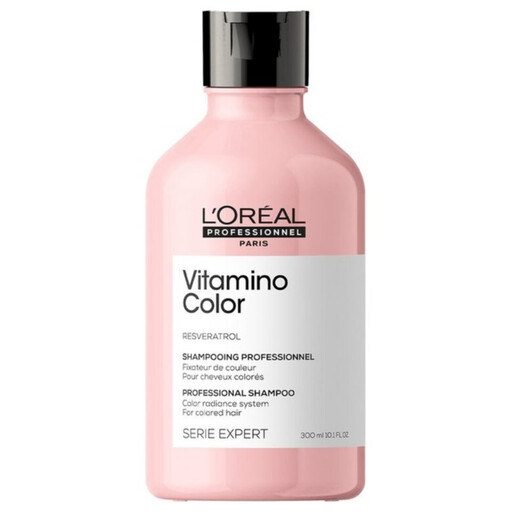
Why this choice? Perfect for those who invest in salon color and want to preserve its vibrancy at home. It addresses the crucial need for protection against fading from repeated washing and external aggressors.
Rather than relying on a single "miracle" ingredient, its formula is built on resveratrol, a polyphenol renowned for its antioxidant properties, which helps protect the fiber and color from oxidative stress.
It gently cleanses while preserving color intensity. Hair is left soft and shiny, without being weighed down.
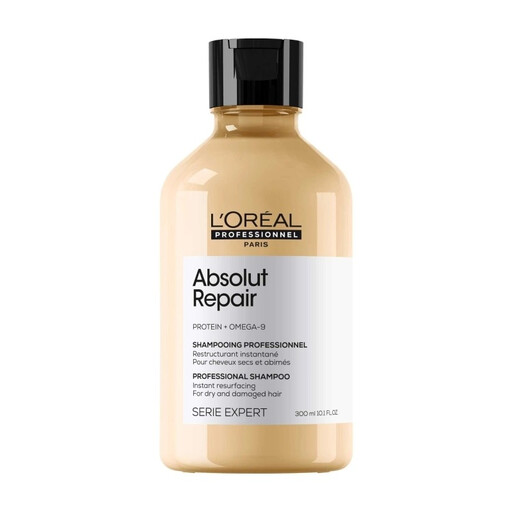
Why this choice? Designed for hair weakened by chemical treatments (bleaching, straightening) or repeated use of heat styling tools. Its mission: to rebuild the hair fiber from within.
It clearly distinguishes between nutrition and repair. Its formula is enriched with gold quinoa protein, an active ingredient that specifically targets the restructuring of the hair's surface, without the risk of making it stiff like an excess of protein would.
It provides visible repair without weighing hair down, leaving it softer and shinier. According to L'Oréal, it reduces surface damage by 77%.
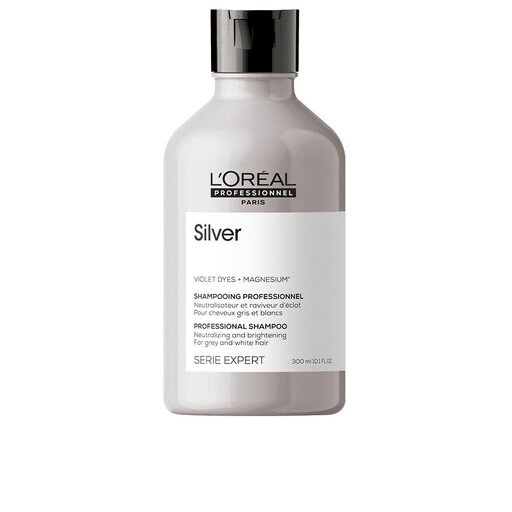
Why this choice? An essential for maintaining a cool blonde, polar white, or silver-grey. It combats the natural oxidation process that causes these colors to turn yellow.
This is not an everyday shampoo, but a highly technical professional hair treatment. It doesn't promise to "repair" or "nourish" as a priority, but instead fulfills a unique and precise function: color correction, thanks to its violet pigments (identified by the code CI 60730).
It effectively neutralizes unwanted yellow and brassy tones. Its formula also contains amino acids to maintain the strength of the hair fiber.
We have curated a complete selection of products that meet these strict selection criteria and current safety standards.
The main difference lies in the concentration and quality of active ingredients. Professional formulas, like those from L'Oréal Serie Expert or Franck Provost Expert, contain a higher proportion of treatment ingredients (proteins, oils, antioxidants) for targeted action and more visible results on specific concerns.
No, it's not a requirement. A sulfate-free shampoo is primarily recommended if you have a sensitive scalp, very dry hair, or color-treated hair that you want to preserve for as long as possible. For normal to oily hair, a shampoo with sulfates can provide a more effective cleanse without being overly harsh.
A blue or purple shampoo is a technical treatment, not a shampoo for daily use. Overuse can leave a violet tint or dry out the hair. It is generally recommended to use it once a week or every two to three washes, alternating with your regular shampoo. Adjust the frequency based on the reappearance of yellow tones.