
Livraison le jour même ou le lendemain

Qualité garantie

Débloquez vos offres de bienvenue: Livraison GRATUITE | Jusqu'à -80 % | 30 jours d'essai gratuits à JoyPlus
Téléchargez l'application
Photographers and videographers, you know it all too well: an unreliable memory card can ruin an irreplaceable shot. A corrupted image, a buffer that maxes out mid-burst, or lost footage during a 4K shoot... it's every creator's nightmare. Choosing a professional SD card isn't just a detail—it's a strategic investment in the security and efficiency of your workflow.
Between the different standards (UHS-I, UHS-II), speed classes (V30, V90), and storage capacities, it's easy to get lost. This guide is here to cut through the technical jargon and present a selection of memory cards built for today's top cameras.
By our Joybuy product experts
Before diving into our top picks, let's review the key factors for finding the perfect camera memory card for your needs.
For professional use, speed is the name of the game. There are two types of speed to consider:
To simplify the choice, the SD Association created Video Speed Classes (V-Class). For professional use, two are particularly important:
The bus interface is like the highway for your data: its bandwidth defines the card's theoretical top speed.
A key thing to note: To take full advantage of UHS-II, both your camera and your card reader must be compatible. A UHS-II card will work in a UHS-I slot, but its performance will be limited to UHS-I interface speeds.
The right capacity depends on your shooting habits. Don't forget: RAW files and 4K/8K video are massive.
Here are a few models that perfectly meet the demands of modern workflows.
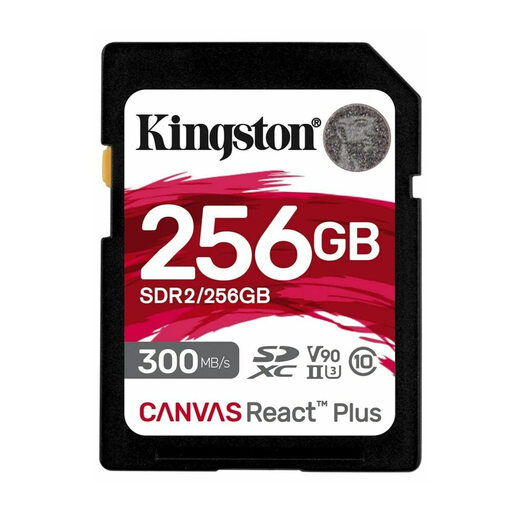
Why it stands out: This is a powerhouse, designed for pure performance. With its UHS-II interface and V90 class, it's built for the most demanding uses, like 8K video and continuous RAW burst shooting.
Highlights:
Who is it for? Videographers and action photographers with high-end mirrorless cameras (UHS-II compatible) for whom every millisecond counts. It's the reliable choice for capturing very high-bitrate footage or burst shots without ever hitting the buffer limit.
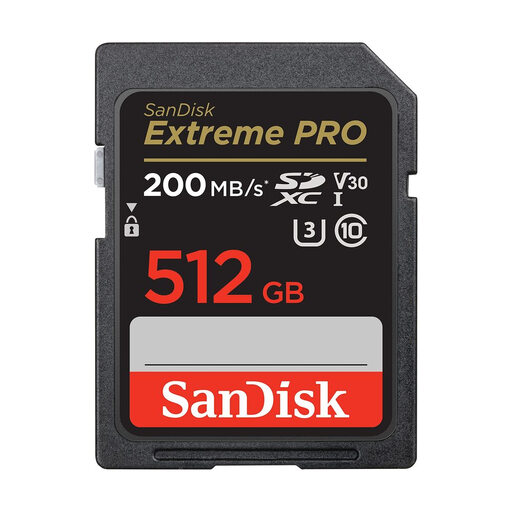
Why it stands out: The SanDisk Extreme PRO is the industry benchmark for reliability and its excellent performance-to-capacity ratio in the UHS-I category. Its large capacity lets you tackle long work sessions with peace of mind.
Highlights:
Who is it for? Versatile content creators who juggle 4K video and RAW photography. Its comfortable 512GB capacity makes it the ideal companion for documentaries, weddings, or travel, where swapping cards is simply not an option.
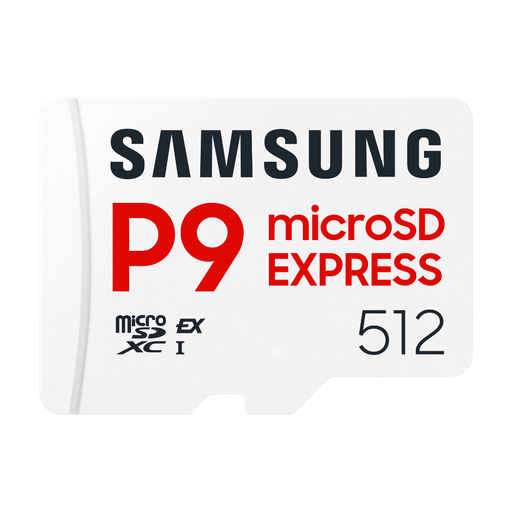
Why it stands out: This card embodies the future of storage with the new Samsung SD Express standard. By leveraging a PCIe/NVMe interface, it promises SSD-like read speeds, set to revolutionize how you offload your files.
Highlights:
Who is it for? Professionals and early adopters with SD Express-compatible devices. If transferring hundreds of gigabytes from your card to your editing station in seconds is your priority, this technology is a game-changer.
Our selection is just a glimpse, but the market is full of great options. Whether you need a different capacity, another brand, or specific features for your gear, you're sure to find the perfect fit.
The key difference lies in the guaranteed minimum sustained write speed. A V30 card ensures at least 30 MB/s, which is perfect for standard 4K video. A V90 card ramps that up to a minimum of 90 MB/s, making it essential for demanding formats like 8K, high-bitrate 4K, or RAW bursts that can quickly fill the buffer.
Yes, absolutely. UHS-II cards are backward compatible. However, be aware that the card will be limited to the speeds of the UHS-I interface (around 95 MB/s). To enjoy the blazing-fast speeds of UHS-II (up to 312 MB/s), both your camera and your card reader must be compatible.