
Livraison le jour même ou le lendemain

Qualité garantie

Débloquez vos offres de bienvenue: Livraison GRATUITE | Jusqu'à -80 % | 30 jours d'essai gratuits à JoyPlus
Téléchargez l'application
Choosing the wrong pliers can quickly turn a simple repair into a real headache: jaws that slip, uneven cutting, an uncomfortable grip or an opening that is too limited. Whether you enjoy DIY projects at home or work as an electrician, plumber, mechanic or maintenance technician, buying professional pliers requires a little careful consideration. Price and appearance alone are not enough to make the right choice.
A very comprehensive set is not necessarily suited to your work. Water-pump pliers will never replace wire strippers, while standard cutting pliers may not be up to the job when faced with a thick cable or particularly hard metal wire. Before ordering a kit, start by listing the tasks you expect to carry out: tightening, cutting, extracting, holding or working in confined spaces.
This description remains fairly vague if the specification does not state either the material or the treatment applied. Terms such as chrome vanadium steel, carbon steel, CR-MO steel or heat-treated steel already provide more useful information. Also examine the shape of the jaws, the corrosion-resistant coating and the quality of the joint.
Compact bolt cutters may be perfectly suitable for wires or small chains, but they should not be used beyond their stated capacity. Similarly, nylon hose pliers are designed for flexible lines, not rigid pipes or high-pressure systems. Sticking to the recommended dimensions and materials reduces tool wear and the risk of flying fragments.
Chrome vanadium steel is very common in tools designed for plumbing, mechanics and maintenance. For compact bolt cutters, CR-MO steel can provide the level of resistance required. A surface treatment, such as nickel plating or black oxide coating, helps protect the metal parts against corrosion. However, it does not remove the need to store the tool somewhere dry or clean it after use.
A TPR or synthetic rubber handle generally improves grip, especially when the tool is used for several minutes at a time. Also remember to check the overall length: 305 mm pliers provide greater leverage than a 200 mm model, but they will also take up more space in your toolbox.
For water-pump pliers, compare the maximum opening in particular. The 305 mm WORKPRO model offers an opening of up to 50 mm, which may be suitable for certain jobs involving pipes and fittings. For bolt cutters, the specifications for the 210 mm WORKPRO model state a maximum capacity of 2.3 mm. These figures should guide your purchase and must not be exceeded.
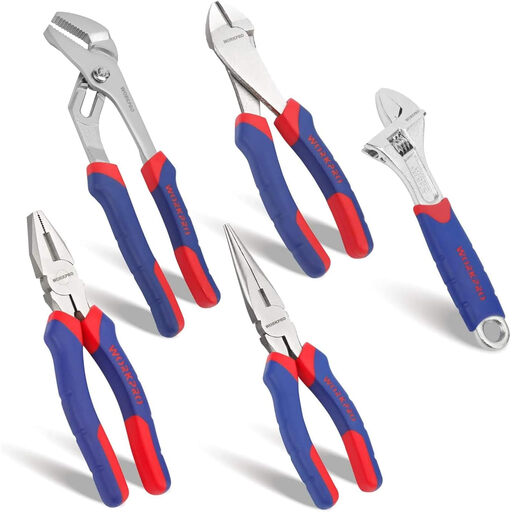
Why this choice suits this profile : This set brings together five tools for everyday repairs, DIY projects at home, plumbing and some electrical work.
The contents are clearly listed: water-pump pliers, combination pliers, cutting pliers, long-nose pliers and an adjustable wrench. This helps you avoid buying several tools separately without knowing exactly what each one is for.
Heat-treated alloy steel, TPR and PP handles, hardened cutting edges and five pieces included.
Why this choice suits this profile : The variety of sizes makes it easier to organise your workshop and covers several needs without having to buy numerous separate items.
The dimensions of each tool are specified. This allows you to check that they suit your workbench and available space before placing your order.
Lengths from 190 to 250 mm, nickel-plated alloy steel and compact storage, with the package dimensions provided.
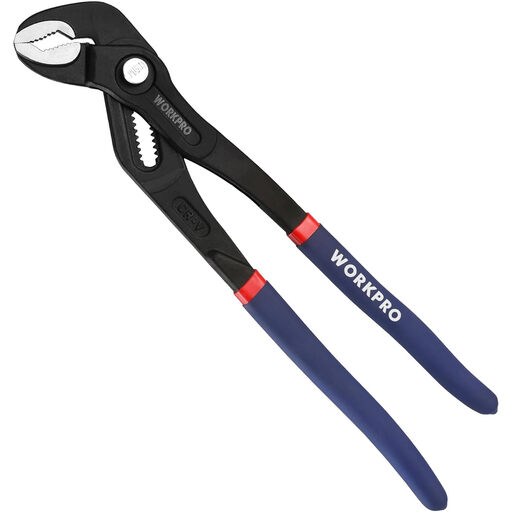
Why this choice suits this profile : At 305 mm long, with an opening of up to 50 mm, these pliers are designed for tightening fittings and pipes.
The maximum opening and quick-adjustment mechanism are clearly specified. You can therefore compare them with the diameter of your parts before getting started.
Treated chrome vanadium steel, quick-adjustment button and serrated jaws suitable for round, flat, square or hexagonal parts.
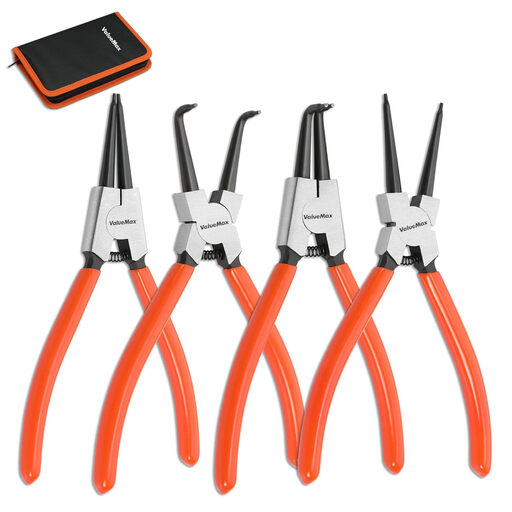
Why this choice suits this profile : The four configurations cover automotive mechanics and assembly jobs that require suitable circlip pliers.
The set distinguishes between straight and angled models, as well as pliers for internal and external circlips. This reduces the risk of using an unsuitable tip.
Four 180 mm pliers, 1.6 mm tips, stated openings of up to 33 or 36 mm and a zipped case.
To keep your tools in good condition for longer:
For tools intended for electrical installations, check the compliance information, permitted uses and the manufacturer’s instructions. Standard pliers are not a substitute for insulated tools that comply with current requirements.
A set containing water-pump pliers, combination pliers, cutting pliers and long-nose pliers is already enough for many everyday repairs. You can then expand your toolkit with wire strippers, crimping pliers or circlip pliers, depending on your projects.
It depends on how often they are used, the materials being cut and how well they are maintained. Staying within the tool’s maximum capacity, cleaning it regularly and storing it somewhere dry will help slow down wear. A joint that sticks, damaged jaws or a cracked handle generally indicate that it is time to replace the pliers.
Water-pump pliers or adjustable pump pliers are generally suitable for holding fittings and pipes that match their opening capacity. Before applying force, check the diameter and shape of the part, as well as the stated capacity. For flexible hoses, dedicated hose-clamp pliers will often be more suitable than standard metal pliers.