
Livraison le jour même ou le lendemain

Qualité garantie

Débloquez vos offres de bienvenue: Livraison GRATUITE | Jusqu'à -80 % | 30 jours d'essai gratuits à JoyPlus
Téléchargez l'application
By the Joybuy Product Recommendations Manager
For a garage, an independent workshop or a knowledgeable car enthusiast, a professional OBD2 diagnostic tool must go far beyond simply reading the engine warning light. Engine, ABS, SRS, gearbox, battery, air conditioning or comfort systems: the requirements vary depending on the vehicles you work on and the level of intervention you need.
The main pitfall is buying a device marketed as "multi-make" when its advanced functions are actually limited to just a few models. Here are the points to check before choosing an OBD2 scanner for your car in the UK.
A basic fault code reader often only interrogates the engine control unit. It can read or clear certain emissions-related codes, but it may not communicate with the ABS, SRS, EPB, transmission or air conditioning system.
For a workshop, look clearly for the term full system diagnostics and check the modules covered for the vehicle's make, year and version. A function advertised as "complete" does not necessarily mean every control unit will be accessible.
A device may boast 15, 28 or 34 service functions: service reset, throttle adaptation, injector coding, DPF regeneration, SAS calibration or BMS reset. In practice, these functions usually depend on the vehicle, its control unit and, sometimes, an online connection.
Before ordering, provide the seller with the VIN, make, model, year and engine type. This check is particularly important for ECU coding, IMMO, FCA AutoAuth access and work on newer vehicles.
Some diagnostic tools include one or two years of updates, while others advertise free lifetime updates. You need to distinguish between:
For professional use, the total cost over three years can matter more than the initial purchase price.
Modern vehicles rely on several electronic architectures. CAN FD compatibility applies to certain GM models and other recent vehicles, while DoIP allows diagnostic data to be transmitted via Ethernet on some BMW, Volvo, Jaguar or Land Rover ranges.
These protocols alone do not guarantee access to all functions. However, they are a useful criterion if your fleet includes newer vehicles. Always check the latest coverage list published by the manufacturer.
Bidirectional testing, also known as active ECU test, lets you send a command to the control unit to activate a component: fan, air conditioning relay, ABS pump, lock, window, light or injector, depending on the vehicle.
This function helps distinguish between a component fault, a wiring issue or a communication problem. It does not replace electrical and mechanical checks, and its availability varies by make.
ECU coding can be used to adapt a replaced module, configure certain parameters or activate functions the vehicle supports. During these operations, using a stabilised power supply is recommended to minimise risks from voltage drops.
A 7 or 8-inch tablet makes it easier to read data streams and reports. A Bluetooth car scanner with a separate VCI offers more freedom to move around the vehicle, while a wired connection prioritises stability.
Before buying, check in particular:
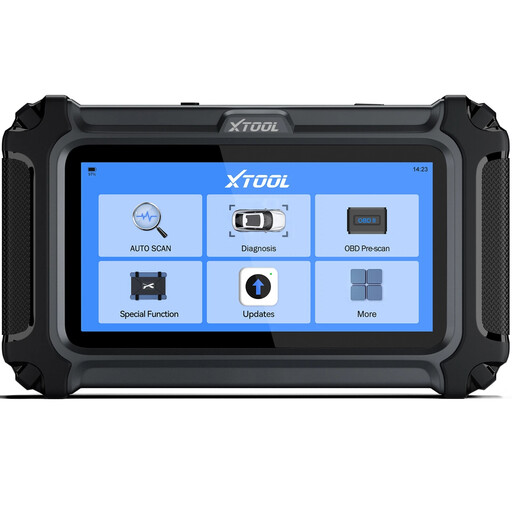
Why this model suits this profile: Its 5.45-inch touchscreen, guided menus and AutoVIN function make it a good choice for home checks, inspecting a used car and small garages.
The product page states that functions vary by vehicle and recommends a VIN check. Updates are advertised as free for life.
Engine, transmission, ABS and SRS diagnostics, EPB and ABS bleed functions where compatible, data graphing and PDF reports.
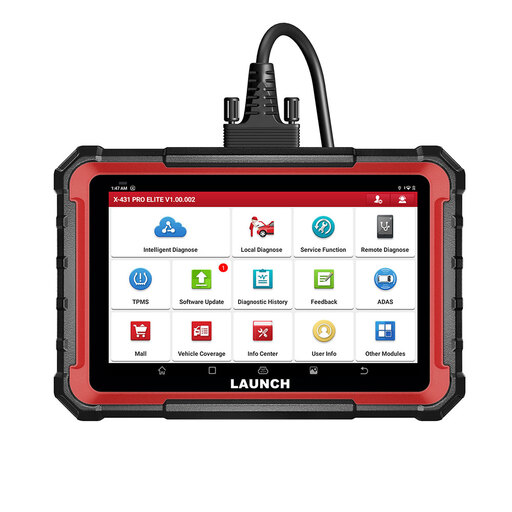
Why this model suits this profile: Its 8-inch tablet, wired connection and extensive functions are designed for workshops that regularly carry out multi-make diagnostics.
The product page distinguishes between updates included for two years and any additional services, such as AutoAuth or optional modules.
CAN FD, DoIP, bidirectional testing, ECU coding, AutoVIN, full system diagnostics and over 31 service functions advertised depending on the vehicle.
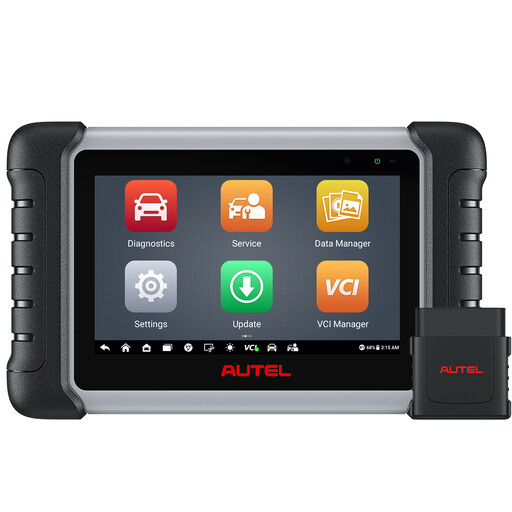
Why this model suits this profile: Its Bluetooth connection, access to all systems and active test functions make it easier to work around the vehicle.
The product page mentions a one-year update period and states that certain functions, particularly FCA, depend on dedicated authentication.
Over 38 services advertised, bidirectional control, reports, AutoVIN and coverage of many control units depending on make and year.
We have put together an up-to-date selection of products suited to different needs in car coding, programming and diagnostics.
No. The OBD2 or EOBD protocol is widely used on petrol vehicles from 2001 and on diesels from 2004, but advanced functions depend on the make, model, year and control unit. Check the VIN coverage before buying.
An internet connection is usually needed for activation, software downloads, updates and certain online functions. Local diagnostics can then work without a network, depending on the device and installed software.
It can help read faults, view live data, perform certain resets and run actuator tests. It does not replace electrical measurements, mechanical checks, manufacturer procedures or safety rules, especially for brakes, airbags and high-voltage systems.