
Livraison le jour même ou le lendemain

Qualité garantie

Débloquez vos offres de bienvenue: Livraison GRATUITE | Jusqu'à -80 % | 30 jours d'essai gratuits à JoyPlus
Téléchargez l'application
Whether you're an artist, architect, student, or a bullet journal enthusiast, choosing a professional notebook shouldn't be taken lightly. Far more than a simple writing surface, it's an everyday companion that must be reliable, durable, and perfectly suited to your needs. But with an overwhelming number of options on the market, it's hard to know where to start.
This guide is here to help you decipher the criteria that truly matter and discover a selection of notebooks that have proven their worth, all without the marketing jargon.
Before we dive into our selection, let's review the key points that will help you make the right choice.
Paper weight, expressed in grams per square metre (g/m?), determines the paper's thickness and opacity. It's a direct indicator of its quality.
Your notebook's size should match your daily routine.
The cover is more than just an aesthetic choice; it determines your notebook's durability. A hardcover notebook better protects your notes and provides a stable writing surface for use anywhere, even without a desk.
The ruling (the pattern on the page) should correspond to your working method.
We have selected three models that excel in their category, each meeting very specific needs.
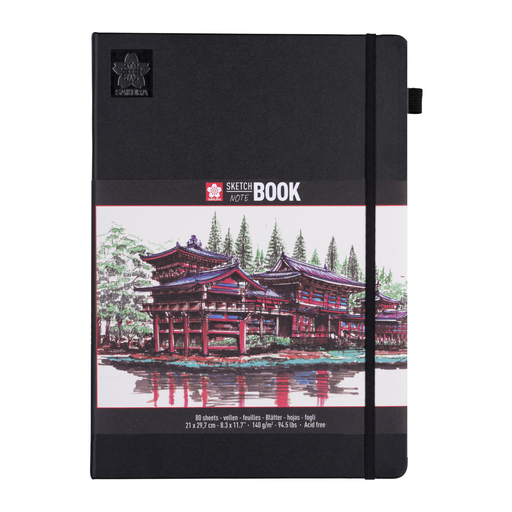
Why it stands out: This notebook was designed as a true portable studio for creatives. Its large A4 size and acid-free, cream-coloured 140 g/m? paper provide a generous and durable surface, ideal for artwork meant to last. Practical details like the pen loop and back pocket make it a tool that is as beautiful as it is functional.
Pros:
Who is it for? Artists, illustrators, designers, and architects looking for a premium A4 sketchbook for their ambitious projects and final pieces.
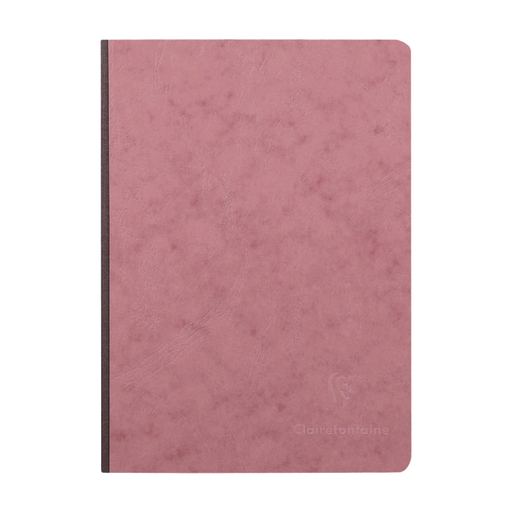
Why it stands out: The Clairefontaine Age Bag collection is an icon in French stationery. This notebook combines an elegant vintage design with the famous 90 g/m? Vélin Velouté paper, renowned for its whiteness and unparalleled smoothness, especially with a fountain pen. Its sewn textile binding ensures it lays completely flat (180°), a crucial feature for daily comfort.
Pros:
Who is it for? Students, engineers, and all professionals who require the precision of an A5 grid notebook and are looking for a reliable and durable quality notebook for heavy use.
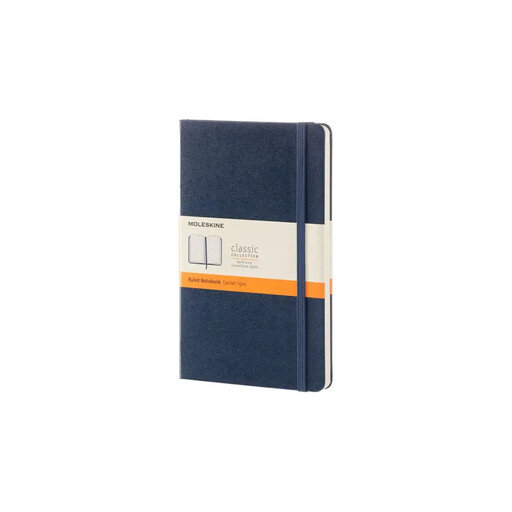
Why it stands out: The Moleskine is not just a notebook; it's an iconic object. This dotted-page version is the perfect partner for the bullet journal method. The discreet grid offers structure without imposing constraints, perfect for blending writing, charts, and creative layouts, far from the rigidity of lines or squares. Its timeless design and impeccable finishing make it a reliable choice.
Pros:
Who is it for?Bujo enthusiasts, creative planners, and professionals seeking a flexible organisational system who appreciate the appeal of a legendary design.
Our selection covers the most common uses, but your ideal notebook might have unique features. If you're looking for a model with a matching pen or other functionalities, we invite you to explore a wider range.
Discover our complete collection of custom notebooks with a pen to find the model that's right for you.
For classic note-taking with a ballpoint pen, 80 g/m? paper is sufficient. If you're a fan of fountain pens or fine-liners, aim for at least 90 g/m? to prevent ink from bleeding through. For drawing or light watercolour, paper from 120 g/m? to 160 g/m? is an excellent starting point.
It all comes down to the paper! Clairefontaine paper (usually 90 g/m?) is known for its whiteness and ultra-smooth surface, which provides a perfect glide for fountain pens. Moleskine paper (around 70 g/m?) has a characteristic ivory tint and a slightly more present texture, which is very pleasant with a pencil or ballpoint pen. The choice depends on your favourite writing tools and your sensory preferences.
A hardcover notebook provides much better protection for your pages, especially if you toss it in a bag. It also offers a stable writing surface, ideal for taking notes on your lap or even while standing. A softcover, on the other hand, makes the notebook lighter and more flexible, but also more vulnerable. Your choice will depend on your level of mobility and the durability you expect.