
Livraison le jour même ou le lendemain

Qualité garantie

Débloquez vos offres de bienvenue: Livraison GRATUITE | Jusqu'à -80 % | 30 jours d'essai gratuits à JoyPlus
Téléchargez l'application
Whether you're a seasoned mechanic or an enthusiast who services your own car, the quality of your tools is the key not only to a successful job but also to your safety and peace of mind. The market is full of promises, but not all tools are created equal. The wrong choice can turn a simple repair into a real headache, complete with stripped screws, inaccessible parts, and a significant waste of time. Before you invest, it's essential to know how to avoid the most common pitfalls.
The two most common mistakes? Trusting poor-quality steel that deforms under the first sign of stress, and choosing poorly designed tools that are ill-suited for the tight corners of modern engines. A tool that looks sturdy can prove completely useless if it can't reach the bolt or clamp you need to work on.
To make an informed choice, you need to look beyond the price tag. Three technical parameters should be verified to guarantee the performance and longevity of your professional mechanic's tools.
The type of steel is the cornerstone of a tool's quality. Many entry-level products are made from simple carbon steel, which can rust and deform quickly under high stress. For reliable automotive repair tools, chrome vanadium steel (often marked Cr-V) is the industry standard. This alloy offers superior resistance to torsion, wear, and corrosion. It ensures your wrenches won't strip a bolt head or break during high-torque applications. This is a non-negotiable criterion for anyone looking for equipment built to last.
A modern engine is a maze of components. Being able to reach a part without having to disassemble everything is a valuable time-saver. This is where a tool's design makes all the difference.
Sometimes, the problem is out of sight. A leak, a broken part, or an obstruction inside an engine block requires a proper diagnostic tool. An engine inspection camera, or endoscope, is designed for this. But beware of basic models with rigid probes, which quickly show their limitations. For a professional diagnosis, an articulating probe is essential. It's the only way to steer the camera inside a cavity to inspect cylinder walls or the corner of a gearbox, thereby avoiding a long and costly disassembly.
Every user has different requirements. Here is our selection: tools that meet specific needs while avoiding the pitfalls we've just discussed.
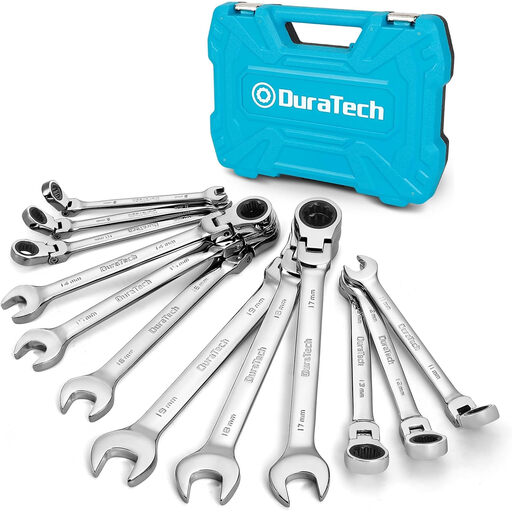
Why we chose it: This set covers the most common sizes in auto mechanics. It's the ideal kit for the enthusiast who wants versatile, high-performance equipment for weekend projects, without sacrificing access to tight areas or durability.
Its chrome vanadium steel construction ensures excellent durability. Crucially, its 180° flex-head and 72-tooth ratchet (5° swing arc) solve the problem of accessing tight spaces where a standard wrench would be completely inoperable.
A complete and versatile set, delivered in a practical storage case. A reliable and durable solution for the majority of fastening tasks.
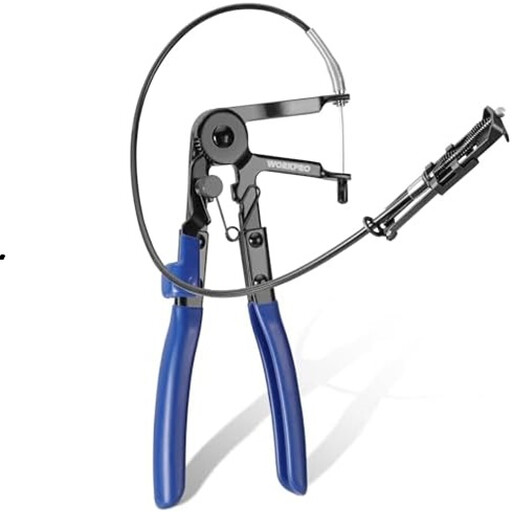
Why we chose it: This tool was designed for mechanics who frequently work on cooling, fuel, or lubrication systems. It makes the inaccessible finally accessible and turns a often frustrating task into a simple formality.
It solves the problem of conventional pliers, which are far too short for many jobs. Its 67 cm flexible cable can reach the most remote clamps, while the locking system holds the clamp open, freeing up both of your hands.
Its ratcheting lock mechanism frees up one hand, allowing you to focus calmly on positioning the hose without having to hold the pliers shut.
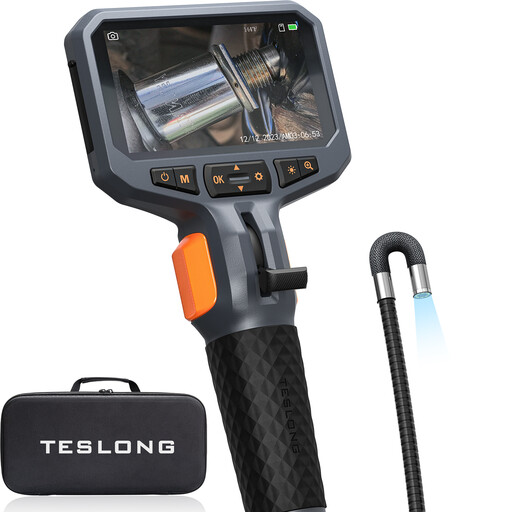
Why we chose it: For complex diagnostics, the image is king. This endoscope is for professionals who need to inspect critical areas (inside cylinders, hollow bodies, etc.) without undertaking a full disassembly.
Unlike entry-level endoscopes, its 210° articulating probe, controlled from the handle, allows for ultra-precise directional inspection. No more "blind" diagnostics with a camera that only points straight ahead.
The ability to record photos and videos to a memory card (TF/microSD) lets you document the inspection for later analysis or to present to a client.
Discover our full selection of products that meet our criteria for performance, durability, and safety.
A well-maintained Cr-V steel tool is a lifetime investment. Even with heavy use, it can last for decades. The secret? Clean them after each use to remove oil and dirt, then store them in a dry place to prevent corrosion. Also, remember to regularly lubricate moving parts (ratchets, joints) to ensure they operate smoothly.
Absolutely. While a hobbyist can start with basic tools, a flex-head ratchet wrench set is a game-changer. For a simple oil change or battery replacement, you're bound to run into a poorly placed bolt. Investing in such a set saves you frustration, prevents stripping a screw, and ultimately, lets you work faster and with more enjoyment.
It all depends on your use case. For advanced automotive diagnostics, two criteria are essential: the probe's diameter and its articulation. A probe under 9 mm in diameter will fit into most spark plug wells. But it's the articulation, controllable from the handle, that makes the difference between a gadget and a true professional tool. It is indispensable for inspecting cylinder walls or taking a look behind a valve. Finally, don't overlook the screen resolution and the quality of the adjustable LED lighting.