
Livraison le jour même ou le lendemain

Qualité garantie

Débloquez vos offres de bienvenue: Livraison GRATUITE | Jusqu'à -80 % | 30 jours d'essai gratuits à JoyPlus
Téléchargez l'application
Whether you're a craftsman on a job site, an artist in the middle of a creation, or a customisation pro, choosing the right professional marker is anything but trivial. Smudged ink, a fading line, or an ill-suited tip can ruin an entire project. Faced with a jungle of options, it's hard to know where to start.
This guide is here to shed some light. We'll break down the essential criteria to help you choose the perfect marker—one that meets your specific needs, from precision industrial marking to the most detailed illustration.
Before diving into our selection, let's review the key points that will guide your decision.
Permanence, opacity, surface compatibility... the ink sets the rules. There are three main types?:
The tip is what gives your lines style and precision. Here are the most common ones?:
The surface you're working on changes everything. For use on a job site or in a workshop, a permanent marker for wood and metal is non-negotiable. Pro tip: always check the manufacturer's recommendations. It's the only way to guarantee your mark will hold up, whether the surface is porous (wood, fabric) or perfectly smooth (glass, plastic).
Enough theory, let's get practical! Here are our champions, tested and approved for very specific uses.
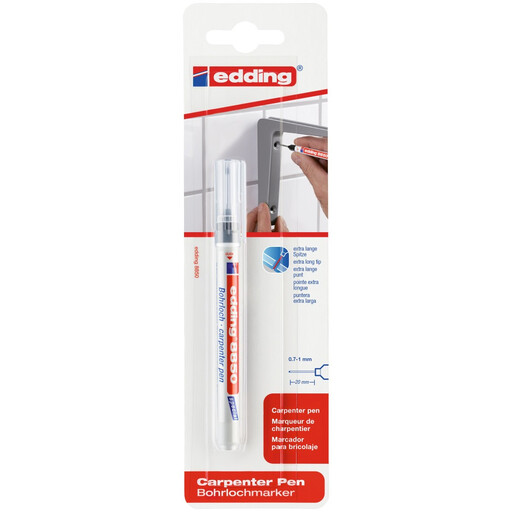
Built for the job site, the edding 8850 is the go-to companion for construction pros. Its long, fine tip gets into tight spaces for precise marking, even on dusty or damp surfaces. The permanent ink dries instantly and resists both water and friction. With its sturdy clip, it's always within reach on your tool belt.
Pros
Who is it for??
For carpenters, plasterers, and all construction professionals who need a reliable and durable marker that can keep up with them on site every day.
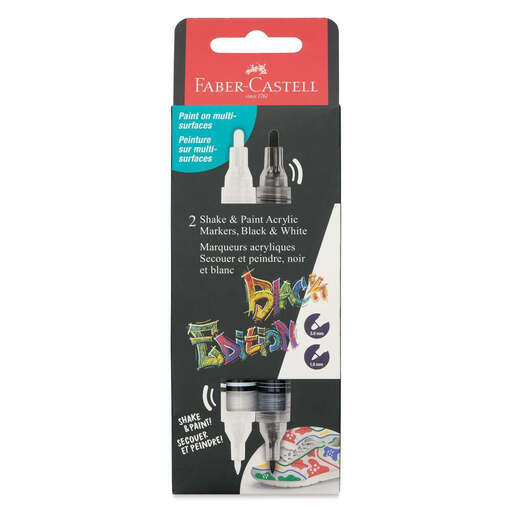
Want to breathe new life into your objects? This set of acrylic markers from Faber-Castell is the secret weapon for customisation. Its ultra-pigmented paint ink provides perfect coverage on any surface, even the darkest ones, for an intense, matte finish. Each marker features a dual tip (3 mm and 1 mm) to switch between filling and detailing. Just shake, pump, and the ink flow is perfectly controlled.
Pros
Who is it for??
For creatives and DIY fans who want to customise trainers, skateboards, or any other object with an opaque and long-lasting result.
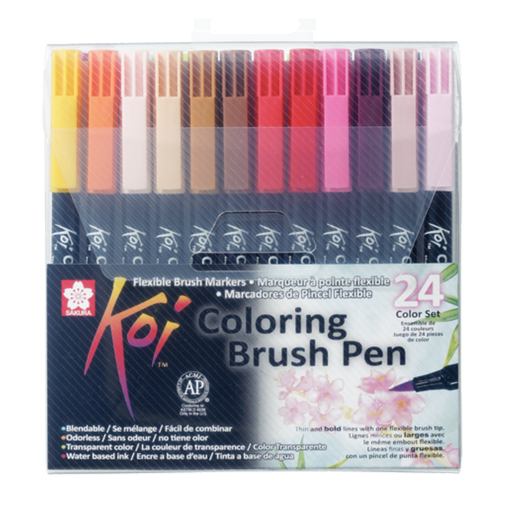
An essential tool for illustrators, this art marker set from SAKURA turns drawing into pure pleasure. The secret? A nylon brush tip that is both flexible and responsive, reacting to the slightest pressure for infinite line variation. The odourless, water-based ink lends itself perfectly to gradients and watercolour effects, which can be blended with a simple wet brush.
Pros
Who is it for??
For illustrators, bullet journal enthusiasts, and calligraphy lovers looking for the versatility and expressiveness of a brush in a marker format.
Does your project have very specific needs, or are you just curious to discover other gems? From whiteboard markers to fabric pens, there's a model out there waiting for you.
? Explore our complete collection of marker pens to discover even more models.
1. Which marker should I choose for writing on multiple types of materials??
For maximum versatility, your safest bet is a multi-surface permanent marker. Alcohol- or oil-based inks are the most adaptable: they adhere just as well to porous surfaces (wood, cardboard) as they do to smooth ones (plastic, metal, glass).
2. What's the difference between an acrylic paint marker and a classic marker??
It's all in the ink! A classic marker uses a fairly translucent ink. In contrast, an acrylic paint marker contains real paint pigments, just like paint from a tube. The result is unbeatable opacity, perfect for making your creations stand out even on the darkest backgrounds.
3. Can I use a professional marker for art drawings??
Absolutely! Many so-called "professional" markers are actually designed for artists. Art marker sets or brush pens for drawing are perfect for illustration, sketching, or lettering. Their blendable inks and specialised tips open up a wide range of creative possibilities.