
Livraison le jour même ou le lendemain

Qualité garantie

Débloquez vos offres de bienvenue: Livraison GRATUITE | Jusqu'à -80 % | 30 jours d'essai gratuits à JoyPlus
Téléchargez l'application
Liven up a party, celebrate a birthday, or turn your living room into an impromptu concert stage: the idea of a karaoke machine is certainly appealing. But be warned, behind the enticing marketing promises often lies disappointment. Crackling sound, mics that give out after three songs, or a battery that dies before the final chorus are common pitfalls. To avoid buyer's remorse, it's crucial to know how to sidestep the most common traps and find a device that truly hits the right note.
Initial enthusiasm can quickly turn to frustration if you rely on the wrong indicators. Here are the classic mistakes that cost unsuspecting buyers dearly.
To make the right choice, focus instead on these objective technical specifications, which are guarantees of performance and durability.
RMS power is the only reliable indicator for assessing a speaker's true sound capability. For a karaoke sound system for parties at home or in a small venue (30-50 people), a power rating between 100 and 200W RMS is an excellent benchmark. But watts aren't everything: sound quality also depends on the speaker architecture. A good system separates frequencies with a dedicated woofer for deep bass and one or more tweeters for clear, precise highs. This design ensures that the music doesn't distort and that vocals remain perfectly intelligible, even at full volume.
To sing and dance without restriction, freedom of movement is essential. A Bluetooth karaoke speaker featuring the Bluetooth 5.0 standard or higher ensures a stable, fast connection with no noticeable latency from your smartphone, tablet, or computer. As for mics, opt for a wireless karaoke system with UHF technology. Significantly more reliable than VHF or Bluetooth, UHF is less susceptible to interference from other devices (Wi-Fi routers, smartphones, etc.) and offers a greater range. Check that the included mics are sturdy and have basic adjustments like echo or volume.
If you plan to use your device outdoors or move it around often, a portable, battery-powered karaoke machine is a must. Don't just rely on the advertised duration in hours: check the battery capacity, expressed in milliampere-hours (mAh) or watt-hours (Wh). A capacity of 4000 mAh is the bare minimum to last a few hours. For more powerful and heavier models, a trolley-style carrying handle and wheels are a significant convenience feature.
We have vetted several models based on these criteria to offer you a selection tailored to every need.
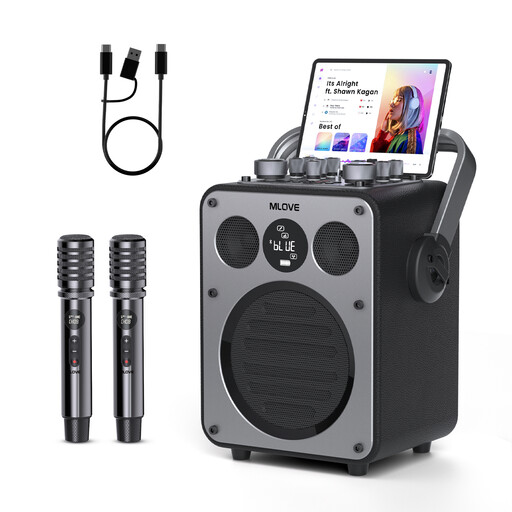
Ideal user profile: Ideal for those who regularly host parties and need serious sound power without compromise. Its trolley design makes it easy to transport, and its DSP audio processor ensures quality vocal effects to get the party started, guaranteed.
This model states a clear 200W RMS power rating, backed by a real subwoofer and dedicated tweeters. The kit includes two high-quality UHF wireless mics and a battery sized for 6 to 8 hours of listening at high volume, so you can avoid any nasty surprises.
The combination of high power, a Digital Signal Processor (DSP) for pro-level sound rendering, and excellent portability (trolley handle and wheels).
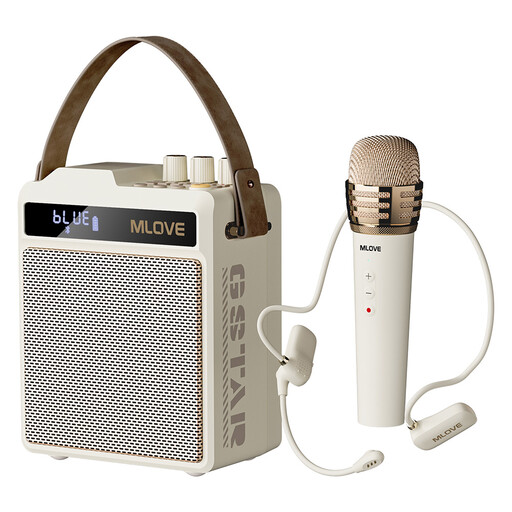
Ideal user profile: Perfect for versatile family use. The wireless headset mic frees up your hands for dancing or playing an instrument, while the handheld mic is perfect for duets. Its compact size and fast charging make it an easy-to-manage party companion.
It avoids the "all-in-one" kit trap by providing two types of quality wireless mics (handheld and headset), catering to various uses right out of the box. Its technical specifications are clear and realistic.
Its great versatility, with its dual microphones (handheld + headset) and its 6.35 mm instrument input. Its compact design and fast charging via USB-C are real bonuses.
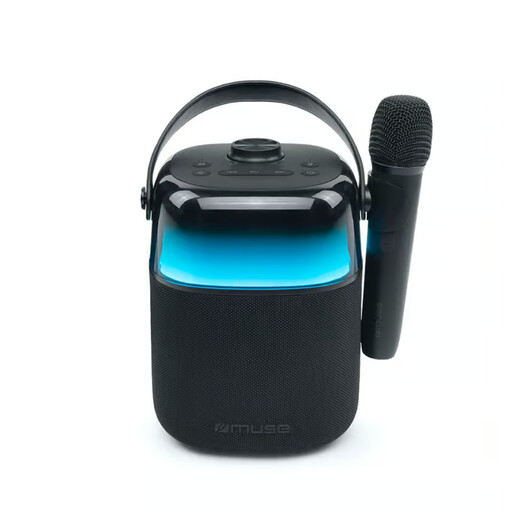
Ideal user profile: An affordable option for those who want to get into karaoke without breaking the bank. Its 30W power is more than enough for small groups, and its splash resistance (IPX5) makes it perfect for casual use in the garden or by the pool.
This model doesn't over-promise. It advertises a power of 30W and a realistic battery life (up to 10 hours). The IPX5 certification is not just a marketing gimmick, but a verifiable technical feature.
Its excellent value for money, its splash resistance for worry-free outdoor use, and its lighting modes for an instant party atmosphere.
Explore our complete, up-to-date selection of products that meet our demanding selection criteria and current safety standards.
For use in a living room or a medium-sized room (up to 50 m?), an RMS power between 30 and 80W is more than enough for a festive atmosphere without disturbing the entire neighborhood. If you're planning larger parties or outdoor events, aim for at least 100W RMS to ensure the sound remains clear and powerful without distortion.
The easiest and most common method is Bluetooth. Activate pairing mode on your Bluetooth karaoke speaker and select it in the Bluetooth settings of your smartphone, tablet, or smart TV. You can then stream music and lyrics (from apps like YouTube or dedicated websites) directly to the speaker. For devices without Bluetooth, a wired connection via an auxiliary cable (3.5 mm jack) remains a simple and reliable alternative.
Yes, as long as you choose the right technology. Modern systems that use wireless mics on the UHF (Ultra High Frequency) band are very reliable today. They offer excellent range (often over 15 meters) and are much less susceptible to interference than older VHF technologies or even Bluetooth, which can sometimes conflict with your Wi-Fi network or other nearby devices.