
Livraison le jour même ou le lendemain

Qualité garantie

Débloquez vos offres de bienvenue: Livraison GRATUITE | Jusqu'à -80 % | 30 jours d'essai gratuits à JoyPlus
Téléchargez l'application
A professional ionic hair dryer can reduce drying time and make styling at home easier. However, high wattage or simply mentioning “ionic” does not guarantee a pleasant experience. For long, thick, curly or frizz-prone hair, you also need to consider the motor, weight, settings and attachments.
Here are the main pitfalls to avoid, the criteria to check and a selection of models suited to different uses in France.
A device rated at 2,400 W is not necessarily faster than a less powerful high-speed hair dryer. Airflow, fan design, the motor and how concentrated the airflow is all play an important role.
High wattage can also place greater demands on your electrical system and increase running costs. When comparing two models, consider the wattage alongside the motor type, stated speed and available settings.
Ionic technology is often presented as a solution for frizz and static. In practice, the result also depends on the temperature, the distance between the device and your hair, how you move the hair dryer and the nature of your hair fibre.
The ionic function does not replace precise heat control. A device that is difficult to adjust may still feel uncomfortable, even when it includes an ionic generator.
A powerful but heavy device can quickly tire your wrist when drying long hair. Conversely, a compact model may lack the attachments needed to create a blow-dry or define curls.
Also check the air intake grille, filter and cord length. Hair and dust that build up in these areas can affect performance and encourage overheating. Always unplug the device before cleaning it and use it away from any source of water.
An AC motor is generally found in professional corded hair dryers and provides a continuous airflow. It may suit people who regularly dry long or thick hair. Some models also claim an extended operating life, but this information should be checked in the product listing and does not guarantee long-term durability.
A brushless motor is common in high-speed hair dryers. It often allows the device to be smaller and lighter while reaching a high rotational speed. For example, the NICEBAY DW-9041 claims 110,000 rpm and an airflow of 23 m/s, according to its product listing. These figures reflect the specifications provided by the manufacturer; the performance you experience will depend in particular on the attachment being used.
To dry your hair quickly, look for several speed and heat settings. A combination of 2 or 3 speeds and 3 or 4 temperature settings offers much finer control than a simple low/high setting.
A cool-shot function is useful for setting your style and cooling a section of hair after a blow-dry. It can also help you manage the sensation of heat more effectively. The Shark SpeedStyle HD333EU claims temperature regulation up to 1,000 times per second, as well as a maximum temperature of 110 °C. This information comes from its product listing and should be treated as commercial specifications, not a guarantee of results.
A hair dryer with a diffuser is suitable for anyone who wants to dry curly or wavy hair while limiting the spread of the airflow. A concentrator, meanwhile, directs air onto a section of hair for blow-drying or straightening.
For everyday use, also prioritise:
If you plan to take your hair dryer travelling, finally check that its voltage is compatible with your destination. Never plug in a device without making sure that the local voltage matches the voltage specified for the product.
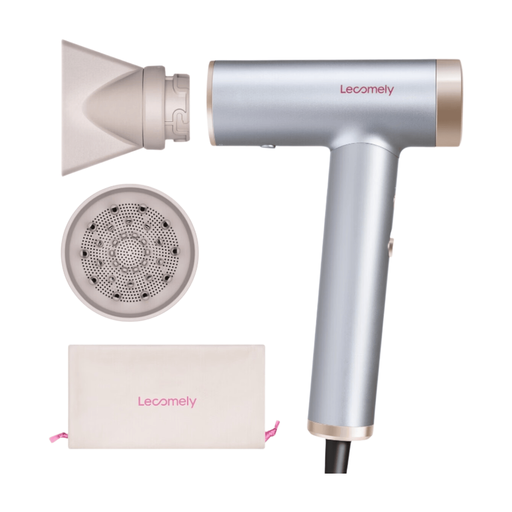
Why this suits this profile : its 2 speeds, 4 temperature settings, cool-shot button, diffuser and concentrator make it easy to use for a first purchase.
The listing highlights several settings and two attachments, rather than relying solely on high wattage that can sometimes be difficult to control.
2 speeds, 4 temperature settings, cool-shot button, diffuser and concentrator.
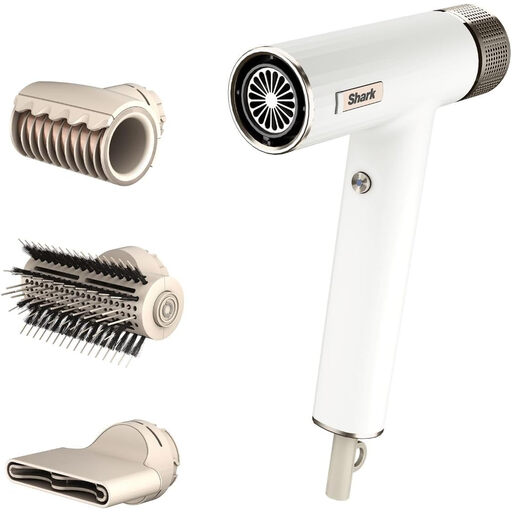
Why this suits this profile : it combines a stated weight of 750 g, a 1,700 W motor and three dedicated attachments for drying, straightening and finishing.
Each attachment has a clearly defined purpose, so you avoid buying extra nozzles that will end up forgotten in a drawer.
Stated weight of 750 g, three attachments, cool-shot function and stated thermal control.
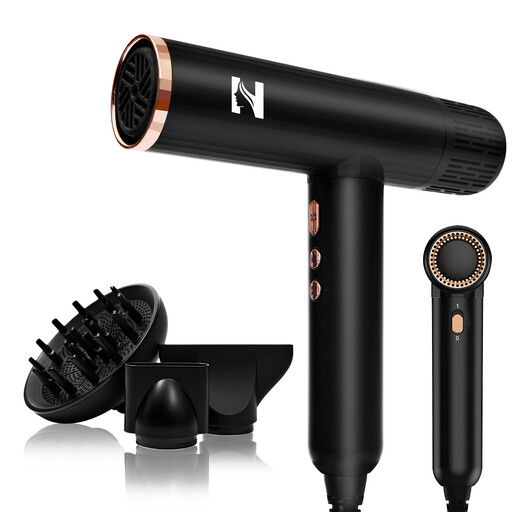
Why this suits this profile : people with curly, long or thick hair benefit from a diffuser, two concentrators, three speeds and a brushless motor rated at 110,000 rpm.
Its stated weight of 0.57 kg and included attachments help reduce fatigue while avoiding the need to purchase additional accessories.
Diffuser, two concentrators, 4 temperature settings, 3 speeds and a stated 2 m cord.
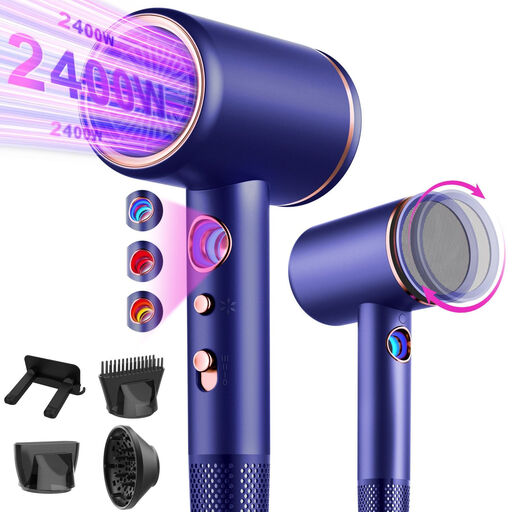
Why this suits this profile : its stated power of 2,400 W, AC motor, three temperature settings, diffuser and three nozzles make it a versatile model for both drying and styling.
The settings and nozzles allow you to adapt the airflow for drying or styling, rather than always operating at maximum heat.
AC motor, stated power of 2,400 W, 3 temperature settings, diffuser and 3 attachments.
We have compiled a complete, real-time updated list of products that meet these demanding selection criteria and European safety standards.
Start by soaking up excess water with a towel, without rubbing your hair vigorously. Then hold the device approximately 10 to 20 cm from your hair and keep the airflow moving constantly. Begin with a moderate temperature, then choose the concentrator or diffuser according to the finish you want.
For curls, place the sections of hair in the diffuser without stretching them. For a blow-dry, work in sections with a concentrator. Clean the air intake grille regularly and only put the device away once it has cooled completely.
Yes, provided the model has a diffuser, several speeds and an adjustable temperature. The attachment plays an essential role in distributing the airflow and preventing hot air from being concentrated on a single area.
Service life depends on the motor, frequency of use, maintenance and compliance with the instructions. There is no universal lifespan. Cleaning the air intake, keeping the outlet clear and switching the device off if you notice an unusual smell all contribute to safer use.
Consumption depends on the wattage and operating time. A 2,400 W device uses more electricity per hour than a 1,700 W model used under the same conditions. However, actual drying time, the setting selected and frequency of use also affect the overall cost.