
Livraison le jour même ou le lendemain

Qualité garantie

Débloquez vos offres de bienvenue: Livraison GRATUITE | Jusqu'à -80 % | 30 jours d'essai gratuits à JoyPlus
Téléchargez l'application
As the head of product selection at Joybuy, my mission is to help you navigate the jungle of tools. For a craftsman or a seasoned DIYer, the quality of professional hand tools isn't a luxury—it's a necessity. A low-quality tool doesn't just sabotage the quality of a project; it puts your safety at risk and wastes precious time.
This guide breaks down the essential selection criteria and presents a curated list of tools that have proven their worth in durability and precision. Our goal? To give you all the keys to making a profitable long-term investment.
Before diving into our selection, let's review the key criteria to keep in mind when choosing your professional hand tools.
A tool's durability depends primarily on the steel it's made from. Two alloys stand out in quality toolmaking:
Checking the steel composition is therefore the first step to ensure you're acquiring durable and high-performing tools.
A tool handled for hours on end must offer a comfortable grip to reduce fatigue and improve precision. Bi-material handles (like PP/TPR composites) provide a superior grip, even with gloves or wet hands. Don't overlook safety features either, such as locking systems on cutting tools or smoothed blade edges to prevent accidental cuts.
For trades like carpentry or masonry, precision is non-negotiable. A try square must guarantee a perfect 90° angle, while a masonry chisel needs a sharp blade for clean, burr-free work. Favour tools with laser-etched markings over printed ones; they are far more resistant to fading and ensure unfailing readability.
Here is a selection of tools that stand out for their materials, design, and perfect suitability for professional use.
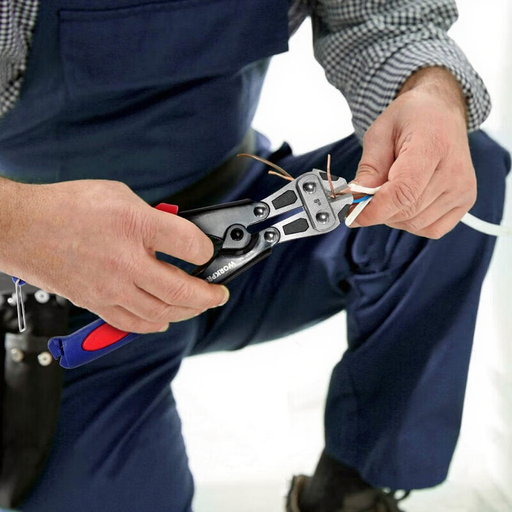
Why it stands out: This compact bolt cutter combines the power needed for the toughest materials with an ultra-practical size for working in the tightest corners. Its design prioritises leverage and jaw durability.
Key features:
Who is it for?: The perfect partner for electricians, construction professionals, and advanced DIYers looking for a powerful and portable cutting tool for their job sites.
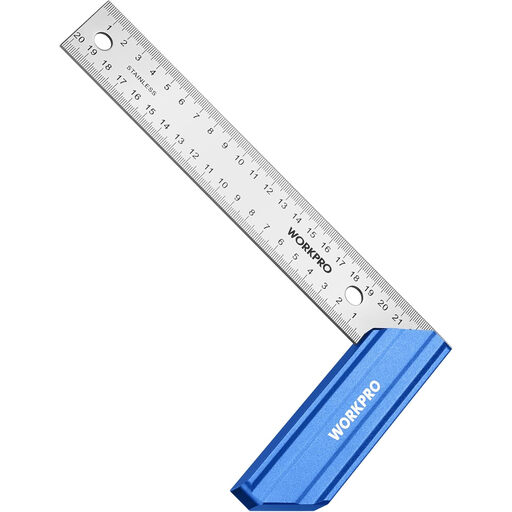
Why it stands out: This try square is built for precision and longevity. The combination of a stainless steel blade and a robust aluminium handle guarantees unfailing reliability for measurements and markings.
Key features:
Who is it for?: An essential for carpenters, joiners, cabinet makers, and all wood or metal professionals who demand absolute precision in their layouts.
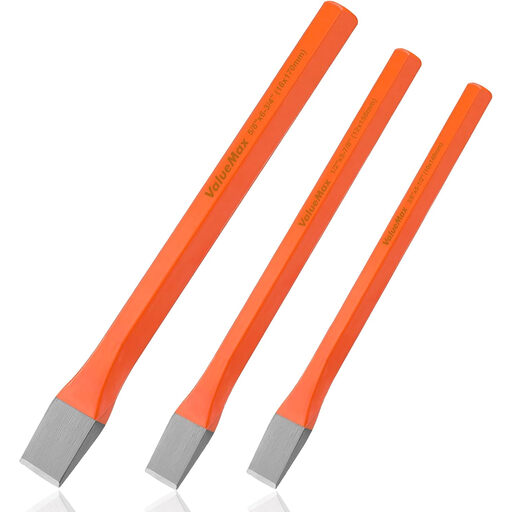
Why it stands out: This set of masonry chisels is a versatile and robust solution for all masonry work. Its Cr-V steel construction with specific heat treatment offers a perfect balance between blade hardness and body flexibility to absorb strikes.
Key features:
Who is it for?: Ideal for masons, construction pros, and seasoned DIYers tackling projects involving stone, concrete, cement, or mortar.
Does your project require a different tool, perhaps for specific finishing on metal or wood? A good file is often the key to a professional result.
Discover our complete range of Hand Files to find the perfect tool for all your finishing and adjustment needs.
1. What is the difference between Cr-V steel and Cr-Mo steel?
To put it simply, chrome-vanadium (Cr-V) steel is the champion of hardness and wear resistance, making it perfect for tools that undergo constant friction. Chrome-molybdenum (Cr-Mo) steel, on the other hand, is renowned for its toughness: it handles impacts and torsion better, making it the logical choice for high-force tools like a bolt cutter.
2. How should I maintain my hand tools to maximise their lifespan?
Simple but regular maintenance is key. After each use, clean your tools to remove dust, debris, and moisture. Store them in a dry place to prevent rust. For tools with moving parts or blades, a thin layer of oil applied from time to time will protect the metal and ensure smooth operation. Finally, inspect them regularly for any signs of wear or damage.
3. Is a more expensive tool necessarily a better investment?
Not necessarily. The best investment is choosing a tool that is suited to the frequency and intensity of your use. It's better to focus on the quality of the materials (like Cr-V or Cr-Mo steel), the finish, and the ergonomics. A well-chosen tool, even at a reasonable price, will always be more cost-effective in the long run than an overpriced model that is ill-suited to your needs.