
Livraison le jour même ou le lendemain

Qualité garantie

Débloquez vos offres de bienvenue: Livraison GRATUITE | Jusqu'à -80 % | 30 jours d'essai gratuits à JoyPlus
Téléchargez l'application
Whether you're an illustrator, architect, designer, or simply a drawing enthusiast, you know that the right tool makes all the difference. But with the sheer volume of professional drawing markers on the market, finding the perfect one for a specific project can quickly become a challenge. This guide is here to cut through the noise, decode the options, and help you choose the tools that truly fit your needs—without the marketing jargon.
Our goal is to arm you with practical information to make the right choice, focusing on what really matters: the technical specifications and real-world applications of each type of marker.
Before diving into our selection, here are the key criteria to keep in mind to ensure you make the right decision.
The ink is the soul of the marker. Its properties determine the final look, durability, and the surfaces you can work on.
The tip defines the character of your line. In fact, artists often juggle several tip types within a single project.
The surface you work on is a decisive factor. Standard drawing paper (like Canson or Bristol) will work perfectly for most water-based or pigment-based inks. For a watercolour marker, opt for a heavier paper (at least 300?g/m?) to prevent buckling. Finally, for projects on objects, glass, fabric, or dark surfaces, an opaque acrylic marker is the obvious choice.
Here is a selection of products that meet distinct creative needs, from precision drawing to object customisation.
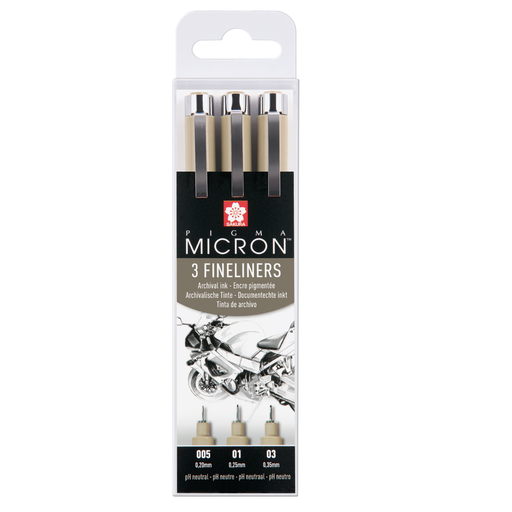
Why it stands out: The Sakura Pigma Micron is a true institution in the world of technical drawing and illustration. This set offers three fine tip sizes (0.20?mm, 0.25?mm, 0.35?mm) for absolute control. Its key feature is its pigment-based Pigma ink, designed for very long-term archiving. According to SAKURA, the ink is permanent, waterproof, fade-resistant, and pH-neutral, preserving the integrity of your paper and colours for decades.
Pros:
Who is it for?: Architects, designers, comic book artists, and all creatives looking for an ultra-reliable black fineliner for precise, permanent lines.
See the SAKURA Pigma Micron set on Joybuy.fr
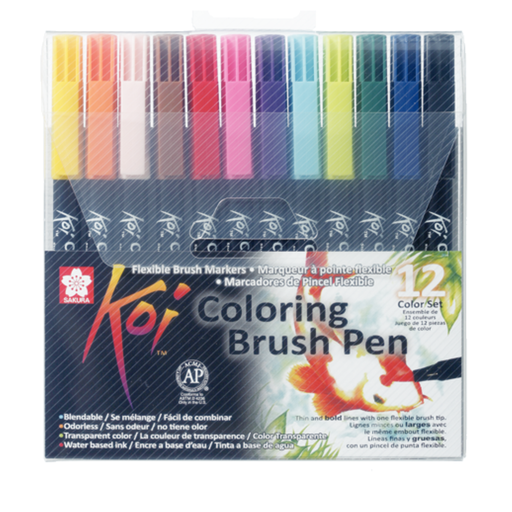
Why it stands out: This SAKURA Koi marker set combines the convenience of a marker with the flexibility of a paintbrush. Each brush pen features a flexible nylon tip that lets you switch from a fine line to a broad stroke with a simple change in pressure. The water-based ink is designed for blending, allowing you to achieve watercolour-worthy gradients. It's the ultimate portable tool for artists who love to play with colour.
Pros:
Who is it for?: Illustrators, art colouring addicts, bullet journal fans, and artists looking for a portable alternative to watercolour paints.
Discover the SAKURA Koi set on Joybuy.fr
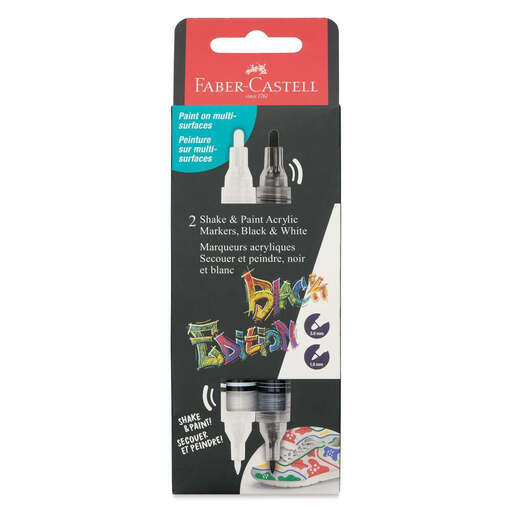
Why it stands out: The acrylic marker from Faber-Castell is all about versatility. This black and white duo is an excellent starting point for tackling various surfaces. Its ultra-opaque, water-based acrylic ink provides perfect coverage on even the darkest backgrounds. Each marker is equipped with a dual tip (3?mm and 1?mm) to easily switch between filling and detailing. Its pump system ensures a controlled and consistent ink flow on materials as diverse as metal, glass, plastic, or stone.
Pros:
Who is it for?: DIY pros, artists who customise everything they can get their hands on (sneakers, skateboards, phone cases), and mixed-media creators who need an opaque, permanent ink.
See the Faber-Castell markers on Joybuy.fr
This selection covers three key uses, but the world of fine art supplies is full of hidden gems. If your needs are different or you simply want to explore other brands, feel free to browse our complete catalogue.
Explore our collection of Pens, Pencils & Writing Supplies to find other marker sets and the perfect tools for your next project.
1. What's the difference between an alcohol-based marker and a water-based marker? Alcohol-based markers, the holy grail for many professional illustrators, use a solvent-based ink. It dries very quickly and allows for ultra-smooth blends without causing the paper to buckle. Water-based markers (like the SAKURA Koi in our selection) rely on an odourless ink that can be reworked with a little water to achieve beautiful watercolour effects.
2. How should I store my markers to extend their lifespan? The golden rule: most drawing markers, especially dual-tip or brush-tip ones, should be stored horizontally. This is key to ensuring an even distribution of ink to each tip. Also, remember to always cap them tightly right after use to prevent the ink from drying out.