
Livraison le jour même ou le lendemain

Qualité garantie

Débloquez vos offres de bienvenue: Livraison GRATUITE | Jusqu'à -80 % | 30 jours d'essai gratuits à JoyPlus
Téléchargez l'application
In a hotel, restaurant, office or healthcare facility, the choice of professional cleaning products has a direct impact on the time spent on each task, water consumption and user safety. For individuals who regularly maintain a large home, economy-sized formats can also help you avoid making multiple purchases.
Yet the choice isn't as straightforward as it seems. A product labelled as "multi-purpose" isn't necessarily suitable for all surfaces. A bleach gel might seem ideal for the bathroom, but it won't replace a disinfectant. As for the large container, it's only truly cost-effective if the dosage, dilution and shelf life match your usage pattern.
A multi-surface cleaner primarily tackles visible dirt. A kitchen degreaser is formulated to work on greasy residues, while a floor and surface disinfectant falls under biocidal use, governed by specific labelling and application conditions.
Relying solely on the marketing promise can therefore lead you to use the wrong product. Check its intended use, the required contact time, whether rinsing is necessary and the standards mentioned on the packaging.
Bleach and acidic formulas aren't suitable for all surfaces. Some products can attack metals, aluminium, painted surfaces, marble, untreated wood and textiles. Even when described as gentle, an abrasive formula should be tested first on an inconspicuous area.
Large-format cleaning products are worthwhile when you use them frequently. But a 5 L container isn't necessarily more economical if the product is poorly dosed or degrades before you finish it. Compare the volume, the recommended dilution and the amount you actually use per session.
Start by identifying your main need:
A product should not be considered a disinfectant if its label does not clearly claim this use. For biocides, consult the conditions of use and the applicable regulatory information.
A gel texture adheres better to vertical surfaces: it stays in contact with dirt for longer and reduces drips. This doesn't mean you can ignore the action time stated by the manufacturer. On surfaces that come into contact with food, rinsing with drinking water may be mandatory, even if the product is described as multi-purpose.
Products containing bleach must never be mixed with acids, ammonia or other cleaning products: dangerous gases could form. Wear suitable gloves and, when the label recommends it, eye and face protection. Ventilate the room, keep products out of reach of children and store them in their original packaging.
The professional references shown below are described based on the information provided by the manufacturers, their volume and their stated use. Always check the label of the product you receive before using it.
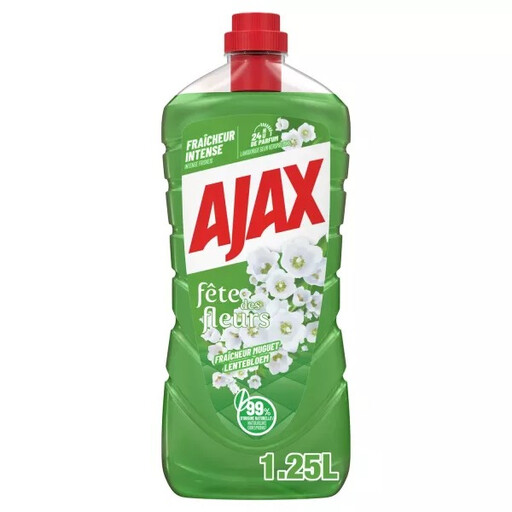
Why this choice suits this profile: Its 1.25 L format is ideal for routine maintenance of floors and hard surfaces, without requiring you to invest in a large container straight away.
Its daily maintenance function is clearly aimed at floors and surfaces, which limits the risk of using a specialised formula inappropriately.
Can be used diluted or applied to a cloth as per the label, 1.25 L format and floral fragrance as stated by the manufacturer.
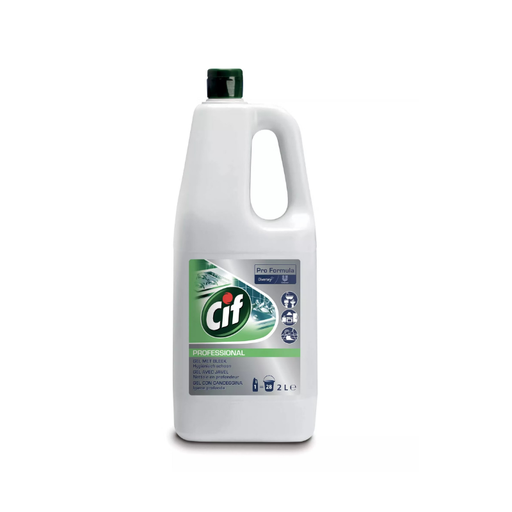
Why this choice suits this profile: Its thick texture and 2 L volume are aimed at users who want a targeted formula for sanitary ware and frequently cleaned washable surfaces.
Its adhesive texture is designed for vertical surfaces, while the instructions distinguish between neat application and dilution for floors and walls.
Gel intended for soap scum, organic stains and mould according to the product description; stated dilution of 140 ml per 10 L of warm water.
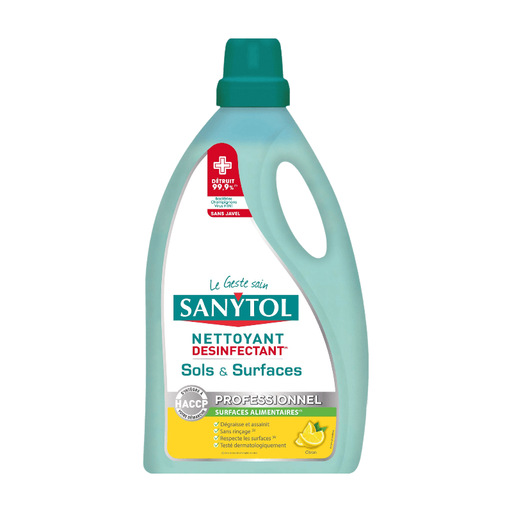
Why this choice suits this profile: The 5 L format is ideal for communal establishments, hotels, restaurants and businesses that regularly maintain large areas.
The bleach-free claim distinguishes it from chlorinated gels. Disinfection is still subject to the label instructions, dilution and contact time.
Bleach-free disinfectant cleaner for floors and surfaces, designed to fit into structured cleaning routines.
We've put together a comprehensive, real-time updated list of products that meet these strict selection criteria and European safety regulations.
Divide the price of the container by its volume, then factor in the recommended dilution. A product sold in 5 L may work out cheaper to use than a 750 ml bottle, but only if the recommended dosage matches your needs and the container is used before its expiry date.
No. Never mix cleaning products, especially those containing bleach with acidic or ammonia-based formulas. Read the label, ventilate the room and rinse the surface thoroughly before switching to another product.
It depends on the product and storage conditions. Check the date on the packaging, keep the lid closed and store the product in a cool, dry place away from sunlight. In a business setting, note the opening date to keep better track of stock.