
Livraison le jour même ou le lendemain

Qualité garantie

Débloquez vos offres de bienvenue: Livraison GRATUITE | Jusqu'à -80 % | 30 jours d'essai gratuits à JoyPlus
Téléchargez l'application
For a professional auto repair technician or a savvy DIY mechanic, a professional multi-brand car diagnostic tool isn't a gadget: it's an indispensable instrument. Faced with increasingly complex vehicles packed with dozens of ECUs, a simple error code reader is now obsolete. It has become essential to invest in a tool capable of communicating with all systems, running active tests, and performing targeted maintenance procedures.
This guide aims to give you the keys to navigate the overwhelming market and present a selection of tools that truly make a difference in a professional garage.
Before diving into a comparison, let's review the features that distinguish a consumer-grade tool from professional equipment. Here are three points to watch closely.
Reading and clearing error codes is the bare minimum. But a true bidirectional car scanner goes much further. It can send commands to an ECU to directly test the function of specific components (injectors, fans, valves, etc.). This feature, also known as an "active test," significantly reduces diagnostic time by allowing you to isolate a fault without having to dismantle a single part.
ECU coding is another advanced function. It allows you to adapt, relearn, or configure new modules (like an injection control unit or a body control module), or even modify factory settings on certain vehicles.
Automotive electronic architectures are evolving at lightning speed. Recent protocols like CAN FD (Controller Area Network Flexible Data-rate) and DoIP (Diagnostics over Internet Protocol) are becoming standard on new vehicles, especially from General Motors, Ford, and European manufacturers. A diagnostic tool that doesn't natively support these protocols will quickly become outdated. Ensure the device you're considering is compatible to future-proof your investment.
The software of a diagnostic scanner must be updated very regularly to incorporate new vehicle models, new features, and bug fixes. Two business models compete:
Here are a few models that meet the demands of professionals, both in terms of functionality and vehicle coverage.
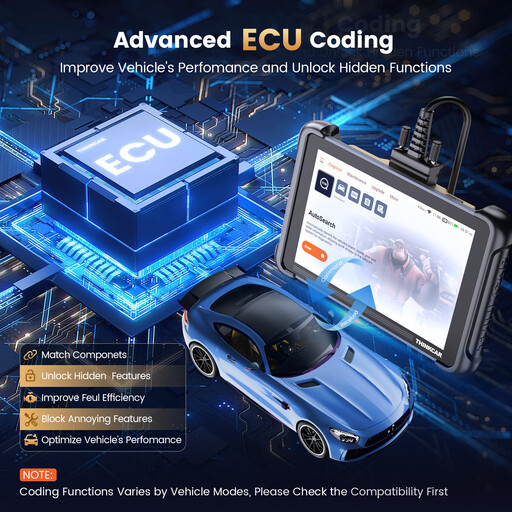
Why it stands out: The ThinkScan 689 establishes itself as a complete solution thanks to its subscription-free model and its compatibility with modern protocols.
Key features:
Who is it for? For the independent technician or garage looking for a powerful, scalable tool with no hidden fees, offering an excellent return on investment.
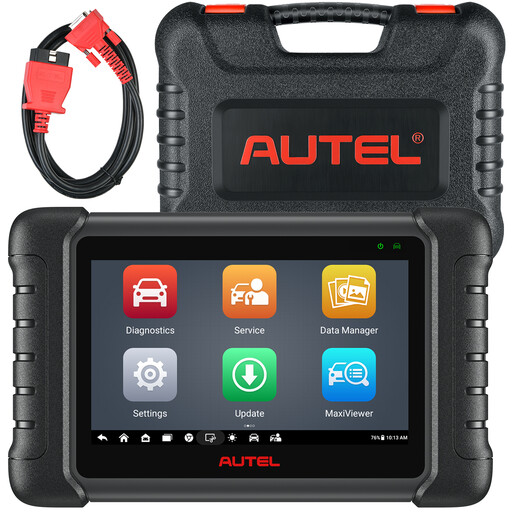
Why it stands out: The Autel MX808S is renowned for the depth of its "all-system" diagnostics and the power of its bidirectional control functions.
Key features:
Who is it for? For the multi-brand workshop that needs a reliable tool with broad coverage and advanced active test capabilities for fast and accurate diagnostics.
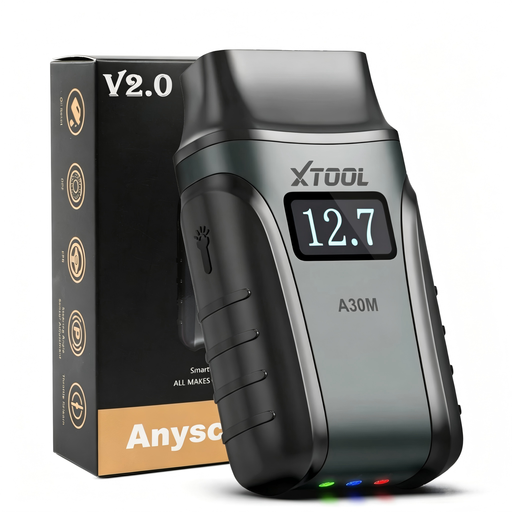
Why it stands out: The XTOOL A30M combines the power of a professional tool with the flexibility of a wireless solution for your smartphone (iOS/Android), all with lifetime updates.
Key features:
Who is it for? For the mobile mechanic, the advanced enthusiast, or the small garage that prioritizes portability and flexibility without compromising on advanced diagnostic functions.
The diagnostic tool market is vast, with solutions for every budget and need. Our selection highlights devices that offer an excellent balance of features, cost, and scalability.
If your needs are different or if you simply want to explore other models, feel free to browse our complete catalog.
Explore our full collection of car diagnostic tools to find the model that will precisely meet your expectations.
A basic OBD2 code reader only reads and clears emission-related fault codes stored in the engine control unit (ECU). In contrast, a professional diagnostic scanner (or "all-system" scanner) can communicate with all of the vehicle's modules: ABS, airbags (SRS), transmission, climate control, instrument cluster, etc. It also offers advanced functions like live data streaming, active tests, and service procedures.
Manufacturers release new models every year and deploy software updates to the existing fleet. Without regular updates, your tool will quickly become obsolete. It will no longer be able to communicate with recent vehicles or may misinterpret data, leading to incorrect diagnoses. A device with a clear update policy is therefore a guarantee of longevity.
For an individual who just wants to read an error code or perform an oil reset, bidirectional control is not essential. For a professional, however, it's a feature that saves a huge amount of time. Instead of assuming a fuel pump is faulty, you can use the tool to command it to activate. If it works, the problem lies elsewhere (relay, wiring, etc.). It's a remarkably effective way to confirm or rule out a hypothesis without dismantling anything.